
Syzygospora mycetophila
Syzygospora mycetophila
Description
Symptoms
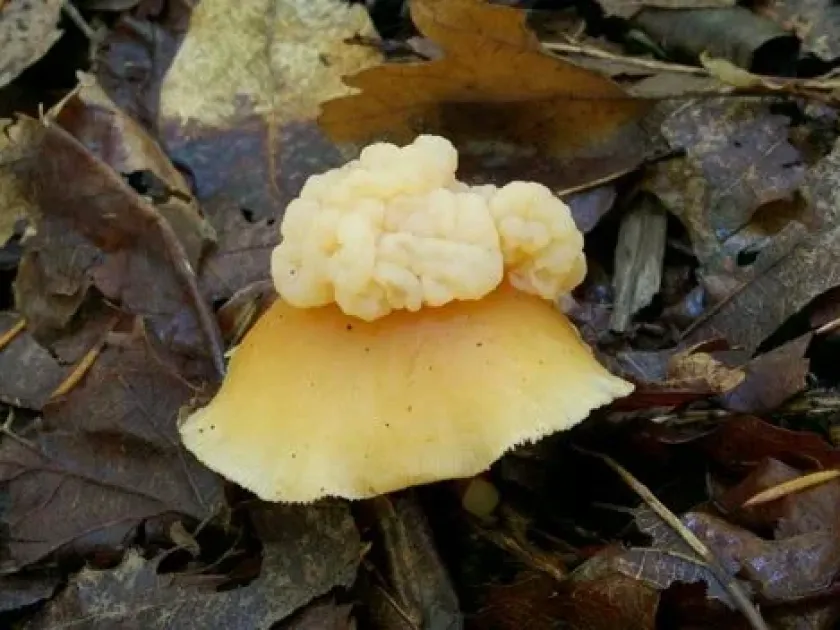
The primary symptom of infection is the development of a white or grayish, cottony to powdery fungal growth on the surface of the mushroom fruiting body. This layer represents the parasite's mycelium and sporulating structures.
Infected mushrooms exhibit significant physical deformation. Typical symptoms include the stunted growth of the cap and stem, as well as a complete cessation of normal mushroom development.
The host tissue eventually softens, becomes waterlogged, and often changes color as the parasite consumes the cellular integrity of the fungus. This deterioration renders the mushroom unrecognizable and biologically non-functional.
In advanced stages, the entire surface of the mushroom may be obscured by the parasite's structures, masking the original characteristics of the host species.
Microscopic confirmation is often required to distinguish this specific parasite from other saprophytic molds or mildew-like fungi that might also colonize decaying mushroom bodies.
Pathogen
Syzygospora mycetophila is a species of fungus in the order Tremellales that functions as a mycoparasite. It specifically targets the fruiting bodies of various agaric mushrooms, leading to their degradation and eventual decay.
As a hyperparasite, it survives by invading the tissues of a host fungus. Its mycelium branches out throughout the host's body, effectively siphoning off nutrients that the host would otherwise use for its own growth and spore production.
The fungus propagates through the release of basidiospores. These spores are highly efficient at dispersal, traveling through air currents or being splashed by water drops onto neighboring host specimens.
Biological studies indicate that the interaction between S. mycetophila and its host is highly specialized, involving the formation of specialized structures known as haustoria to penetrate host cells.
Understanding this organism is crucial for researchers studying fungal biodiversity and the complex trophic interactions occurring within forest floor micro-ecosystems.
Conditions for development
Syzygospora mycetophila thrives in environments characterized by high relative humidity. The presence of surface moisture is a critical requirement for the germination of its spores and subsequent colonization of host tissues.
The parasite is most active during cool to moderate weather patterns that favor the prolonged dampness of the substrate. Fluctuating temperatures leading to condensation are particularly conducive to the rapid spread of the fungus.
High host density is a significant driver of outbreaks. When mushroom fruiting bodies grow in tight clusters, the probability of spore transmission from an infected individual to a healthy one is greatly increased.
Poor ventilation in the habitat, whether in a natural forest clearing or a cultivated environment, exacerbates the issue by maintaining high humidity levels around the mushroom bodies.
Insect activity also plays a vital role in transmission, as beetles or flies foraging on mushrooms can act as vectors, carrying fungal fragments or spores between healthy and infected hosts.
Why it matters
The harm caused by this fungus is primarily aesthetic and qualitative, as it destroys the integrity of the mushrooms. It makes them inedible and promotes secondary rot due to the disruption of cellular tissues.
For commercial mushroom production, S. mycetophila is a significant pest. If introduced into a growing facility, it can rapidly colonize crops, leading to significant yield losses and potential market rejection.
Ecologically, the parasite acts as a population regulator, reducing the reproductive capacity of specific host mushroom species by preventing the production of viable host spores.
The metabolism of the parasite contributes to the rapid decay of the host, which can alter the local nutrient cycle in the leaf litter where the mushrooms reside.
While not a major agricultural threat, its presence in managed fungal systems demands immediate attention to prevent the degradation of valuable biological resources.
Protection
The most effective strategy for managing this fungus is the strict maintenance of hygienic standards. Preventing the entry of the pathogen into growing areas is the first line of defense.
Controlling the microclimate is essential. Reducing relative humidity and improving air circulation can effectively inhibit the development of the parasite on mushrooms in production environments.
Early detection and immediate removal of infected fruiting bodies are necessary to minimize the dispersal of spores and stop the progression of the infection to adjacent hosts.
Disinfecting equipment and workspaces with appropriate fungicidal solutions helps eliminate residual spores and reduces the overall inoculum load in the environment.
Ongoing monitoring and regular inspection of the crop are vital, as they allow for the rapid identification and isolation of any symptomatic mushrooms before the parasite spreads further.
Discussion
No discussions yet — be the first.