
Sympodiella needle cast
Sympodiella acicola
Description
Symptoms
The primary symptom of infection is the premature yellowing and subsequent browning of needles, typically appearing in the lower canopy of the trees. Affected needles lose their elasticity and become brittle.
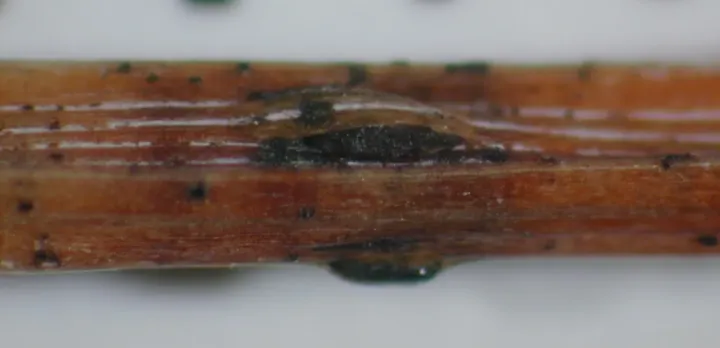
Microscopic examination reveals the presence of small, dark spots or dots on the needle surface, representing the conidial sporulation of the fungus. These structures are often arranged in rows along the stomatal channels.
Infection usually starts on older needles located closer to the trunk or on lower branches. Over time, the process may spread to younger needles if high humidity conditions persist.
Unlike many other needle diseases, symptoms of Sympodiella acicola are often confused with natural needle senescence, but the presence of fungal fruiting bodies allows for accurate identification.
Gradual needle shedding leads to a reduction in the photosynthetic capacity of the tree, which negatively impacts the overall crown condition and vigor.
Pathogen
The causal agent of this disease is the ascomycete fungus Sympodiella acicola. This microorganism belongs to the group of saprotrophic or weakly parasitic fungi that specialize in the decomposition of plant debris.
The life cycle of the pathogen is closely tied to dead plant tissues. The fungus actively colonizes old needles, surviving in the litter layer through mycelia and conidial sporulation throughout the growing season.
In its natural habitat, Sympodiella acicola is most frequently found on the needles of Scots pine. The fungus forms characteristic sporulating structures on the surface of the needles that serve as sources of secondary infection.
The biology of the pathogen is documented as a specific agent contributing to organic matter degradation in forest ecosystems. However, under specific conditions, it may act as an epiphyte on weakened trees.
Conidial dispersal occurs primarily through air currents or rain splash, allowing the fungus to rapidly colonize substrates in dense forest stands.
Conditions for development
The development of the disease is most intense under conditions of high humidity, which is the key factor for spore germination and substrate colonization.
Overcrowded plantings and a lack of adequate canopy aeration facilitate moisture retention, creating an ideal environment for the pathogen.
Temperatures ranging from +15 to +22 degrees Celsius are highly favorable for active fungal sporulation on the infected needles.
The accumulation of large amounts of needle litter beneath trees acts as a primary infection reservoir, where the fungus successfully overwinters and accumulates biological potential.
Weakened trees, suffering from nutrient deficiencies or environmental stress, are significantly more susceptible to colonization.
Why it matters
The primary damage consists of premature needle drop, which reduces the assimilating surface area of the crown and weakens the tree's health.
Prolonged infection leads to a decrease in radial stem growth and a loss of aesthetic value in ornamental or parkland conifers.
In forest nurseries, the spread of Sympodiella acicola can cause premature defoliation of seedlings, reducing their survival rate upon outplanting.
The disease is rarely the direct cause of mature tree mortality, but it significantly compromises host immunity, making trees vulnerable to secondary pests and other pathogens.
Economic losses are associated with forest pathology monitoring costs and the necessity of management interventions in affected forest areas.
Protection
Sanitary removal of needle litter is a fundamental preventive measure, as the bulk of the inoculum is concentrated in the fallen debris.
Thinning of stands is recommended to ensure proper canopy ventilation, which prevents the establishment of the moist environment required by the fungus.
In cases of severe infestation in ornamental plantings, contact fungicides based on copper or other active ingredients can be applied.
Balanced fertilization, particularly with potassium and phosphorus, promotes the strengthening of needle cell walls and enhances overall plant resistance.
Regular monitoring of forest stands during the spring and summer periods allows for the early detection of symptoms and the timely removal of infected branches.
Discussion
No discussions yet — be the first.