
Subulicystidium longisporum
Subulicystidium longisporum
Description
Symptoms
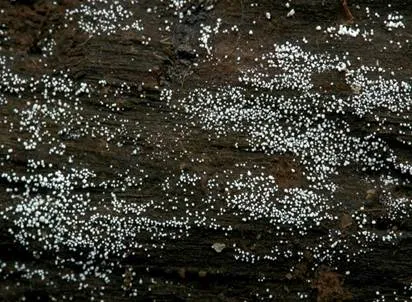
The first external sign of infection is the appearance of a thin, whitish or cream-colored fungal film covering the surface of the bark or exposed wood tissue.
As the mycelium penetrates deeper, it triggers the formation of white rot. The internal structure of the wood becomes brittle, loses its mechanical strength, and exhibits a fibrous appearance.
Bark peeling is a common secondary symptom, revealing a layer of white or greyish fungal mycelium that actively degrades the underlying vascular tissues.
In advanced stages of decay, the wood may become soft and sponge-like to the touch, indicating that the fungus has successfully colonized a large portion of the host tissue.
Visual identification of the reproductive structures can be difficult as they are often small and inconspicuous, blending into the texture of the decaying bark.
Pathogen
Subulicystidium longisporum is a basidiomycetous fungus classified as a wood-decay pathogen. It plays a significant role in the degradation of cellulose and lignin within forest ecosystems.
The fungus is characterized by its thin, membranous hymenophore which develops on the surface of decayed wood. It relies on the enzymatic breakdown of lignocellulosic materials to obtain nutrients.
The name longisporum refers to the elongated shape of the basidiospores, which are dispersed primarily via air currents, allowing for rapid spread across wooded areas.
Under a microscope, the species is identified by its distinct, long, needle-like cystidia that are typically encrusted with crystals, providing a unique diagnostic feature.
It exists as both a saprotroph on deadwood and an opportunistic pathogen that can colonize weakened living trees when environmental conditions are favorable.
Conditions for development
High relative humidity is the most critical factor for the development of Subulicystidium longisporum. Moisture content in the wood must be sufficiently high to support fungal metabolism.
Optimal growth temperatures for this species typically range between 15°C and 25°C, making it highly active during spring and autumn months.
Poor ventilation and high planting density create microclimates that trap moisture, significantly increasing the probability of fungal spores successfully germinating on susceptible hosts.
Physical injuries, such as broken branches or storm damage, provide direct entry points for the pathogen into the nutrient-rich heartwood of the tree.
Trees under abiotic stress, such as drought or nutritional deficiency, show reduced defensive responses, making them much more vulnerable to colonization by this fungus.
Why it matters
The primary damage caused by this fungus is the destruction of structural wood fibers, which can lead to the structural failure and subsequent breakage of tree trunks.
In orchards, the fungus can impact yield by interrupting nutrient transport, leading to branch dieback and an overall decrease in tree vigor.
Forestry operations suffer economic losses due to the degradation of timber quality, rendering the wood unsuitable for construction or high-value applications.
The fungus acts as a long-term threat as it can persist in infected stumps and fallen debris, serving as a reservoir for recurring infections in the vicinity.
Chronic infections lead to the gradual decline of trees, necessitating expensive removal programs and long-term site management to prevent further spread.
Protection
Sanitation is the most effective management strategy; removing infected woody debris and dead trees reduces the local spore load and limits the infection pressure.
Proper pruning techniques, combined with the application of wound sealants, help protect trees from initial spore entry and support rapid healing.
The use of preventative fungicide sprays can be beneficial in high-risk areas, particularly when trees have recently suffered mechanical damage or storm stress.
Maintaining optimal tree health through balanced fertilization and irrigation ensures that trees remain resilient against wood-rotting pathogens.
- Regular inspection of the orchard or forest stand.
- Disinfection of pruning tools between uses.
- Strategic thinning to improve air circulation.
Discussion
No discussions yet — be the first.