
Stropharia hornemannii
Stropharia hornemannii
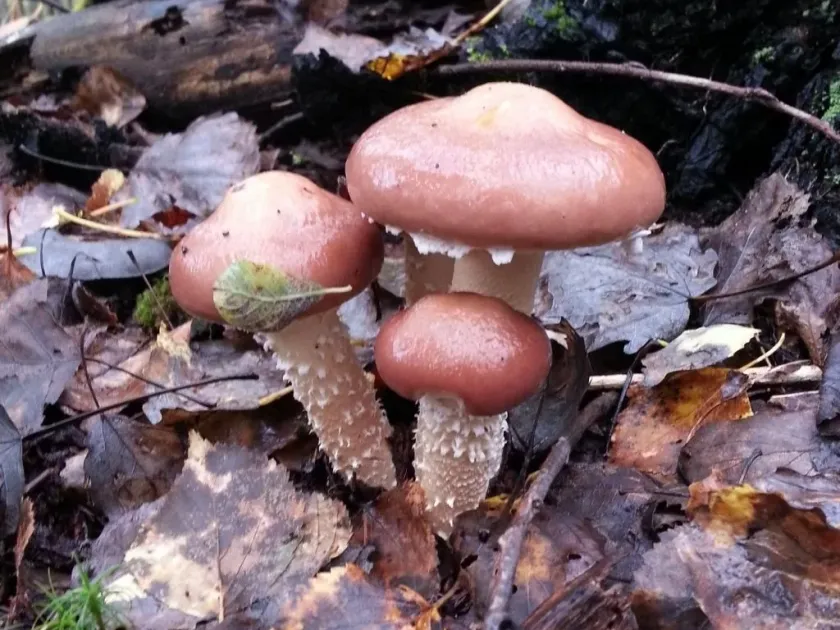
Description
Symptoms
The primary sign of Stropharia hornemannii presence is the formation of characteristic mushrooms on decaying wood, stumps, or heavily mulched forest soil. These caps often appear in clusters, signaling an established mycelial network.
Inside the substrate, the presence of the fungus is marked by structural degradation. The wood loses its mechanical strength, turns brown, and becomes soft or sponge-like due to the enzymatic breakdown of the plant cell walls.
White fungal threads, or rhizomorphs, are often visible within the wood or along the soil-wood interface. These structures are the vegetative organs used by the fungus to expand its territory and transport water and essential nutrients.
In advanced stages of decay, the wood exhibits deep cracking perpendicular to the grain, causing it to crumble easily under pressure. This indicates that the wood has been significantly compromised by the ongoing enzymatic digestion.
Although it does not typically form cankers on healthy trees, the fungus may exploit dead portions of root systems, facilitating the gradual decay of weakened trees and contributing to natural thinning processes in the forest.
Pathogen
Stropharia hornemannii is a species of gilled mushroom in the family Strophariaceae. Biologically, it functions as a saprotroph, an organism that obtains its nutrients from decaying organic matter, specifically dead wood, which categorizes it as a key decomposer in forest ecosystems.
The pathogenic agent, the mycelium, infiltrates the wood structure, secreting enzymes that break down lignin and cellulose. This process allows the fungus to utilize the stored energy within the timber, effectively cycling nutrients back into the soil environment.
The fruiting bodies of the fungus are characterized by a sticky, yellowish-brown cap and a distinct ring on the stipe. They typically emerge during the late summer and autumn seasons, triggered by increased moisture and declining temperatures.
The mycelium remains highly resilient and capable of persisting within the substrate for extended periods. Reproduction occurs primarily through the dispersal of basidiospores, which are spread by wind currents to colonize suitable moist habitats.
In forestry, this species is not typically classified as a primary pathogen of healthy living trees but rather as a secondary colonizer that thrives on fallen timber, stumps, and logging debris in humid environments.
Conditions for development
High moisture levels are critical for the development of Stropharia hornemannii. The species thrives in shaded, damp locations where water is consistently available in the forest floor litter and decaying organic debris.
The fungus prefers cooler temperate climates, with optimal growth temperatures ranging from 12 to 18 degrees Celsius. This narrow range is most commonly observed during the peak of the autumn season, facilitating optimal conditions for spore release.
Soil acidity also plays a role in the fungus's distribution. Coniferous forests, characterized by acidic soil and high levels of needle litter, provide the ideal environment for the colonization and growth of this saprotrophic organism.
Anthropogenic factors, such as poor sanitation after logging activities or the accumulation of wood piles, significantly enhance the local spread of the fungus. Such sites provide the necessary carbon sources for the mycelium to establish itself.
Spore dispersal relies on favorable air currents, though local humidity levels often dictate whether those spores will successfully germinate. Proper aeration of the forest floor can sometimes inhibit the development of dense mycelial mats.
Why it matters
The primary concern regarding Stropharia hornemannii is the accelerated decay of harvested or standing dead timber. This degradation reduces the commercial value of lumber and wood products left unattended in damp conditions.
While not a direct parasite, the fungus contributes to the biological breakdown of potential forestry resources. In industrial settings, this results in significant biomass loss if wood storage areas are not properly managed for humidity and aeration.
In nursery settings, the presence of this fungus is often a symptom of poor site sanitation. If left unchecked, it can degrade the surrounding soil quality and potentially impact the root health of young, stressed seedlings.
The enzymatic activity of the fungus modifies the chemical composition of the soil, which can alter the micro-ecosystem. While this is natural for forest rejuvenation, it may hinder the growth of sensitive crops in affected areas.
Overall, the harm is largely economic in nature, associated with timber storage losses and the degradation of forestry residues that might otherwise be managed for secondary wood products or compost.
Protection
Effective prevention involves rigorous forest sanitation, specifically the timely removal of stumps and logging debris. Eliminating the primary substrate prevents the fungus from establishing a viable population in the area.
Maintaining proper drainage in forestry sites is essential to mitigate moisture accumulation. Reducing stagnant water levels helps create an environment less favorable for the survival and spread of fungal spores.
In intensive nurseries, the application of targeted fungicides can protect the soil and surrounding plant tissue from colonization. These measures are most effective when applied proactively during the high-risk autumn season.
Biological control methods focus on fostering healthy soil microbial communities, which naturally compete with wood-decaying fungi. Promoting diverse soil life can effectively limit the encroachment of Stropharia hornemannii.
- Sanitary removal of fallen trees and decaying stumps.
- Improving site drainage to reduce surface moisture.
- Regular inspection of wood storage sites to prevent moisture buildup.
- Application of bio-fungicides to maintain a healthy soil micro-environment.
Discussion
No discussions yet — be the first.