
Blue-green Stropharia
Stropharia aeruginosa
Description
Symptoms
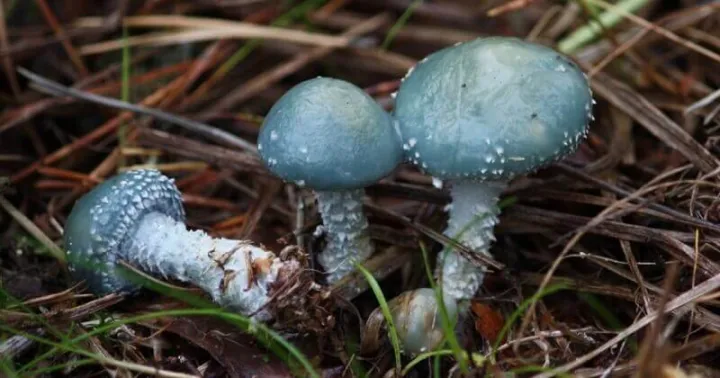
The Blue-green Stropharia is easily recognized by its vibrant blue-green cap, which often features white, scaly remnants of the universal veil.
As the mushroom matures, the intense color fades to a yellowish or ochre hue, and a distinct ring is often visible on the stem.
This fungus does not produce symptoms on leaves, stems, or roots because it is not a parasite of cultivated plants.
Its presence is indicated solely by the appearance of the mushrooms on moist, organic-rich soil or decaying wood.
Observers should distinguish this species from pathogenic fungi that might cause lesions or chlorosis on crops.
Pathogen
The agent in question is the basidiomycete fungus Stropharia aeruginosa, which belongs to the Strophariaceae family.
It acts as a saprotroph, meaning it derives its nutrition from dead organic matter, such as leaf litter and decomposing woody debris.
Unlike true plant pathogens, this species possesses no biological mechanisms to invade healthy, living plant tissues.
Its biological cycle is focused on the breakdown of cellulose and lignin, contributing to the natural cycling of nutrients in the soil.
The mycelium resides in the upper soil layers and does not interfere with the health or vitality of vascular plants.
Conditions for development
High humidity and consistent moisture in the soil are essential for the vegetative growth of the mycelium and the development of fruiting bodies.
The fungus thrives in shaded areas where organic material has accumulated, such as garden beds with mulching or compost heaps.
Temperatures between 12°C and 20°C create an optimal environment for the expansion of the fungal network.
Spore dissemination is facilitated by air currents, allowing the fungus to colonize various substrates that provide sufficient organic matter.
Excessive organic waste that remains unprocessed in the soil creates a perfect habitat for the growth of this species.
Why it matters
Blue-green Stropharia is not harmful to crops and should not be categorized as a plant disease or agricultural threat.
It causes no necrotic damage, rot, or wilting in healthy plants, making it irrelevant to the study of crop diseases.
The fungus does not compete with plants for nutrients in a way that would inhibit crop yields or agricultural performance.
Its only impact is ecological, as it functions as a decomposer within the soil microbiome rather than as a pathogen.
Farmers do not need to worry about crop loss or yield reduction due to the colonization of soil by this specific mushroom.
Protection
No protective measures are necessary for this fungus since it does not act as a pathogen in agricultural environments.
Proper composting and the incorporation of organic matter into the soil are standard practices that generally manage the fungal habitat.
Improving soil drainage and surface aeration can reduce the localized moisture required for the formation of mushroom caps.
Manual removal of fruiting bodies is the most effective and safe method if their presence is undesirable for aesthetic reasons.
Applying fungicides is strongly discouraged as it is environmentally unsound and unnecessary for controlling a saprotrophic species.
Discussion
No discussions yet — be the first.