
Spruce cone mushroom
Strobilurus esculentus
Description
Symptoms
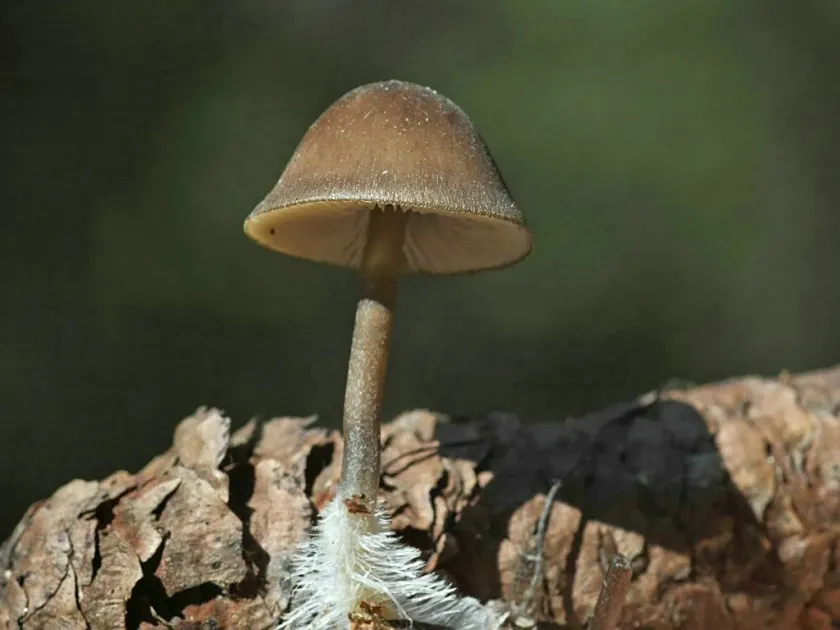
The primary sign of the fungus's presence is the emergence of small brown or grayish-brown mushroom caps on spruce cones lying in the forest litter.
Upon closer inspection of the cones, one can observe the development of white fungal mycelium, which permeates the scales, causing gradual softening and decay.
In the early stages of infection, the surface of the cone may appear healthy, but a characteristic fragility can be felt when attempting to break it due to the active degradation of tissues.
During the peak fruiting season, dozens of mushrooms can appear on a single cone, leading to the complete degradation of the fruit structure within one or two seasons.
The discoloration of scales to dark brown or black also indicates deep tissue colonization, rendering the cones useless for seed collection purposes.
Pathogen
Strobilurus esculentus is a saprotrophic fungus belonging to the Physalacriaceae family. While recognized as an edible mushroom, in forestry, it is categorized as a specialized decomposer of conifer fruits.
This fungus is a host-specific species that develops exclusively on the cones of Norway spruce (Picea abies). It plays a vital ecological role by breaking down woody debris on the forest floor.
The life cycle of the pathogen begins with the infection of fallen or partially buried spruce cones. The mycelium penetrates deep into the scales, utilizing the organic matter as its primary energy source.
The fungal mycelium is characterized by rapid growth in high-humidity conditions. During spring, when temperatures are favorable, it forms visible fruiting bodies on the surface of the cones.
A biological feature of this species is its strict host specificity to spruce. Other conifers, such as pine or larch, are rarely or never colonized by this fungus.
Conditions for development
The development of the fungus is closely linked to the humidity of the forest floor. The most active growth is observed in early spring, when the soil is saturated with snowmelt.
Optimal temperature conditions for the formation of fruiting bodies range from +5 to +15 degrees Celsius. The fungus is highly sensitive to substrate desiccation.
The presence of a large amount of spruce litter is a prerequisite for the mass spread of the pathogen. In pure spruce forests, the concentration of the fungus is significantly higher.
Light levels have almost no impact on mycelial growth inside the cones, although direct sunlight inhibits the appearance of fruiting bodies on the surface.
Dense spruce plantations promote the accumulation of plant debris, creating an ideal microclimate for the proliferation of this fungal population.
Why it matters
The primary damage is the destruction of spruce seed material. As the fungus breaks down the cones, it significantly reduces the pool of potential seeds available for natural regeneration.
For the forestry sector, this means a decrease in the natural renewal of spruce forests, as a large portion of fallen seeds becomes unsuitable for germination.
While the fungus is not an aggressive parasite of living trees, its intensive growth in nurseries can lead to the spoilage of collected cones intended for reforestation.
Infection complicates the collection and processing of cones, as the integrity of the fruit is compromised, leading to lower quality and lower yields of extracted seeds.
The mass spread of the fungus in forest stands can also contribute to the accumulation of spores in the soil, which in specific conditions accelerates the decay of organic litter.
Protection
The main preventive measure in forest nurseries is the timely collection and disposal of fallen cones to prevent them from decomposing on the site of seedlings.
It is important to ensure good soil drainage in nurseries to prevent moisture stagnation, which creates favorable conditions for fungal infections.
To prevent the spoilage of seed raw materials, it is recommended to store collected cones in dry, well-ventilated facilities with low air humidity.
If fungicide use is necessary, only products approved for forest crops should be applied, although chemical protection is rarely practiced in natural forest ecosystems.
Adherence to forest hygiene standards and regular cleaning of the area from excessive spruce litter remain the most effective methods for managing this fungal population.
Discussion
No discussions yet — be the first.