
Common scab of potato
Streptomyces violaceusniger
Description
Symptoms
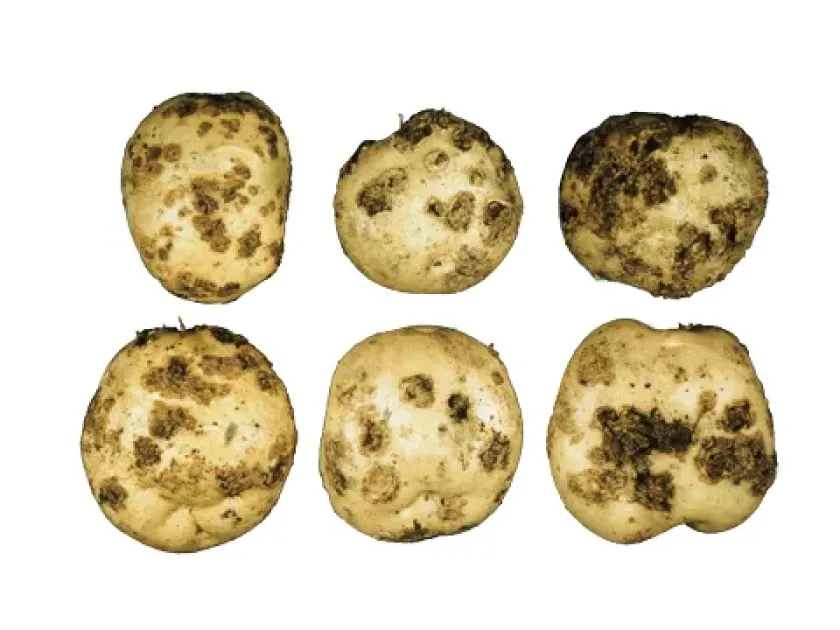
The most visible signs of common scab are corky, raised, or sunken lesions on the potato tuber skin. These lesions can range in size from small spots to large, coalesced patches covering most of the surface.
Depending on the specific conditions and potato variety, the symptoms can appear as shallow surface scabs, deep crater-like pits, or raised wart-like growths that make the skin texture rough and uneven.
The lesions often become dark brown or tan and are characterized by a corky texture. As the tuber grows, the lesions expand, frequently causing the skin to crack and become highly unsightly.
Roots and stolons can also be colonized, potentially leading to restricted nutrient uptake for the developing tubers, although the primary commercial impact remains on the tuber skin quality.
- Surface scab: thin, netted patches on the skin.
- Common scab: raised, corky lesions.
- Deep scab: pitted, necrotic craters.
- Raised scab: wart-like, thickened growths.
Pathogen
The causal agent of common scab in potatoes is the soil-borne actinomycete Streptomyces violaceusniger, along with several other species in the Streptomyces genus. These are filamentous bacteria that function as saprophytes, feeding on decaying organic matter in the soil.
Actinomycetes form a branching mycelium that resembles fungal structures but with significantly smaller diameters. They are highly resilient, capable of persisting in the soil for years in the form of spores, which makes them extremely difficult to eradicate once established.
The pathogen is ubiquitous in many agricultural soils. It thrives in environments where there is abundant organic matter and specific soil pH conditions that favor bacterial colonization over fungal competition.
Transmission of the pathogen occurs primarily through infected soil, but it is also spread by planting contaminated seed tubers. Farm machinery and tools can also transport the spores between fields.
Bacteria enter the tuber tissues via lenticels, natural openings, or mechanical wounds. Once inside, they release phytotoxins that induce corky tissue development, resulting in the classic symptoms of the disease.
Conditions for development
Common scab is most prevalent in soils with a neutral to alkaline pH (ranging from 6.0 to 7.5). In acidic soils (pH below 5.5), the activity of the pathogen is significantly inhibited.
Warm soil temperatures, typically between 20°C and 30°C, provide an ideal environment for the rapid multiplication and infection rate of the bacteria during the critical tuber initiation stage.
Moisture stress during tuber set is a major factor. If the soil becomes dry during the early growth stages of the tubers, the lenticels expand and become more susceptible to bacterial entry.
The application of fresh manure or heavy liming right before planting creates localized high pH zones, which are perfect for outbreaks of common scab in susceptible potato cultivars.
Poorly aerated soils that impede moisture movement or compaction can also lead to uneven development of the tuber skin, increasing the likelihood of infection at the lenticel sites.
Why it matters
The primary damage caused by common scab is cosmetic, leading to significant downgrading of the potato crop. Infected tubers are often rejected by retail markets and processors.
Deep scab lesions cause significant weight loss and waste during peeling, which lowers the overall culinary quality and processing efficiency of the potato harvest.
The disease negatively impacts storage shelf life. The damaged skin allows secondary pathogens, such as soft rot bacteria or fungi, to invade the tuber and cause rapid decay in storage.
Seed tubers infected with common scab may show poor emergence or reduced vigor, leading to uneven crop stands and lower yields in the following season.
Economic losses are compounded by the need for extra sorting, grading, and the necessity to implement expensive land management strategies to reclaim soil health.
Protection
Implementing a proper crop rotation system is the most effective cultural practice. Growing non-host crops like cereals or cover crops for at least 3 years between potato plantings is highly recommended.
Managing soil pH is critical. Avoiding over-liming and applying physiologically acidic fertilizers like ammonium sulfate can help keep soil pH at a level that suppresses the pathogen.
Selecting scab-resistant potato varieties is the most reliable long-term strategy for managing the disease in fields with a known history of the pathogen.
Maintaining adequate soil moisture through irrigation, particularly during the tuber initiation period, is essential to prevent the expansion of lenticels and bacterial infection.
Using certified, disease-free seed tubers and treating planting material with appropriate biological agents or fungicides can significantly reduce the initial infection pressure on the field.
Discussion
No discussions yet — be the first.