
Common scab of potato
Streptomyces venezuelae
Description
Symptoms
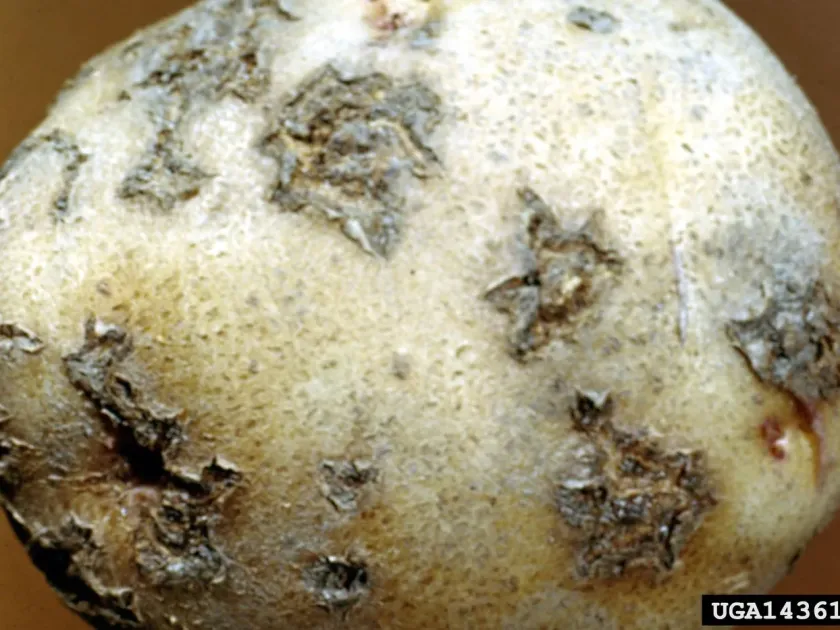
Common scab symptoms first appear as small, circular, reddish-brown spots on the surface of developing potato tubers. Over time, these spots expand into rough, corky lesions that significantly alter the skin's texture.
The morphology of the scabs can vary greatly: some are superficial and flat, while others are raised or deeply pitted. These variations depend on the specific strain of the bacteria and the genetic susceptibility of the potato variety.
Lesions can merge into large, irregular patches that cover significant portions of the tuber. In severe cases, these deep pits can reach several millimeters into the tuber, causing internal tissue damage.
While the disease primarily affects the tubers, it can also lead to the degradation of stolons, although this is less frequently noticed compared to the clear visible damage on the harvestable potatoes.
- Flat, superficial corky lesions.
- Raised, wart-like scabs.
- Deep, crater-like pits in the tuber flesh.
- Russet-like patterns across the skin surface.
Pathogen
The disease is caused by soil-borne actinobacteria of the genus Streptomyces, primarily Streptomyces scabies (and related species like Streptomyces venezuelae). These bacteria are natural inhabitants of the soil that can become pathogenic under favorable conditions.
These organisms are saprophytic, meaning they thrive on decaying organic matter in the soil. Their ability to persist in the soil for several years, even in the absence of a host, makes them difficult to eradicate from affected fields.
The pathogen infects potato tubers through lenticels, wounds, or cracks that develop during tuber expansion. Once inside, the bacteria secrete toxins that disrupt normal cell development and trigger the formation of lesions.
Environmental conditions play a crucial role in the infection process. Streptomyces species prefer soil environments that are neither too acidic nor too saturated, favoring moderately aerated soil structures.
The bacterial mycelium spreads within the outer layers of the tuber skin, creating typical scab-like appearances that characterize the disease across various potato varieties worldwide.
Conditions for development
The disease thrives in neutral to alkaline soils (pH levels between 6.0 and 7.5). Soil management that maintains a lower pH is highly effective at reducing the severity of common scab infections.
Warm, dry soil conditions during the tuber initiation stage significantly increase susceptibility. Moisture stress during this period is the most important environmental factor that promotes the rapid infection of new tubers.
High soil temperatures (around 20–25°C) are ideal for the rapid growth and reproduction of Streptomyces species, making summer-planted or early-season crops particularly vulnerable in certain climates.
The addition of fresh manure or excessive lime applications prior to planting creates a nutrient-rich and high-pH environment that encourages the proliferation of the pathogen and exacerbates infection rates.
Soil aeration also contributes to the pathogen's success. Well-drained, sandy soils often show higher instances of common scab compared to compacted, heavier soils that limit the oxygen availability the bacteria require.
Why it matters
The most significant impact of common scab is the drastic reduction in tuber marketability. Tubers with noticeable scabbing are often rejected by packers and retailers, causing severe economic losses for growers.
Beyond visual damage, affected tubers have compromised skin, which makes them more prone to water loss and secondary infections by other fungi or bacteria during the storage period, leading to rapid rotting.
Although the internal quality of the flesh is often unaffected in mild cases, severe pitting renders the potato difficult to peel and process, reducing its culinary value and consumer acceptance.
The disease increases production costs because growers must invest in soil treatments, resistant varieties, and more rigorous sorting processes, which negatively impacts the overall farm profitability.
Common scab also complicates agricultural land use, as affected fields remain contaminated for long periods, restricting the ability to rotate potatoes in short cycles or forcing producers to change crop types.
Protection
The use of resistant cultivars is the most effective long-term strategy for managing common scab. Growers should select varieties that have demonstrated strong tolerance to the disease under local conditions.
Soil pH management is critical. Applying acidic fertilizers, such as ammonium sulfate, can lower the soil pH enough to significantly inhibit the growth of Streptomyces bacteria during the tuber-forming phase.
Maintaining consistent soil moisture, especially during the 2–4 week window after tuber initiation, is essential. Adequate irrigation prevents the lenticels from opening in a way that allows easy pathogen penetration.
Implementing a proper crop rotation plan—with a minimum of 3 to 4 years between potato crops—and avoiding heavy applications of alkaline soil amendments are vital cultural practices for reducing inoculum levels.
Using biological control agents, such as specific strains of Bacillus subtilis, can help establish a beneficial microbial population in the soil, which competes with the pathogen and protects the developing tubers.
Discussion
No discussions yet — be the first.