
Common scab of potato
Streptomyces lavendulae
Description
Symptoms
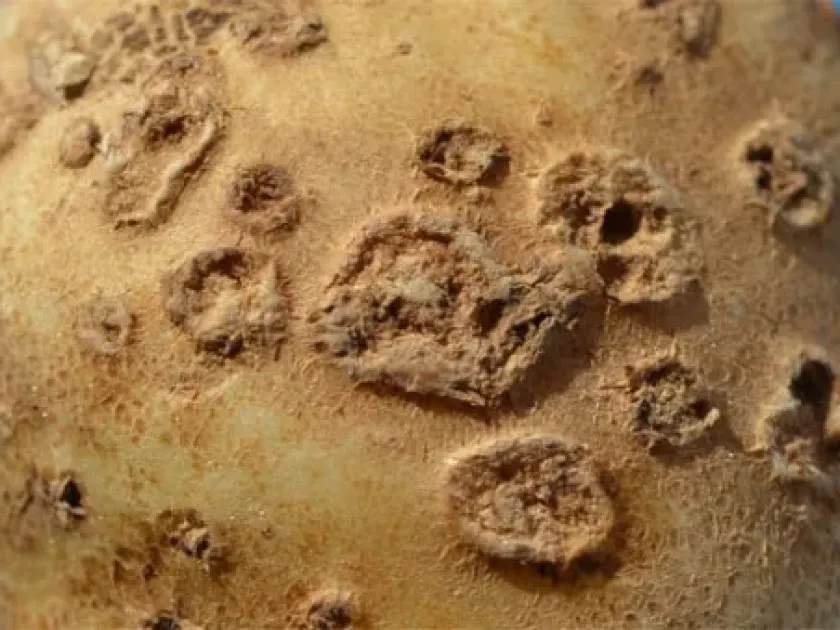
Symptoms appear on the surface of mature tubers and vary significantly based on the potato variety and the severity of the infection.
Typical lesions present as shallow, raised, deep, or pitted scabs that may cover only a small portion or the entire surface of the tuber skin.
The scab lesions are characterized by a rough, dry, corky texture, often giving the tuber a cracked and unsightly appearance that ruins its marketability.
In some cases, the infection manifests as superficial russeting, which affects only the epidermis without causing the deep pitted lesions seen in severe infestations.
Affected areas are often surrounded by a faint, lighter halo, and the tubers themselves may exhibit a slight earthy odor when stored in bulk.
Pathogen
The causative agent of common scab is Streptomyces lavendulae, a species of soil-inhabiting bacteria that grow as branching filaments resembling fungal mycelium.
These actinomycetes are saprophytic organisms that can survive indefinitely in the soil by feeding on organic matter, making them extremely difficult to eradicate.
The pathogen is aerobic and thrives in neutral to slightly alkaline soil conditions, which significantly influences its ability to infect potato crops.
Infection primarily occurs through lenticels, the natural pores of the tuber, during the early stages of tuber development, as well as through mechanical skin abrasions.
Biological virulence is linked to the production of thaxtomin, a phytotoxin that triggers the formation of corky tissues on the potato surface as a host response.
Conditions for development
Common scab development is highly sensitive to soil pH; the pathogen is most active and aggressive in soils with a pH ranging from 6.0 to 7.5.
Low soil moisture levels during the early stages of tuber initiation provide optimal conditions for infection, as the pathogen moves easily through the soil film.
The application of fresh manure or excessive liming increases soil pH, which directly stimulates the growth of Streptomyces populations in the field.
High soil temperatures (above 20°C) often exacerbate the disease, as they favor the rapid reproduction of actinomycetes compared to other soil microflora.
Conversely, maintaining adequate irrigation during the tuber-bulking period can create an environment less conducive to the pathogen's development.
Why it matters
The primary economic impact of common scab is the significant reduction in the tuber's cosmetic quality, making it unsuitable for fresh market sales.
Corky lesions on the surface allow for easier entry of secondary rot-causing pathogens, which often leads to severe storage losses and rapid tuber deterioration.
Damaged skin increases water transpiration from the tuber, leading to shriveling, weight loss, and a decrease in culinary and processing value.
When used as seed potatoes, infected tubers can lead to poor stand emergence and reduced yields, as the pathogen can interfere with sprout development.
Growers often face high costs related to rigorous washing, sorting, and mandatory rejection of infected lots before they reach the distribution chain.
Protection
Implementing a crop rotation cycle that avoids potatoes for at least four years can help reduce the soil-borne inoculum level of Streptomyces.
Managing soil chemistry by avoiding alkaline amendments and using physiologically acid fertilizers can help maintain a pH that inhibits pathogen activity.
Ensuring consistent irrigation during the critical tuber initiation phase is a highly effective cultural practice for preventing early infections.
Selecting potato cultivars with known resistance to common scab is the most sustainable and efficient strategy for avoiding major crop losses.
Using certified, disease-free seed tubers and avoiding the use of fresh manure in the year of potato cultivation are essential preventive measures.
Discussion
No discussions yet — be the first.