
Common scab
Streptomyces europaeiscabiei
Description
Symptoms
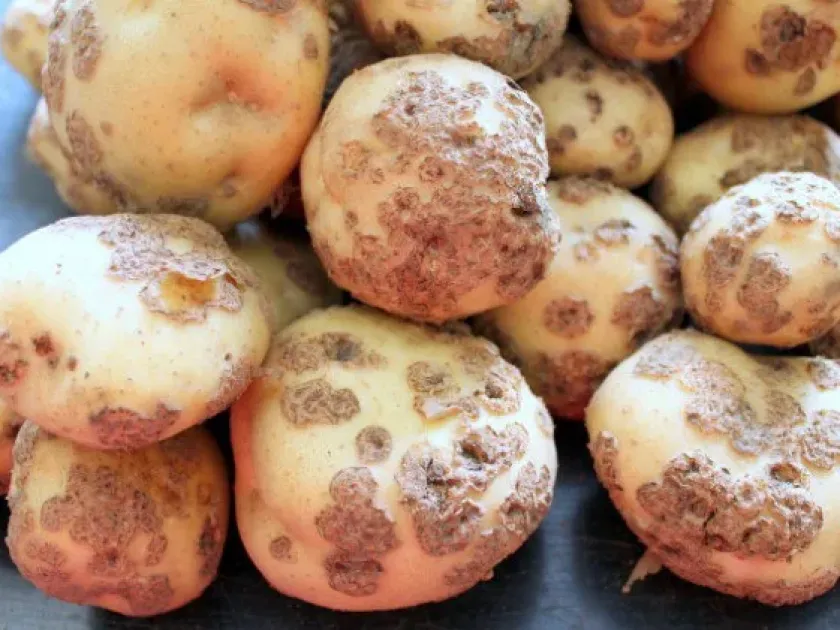
The symptoms of common scab are exclusively limited to the tubers and are typically observed at harvest time. The disease manifests as rough, corky patches or pitted lesions on the potato skin.
There are several distinct types of scab symptoms: surface (flat) scab, raised scab, and deep (pitted) scab. The appearance of the lesions depends on the potato variety and the specific timing of the infection.
In cases of deep scab, the pathogen causes crater-like depressions that can extend several millimeters into the flesh. These pits are often surrounded by a dark, hardened corky layer that serves as a protective barrier for the plant tissue.
Often, these lesions can merge to cover the entire surface of the tuber, resulting in a distorted and unsightly appearance that significantly reduces the marketability of the crop.
Symptoms are rarely visible on the foliage or other parts of the plant, making it a hidden threat throughout the growing season until the tubers are lifted.
Pathogen
Common scab is caused by soil-inhabiting actinomycetes, primarily Streptomyces europaeiscabiei and several other related species. These organisms function as saprophytes under normal conditions, breaking down organic matter in the soil.
Unlike true fungi, Streptomyces are filamentous bacteria that can survive in soil for many years. They exist as part of the normal soil microflora but can become pathogenic when the environment favors their activity over the plant.
The bacteria infect developing tubers through natural openings known as lenticels or through wounds caused by insects, mechanical damage, or chemical stressors. The colonization of tuber tissue starts when the periderm (skin) is still tender and thin.
Once inside, the pathogen produces specialized enzymes that degrade the tuber cell walls, leading to the formation of necrotic lesions. The severity of the infection depends heavily on the specific strain of the bacterium and the host's resistance level.
These pathogens are highly persistent and can travel across fields via infested soil on equipment, contaminated seed potatoes, or runoff water.
Conditions for development
The development of common scab is highly dependent on soil environmental factors. The disease is most severe in neutral to alkaline soils, with an optimal pH range of 6.0 to 8.0.
Soil temperature is another critical factor, as Streptomyces thrive in warm conditions, specifically between 20°C and 25°C. This explains why infections are often more frequent during warm, dry springs.
Moisture plays a dual role: low soil moisture during the tuber initiation stage makes the lenticels more susceptible to bacterial invasion, while consistent irrigation during this period can help prevent infection.
The application of fresh, non-composted manure is a major catalyst for scab development, as it promotes high microbial activity and raises the local soil pH.
Repeated cropping of potatoes on the same land without proper rotation allows the pathogen population to build up to levels that make severe infection almost inevitable.
Why it matters
The primary impact of common scab is the dramatic reduction in the commercial value of the potato crop. Tubers with significant scabbing are rejected by fresh-market retailers and processors.
Cooking quality is compromised, and the presence of deep pits leads to high peeling waste in industrial food processing. Consumers perceive scabby potatoes as lower quality, regardless of their internal nutritional value.
The disease negatively affects storage life. Open lesions act as entry points for secondary pathogens, such as soft rot or dry rot fungi, which can cause significant losses during prolonged storage.
The use of infected potatoes as seed increases the likelihood of distributing the pathogen to cleaner fields and may lead to poor germination rates due to the impairment of the tuber eyes.
Economic losses are compounded by the costs associated with culling damaged tubers, reduced yields, and the need for expensive chemical or management-based intervention programs.
Protection
Management focuses on an integrated approach, starting with the use of resistant potato varieties, which is the most sustainable and effective control strategy available to farmers today.
Maintaining soil pH in the acidic range (below 5.5) using acidifying fertilizers like ammonium sulfate can significantly suppress the growth of Streptomyces in the soil.
Proper irrigation management is vital; keeping the soil profile moist during the critical period of tuber formation effectively limits the penetration of the bacteria through the lenticels.
Long crop rotations, ideally spanning 4-5 years, help reduce the overall population of the pathogen in the soil, preventing the buildup of high inoculum levels.
- Avoid the use of lime or fresh manure immediately before planting.
- Plant only certified, scab-free seed tubers.
- Use green manure cover crops to modify soil microbial activity.
- Maintain strict sanitation practices for all farm machinery and storage facilities.
Discussion
No discussions yet — be the first.