
Common Scab
Streptomyces erythraeus
Description
Symptoms
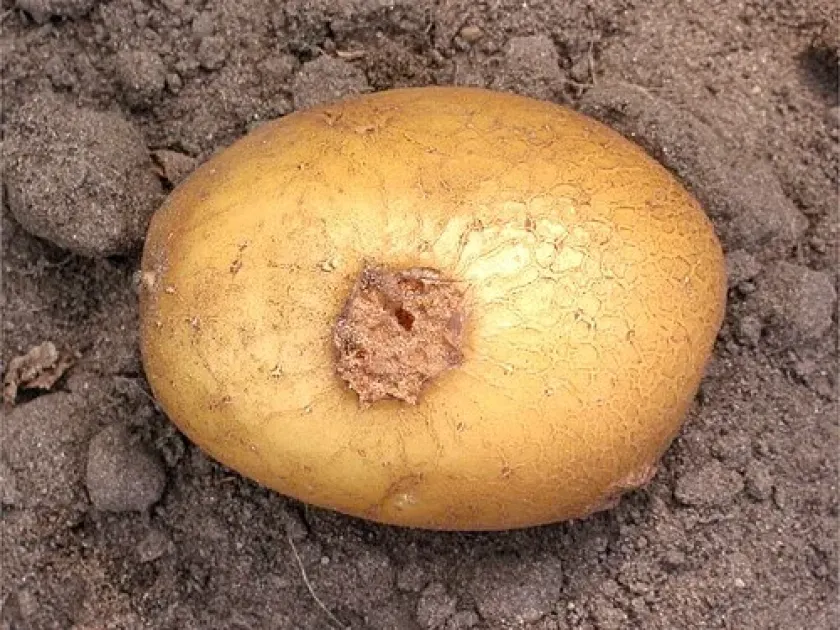
The primary symptom of common scab is the presence of lesions on the potato tuber surface, which vary in depth and shape. Infected areas can appear as flat corky spots, superficial scabs, or deep, crater-like pits.
In cases of severe infection, the affected areas may merge, covering a significant portion of the tuber surface. The tissues within the lesions often become covered with a dry, cracked, dark or brown crust.
The disease may affect not only the tubers but also the stolons and, in rare instances, the root system of the plant. Small necrotic spots form on the stolons, which hinder the normal nutrient uptake of developing tubers.
The visual quality of damaged tubers is significantly degraded, making them unsuitable for high-quality market requirements. The skin structure in the infected areas becomes coarse, rough, and prone to further physical damage.
Diagnosing the disease can be difficult, as visible signs often only become apparent close to the harvest period. Secondary infections, such as soft rots, can easily penetrate the tuber through the compromised skin damaged by scab.
Pathogen
The disease is caused by a group of actinomycetes, most notably Streptomyces scabies (formerly often misidentified as Streptomyces erythraeus). These microorganisms occupy a biological niche between bacteria and fungi.
The mycelium of these actinomycetes develops in the soil, feeding on organic matter and root exudates of plants. They possess high resistance to unfavorable environmental conditions due to their ability to produce spores.
The pathogen persists in the soil for many years, remaining in a saprophytic state until a susceptible host is available. Actinomycetes actively multiply in the rhizosphere, using the lenticels of the tubers as entry points for infection.
The pathogens secrete enzymes that degrade the cell walls of the potato, leading to the formation of the characteristic corky tissue. This is a classic soil-borne disease that is difficult to completely eliminate from an agricultural field.
Different species of Streptomyces can exhibit varying levels of virulence, which explains the variability in external scab symptoms. Understanding the biology of these organisms is critical for developing effective crop rotation strategies.
Conditions for development
Common scab develops most actively in sandy loam and light soils with a neutral or slightly alkaline pH (6.0–7.5). In acidic soils, the risk of disease development is significantly reduced.
Moisture deficiency in the soil during the tuber initiation and development phase is a key factor that triggers mass infection. During this period, the lenticels of the tubers become particularly vulnerable to pathogen penetration.
High soil temperatures also promote the activation of actinomycetes, accelerating their reproduction process. Prolonged absence of rainfall during the active tuberization phase creates ideal conditions for the spread of common scab.
Applying large doses of fresh manure or lime, which raise the soil pH, significantly contributes to disease outbreaks. Excess organic matter in an insufficiently composted state serves as an excellent substrate for the pathogen.
Excessive soil compaction and poor aeration can indirectly influence disease development by creating a microclimate that favors the survival of the bacterial flora. Water management remains the primary catalyst for severe outbreaks.
Why it matters
The main impact of the disease is a sharp reduction in the marketability and visual appeal of potatoes. Tubers with scab symptoms lose their consumer appeal and are not suitable for long-term storage.
Damaged skin is unable to effectively protect the internal tissues of the tuber from moisture loss, leading to rapid shriveling during storage. The crop becomes susceptible to secondary fungal and bacterial rot infections.
Nutritional value markers, including starch and vitamin content, may decrease. Deep pits lead to significant waste during peeling and food processing, which reduces the total output of usable product.
Economic losses arise from direct sorting losses at harvest and the inability to sell the batch at a premium quality grade. Under severe infection, potatoes are relegated to livestock feed, significantly reducing the farmer's profit.
Chronic accumulation of the pathogen in the soil forces growers to abandon potato production on affected fields, disrupting established crop rotation cycles. This necessitates the search for alternative, potentially less profitable crops.
Protection
- Selection and use of potato cultivars resistant to common scab.
- Adherence to crop rotation, with a return to the same field only every 3–4 years.
- Irrigation of potatoes during critical growth stages to maintain optimal soil moisture.
- Application of physiologically acidic fertilizers (e.g., ammonium sulfate) to acidify the soil.
- Use of healthy seed tubers that do not show visible signs of infection.
- Avoiding the application of fresh manure immediately before planting potatoes.
Discussion
No discussions yet — be the first.