
Common scab of potato
Streptomyces albidoflavus
Description
Symptoms
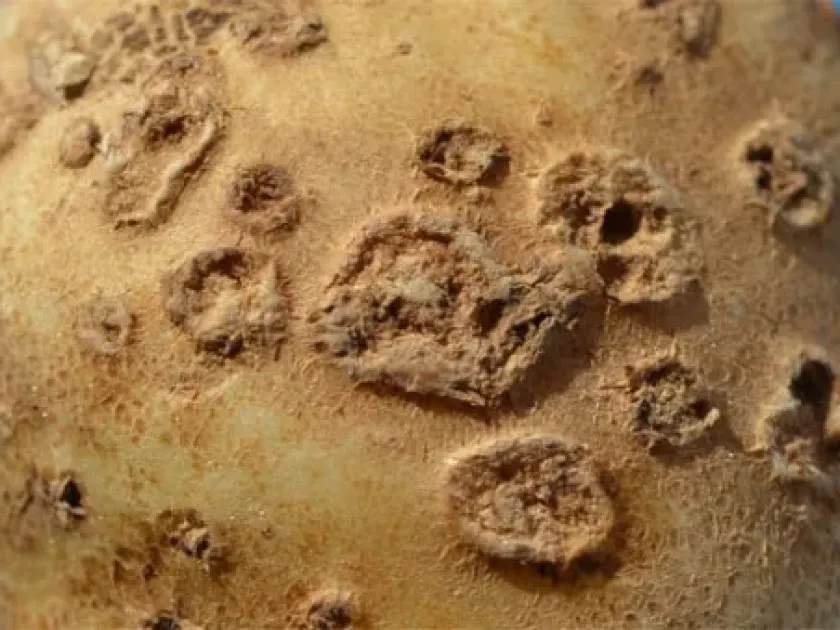
Symptoms of common scab appear on the surface of tubers as lesions that vary in appearance, ranging from superficial russeting to deep, corky pits or raised scab-like bumps.
The lesions begin as small, brownish spots that gradually expand and harden into corky, star-shaped, or irregular scabs, significantly marring the tuber's appearance.
In severe cases, the entire surface of the potato may be covered by these growths, leading to skin deformation and increased water loss during storage.
The damage to the skin compromises the tuber's natural barrier, leaving it susceptible to secondary pathogens like soft rot bacteria and various fungi that cause further decay.
While the internal flesh of the potato usually remains unaffected, the depth of the lesions can make peeling difficult and increase wastage during culinary processing.
Pathogen
The causative agent of common potato scab is a group of soil-borne bacteria known as actinomycetes, specifically the genus Streptomyces, with Streptomyces albidoflavus being a primary representative.
These microorganisms are saprophytic, meaning they thrive on decaying organic matter in the soil, which allows them to persist for long periods even in the absence of a host crop.
The bacteria infect developing potato tubers through lenticels, natural growth cracks, or wounds in the skin during the early stages of tuber initiation.
Besides potatoes, these pathogens have a wide host range and can infect other root vegetables like beets, carrots, and radishes, necessitating careful crop rotation planning.
The survival and development of these bacteria are highly dependent on soil pH; they prefer neutral to slightly alkaline conditions (pH 6.0–7.5) and are significantly inhibited in acidic soils.
Conditions for development
The development of common scab is favored by high soil temperatures, typically between 25 and 30 degrees Celsius, which align with the period of tuber development.
Low soil moisture during the tuber initiation stage is a critical factor, as dry soil conditions make the young tubers more susceptible to bacterial infection.
Over-liming of soil or the application of large quantities of wood ash increases the pH level, creating an environment that encourages the proliferation of Streptomyces.
The application of fresh manure shortly before planting can also trigger disease outbreaks by promoting the activity of soil microorganisms, including the target pathogen.
Continuous potato cropping on the same site leads to a cumulative increase in the soil's bacterial population, making each subsequent year more prone to infection.
Why it matters
The primary economic impact of common scab is the reduction of tuber marketability, as visually damaged potatoes are often rejected by retailers and consumers.
Although common scab does not necessarily reduce the nutritional value significantly, it degrades the quality and shelf-life of the harvest, making it unsuitable for long-term storage.
Infected tubers used as seed potatoes can introduce the pathogen into new, clean fields, potentially leading to widespread future outbreaks and yield losses.
Farmers face significant losses due to the need to sort out affected produce, which can constitute a large percentage of the total yield in high-infection environments.
Secondary infections associated with the scab lesions can destroy stored harvests, leading to complete economic loss of the winter inventory in extreme cases.
Protection
The most effective strategy for managing common scab is to maintain soil pH at a slightly acidic level (around 5.0–5.5) using fertilizers like ammonium sulfate.
Implementing a proper crop rotation schedule that includes non-host crops and green manure (like rye or mustard) helps to reduce the pathogen population in the soil.
Ensuring adequate and consistent soil moisture during the tuber initiation phase is vital to prevent the lenticels from becoming overly permeable to the bacteria.
Selecting resistant potato varieties is a crucial proactive measure, especially in fields where common scab has been historically problematic.
- Planting certified disease-free seed potatoes.
- Avoiding over-liming or fresh manure application.
- Using cover crops to improve soil health.
- Applying appropriate seed treatments before planting.
Discussion
No discussions yet — be the first.