
Sticta sylvatica
Sticta sylvatica
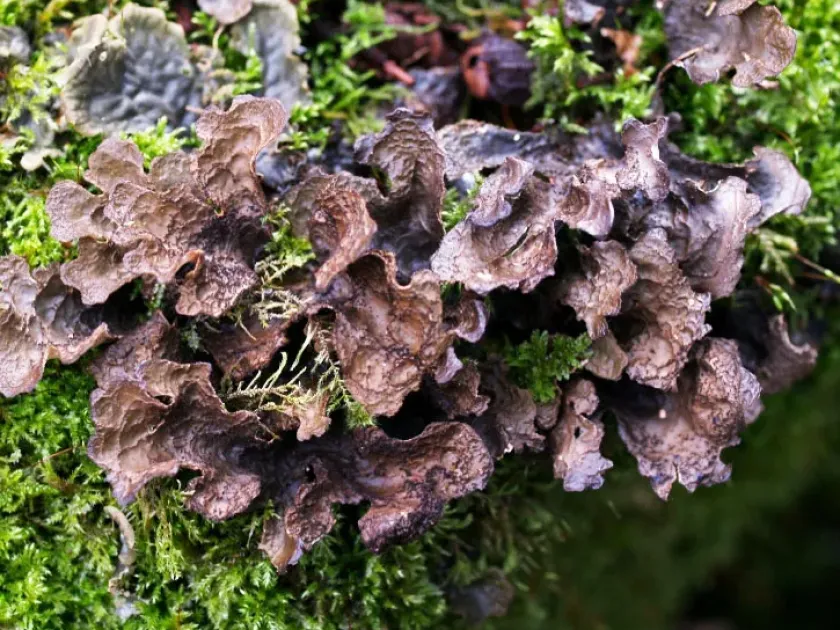
Description
Pathogen
Sticta sylvatica is not a plant disease but a species of foliose lichen belonging to the family Peltigeraceae. It is a symbiotic organism consisting of a fungal partner and cyanobacteria, which enables it to fix atmospheric nitrogen.
This species functions as an epiphyte, growing on tree bark or mossy surfaces in forest environments. It is strictly a non-pathogenic organism and does not cause any form of rot, necrosis, or structural damage to the plants it colonizes.
The thallus of Sticta sylvatica is distinct, featuring wide lobes that are dark brown or olive-green. The underside is covered in small pits known as cyphellae, which facilitate gas exchange, emphasizing its complex evolutionary adaptation.
In forestry and agronomy, this lichen is considered a beneficial part of the ecosystem rather than a threat. It does not compete for nutrients with the host tree, as it derives its sustenance from the atmosphere rather than the plant's vascular system.
The presence of this lichen is indicative of healthy, long-established forest stands. It does not cause diseases in crops, orchards, or timber trees, and therefore requires no chemical control or intervention.
Conditions for development
The survival and growth of Sticta sylvatica are strictly tied to high-humidity environments. It requires consistent moisture levels provided by frequent rain, fog, and dew to remain metabolically active.
Air quality is a primary determinant of its distribution. As a lichen, it is highly sensitive to atmospheric pollutants, particularly sulfur dioxide, making it a reliable indicator of clean environmental conditions.
It thrives in shaded, sheltered areas within old-growth forests where temperature fluctuations are minimal and the canopy provides constant protection from direct, dehydrating sunlight.
The species prefers substrates with specific pH levels, often colonizing the bases of deciduous trees or moss-covered rocks where organic matter accumulates.
Because its life cycle is extremely slow, Sticta sylvatica is rarely found in managed forests or areas subjected to frequent mechanical disturbances or heavy chemical applications.
Discussion
No discussions yet — be the first.