
Stereum insignitum
Stereum insignitum
Description
Symptoms
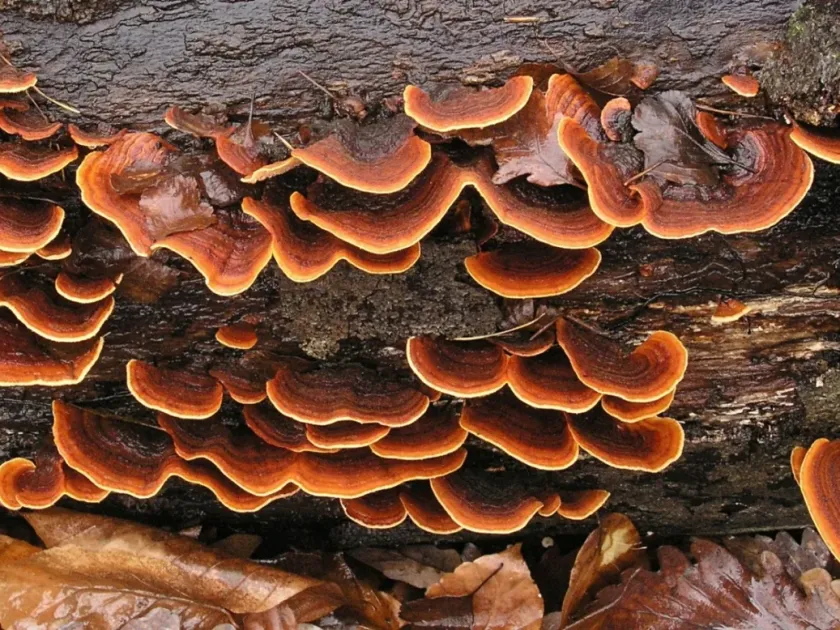
The most distinct sign of infection is the emergence of bracket-like fruiting bodies on the trunk or large branches. These structures often display concentric zones of different colors and textures, providing a key identification feature for this species.
Internally, the wood undergoes a transformation typical of white rot. It becomes bleached, fibrous, and significantly lighter in weight. As the decay progresses, the structural integrity of the affected tree is severely compromised.
Symptoms in the canopy include premature wilting, yellowing of leaves, and the progressive death of individual limbs. These signs occur because the fungus disrupts the xylem and phloem, cutting off the supply of water and nutrients to the foliage.
External bark indicators include cracks, sunken areas, or fissures where the fungal mycelium emerges. Often, the presence of the fungus is accompanied by a musty, wood-decay odor emanating from these openings in the bark.
A hollow sound when tapping the trunk is a critical diagnostic sign of internal decay. If detected, it usually suggests that the fungus has successfully colonized the heartwood, posing a significant risk of branch or trunk failure during heavy winds.
Pathogen
Stereum insignitum is a basidiomycetous fungus belonging to the Stereaceae family, primarily known for causing white rot in woody plants. While it often acts as a saprotroph on dead wood, it can transition into a parasite on stressed or wounded trees.
The pathogen propagates via airborne basidiospores that colonize host trees through physical wounds, such as pruning cuts, frost cracks, or mechanical damage. Once inside, the fungal mycelium spreads through the woody tissues, slowly degrading lignin and cellulose.
This fungus is biologically specialized to break down complex wood compounds, which makes it a persistent inhabitant of forest and garden ecosystems. It thrives in locations where dead woody debris is left to accumulate.
The life cycle of Stereum insignitum is characterized by the formation of leathery, resupinate to effused-reflexed fruiting bodies. These structures appear on the bark surface once the interior decay has reached an advanced stage, releasing thousands of spores.
The fungus is highly resilient, capable of persisting in logs, stumps, and fallen branches for many years. This long-term survival strategy makes it a continuous threat to nearby healthy vegetation if proper sanitation practices are neglected.
Conditions for development
High humidity and moisture are the primary drivers of Stereum insignitum development. Fungal spores require moist conditions to germinate, making rainy seasons and poorly ventilated, dense garden areas ideal for the rapid spread of the pathogen.
Physical injuries to the tree provide essential entry points. Incorrect pruning techniques that leave large, untreated wounds significantly increase the likelihood of infection, as these areas serve as open gateways for fungal spores.
Trees experiencing physiological stress due to drought, nutritional deficiencies, or pest infestations are highly susceptible. A weakened immune system prevents the tree from forming effective callus tissues around wounds, leaving the wood exposed.
Moderate temperatures ranging from 15 to 25 degrees Celsius facilitate optimal fungal growth. However, the fungus is known for its durability and can remain active during cooler autumn months, continuously expanding its internal reach.
The presence of nearby decaying wood, such as dead stumps or untreated logging residue, acts as a primary source of inoculum. This infection source allows the fungus to maintain a steady presence in the orchard environment year-round.
Why it matters
The primary danger posed by Stereum insignitum is the significant reduction in the mechanical strength of the wood. The white rot decay leads to brittle wood, which can cause sudden structural failure and the collapse of large limbs or whole trees.
The pathogen causes severe decline in tree vitality, resulting in stunted growth and poor foliage development. This suppresses the tree's physiological functions, leading to long-term degradation of its overall health and lifespan.
In commercial orchards, Stereum insignitum leads to substantial economic losses through decreased fruit production. Affected trees often exhibit reduced yield, smaller fruit sizes, and inferior quality, making them unproductive assets.
Once the infection is visible, it is often too late to save the affected specimen. The deep colonization of the heartwood renders the damage irreversible, necessitating the removal of the tree to protect the rest of the planting.
Additionally, the fungus poses a risk to neighboring healthy trees. As a persistent source of spores, an infected individual can trigger a chain reaction of infections across the site, requiring extensive labor and costs to manage.
Protection
Effective management begins with rigorous orchard sanitation. All dead or infected trees, as well as stumps, should be removed and destroyed by burning to eliminate the primary reservoirs of fungal spores from the environment.
Pruning practices must prioritize tree health. All cuts must be clean, and large wounds should be immediately sealed with professional pruning sealers or fungicidal paints to create a protective barrier against fungal invasion.
Tool hygiene is crucial to prevent the spread of the pathogen. Pruning equipment should be regularly disinfected with alcohol or copper-based solutions, especially when moving between different trees or orchard sections.
Maintaining tree vigor through proper fertilization and irrigation is essential. A well-nourished tree develops a stronger defense mechanism, helping it to rapidly compartmentalize wounds and resist the establishment of fungal pathogens.
Regular inspections are vital for early detection. If the infection is localized, surgical removal of the decayed wood until healthy tissue is reached, followed by proper antiseptic treatment, may occasionally salvage an infected tree.
Discussion
No discussions yet — be the first.