
Stereum hiugense
Stereum hiugense
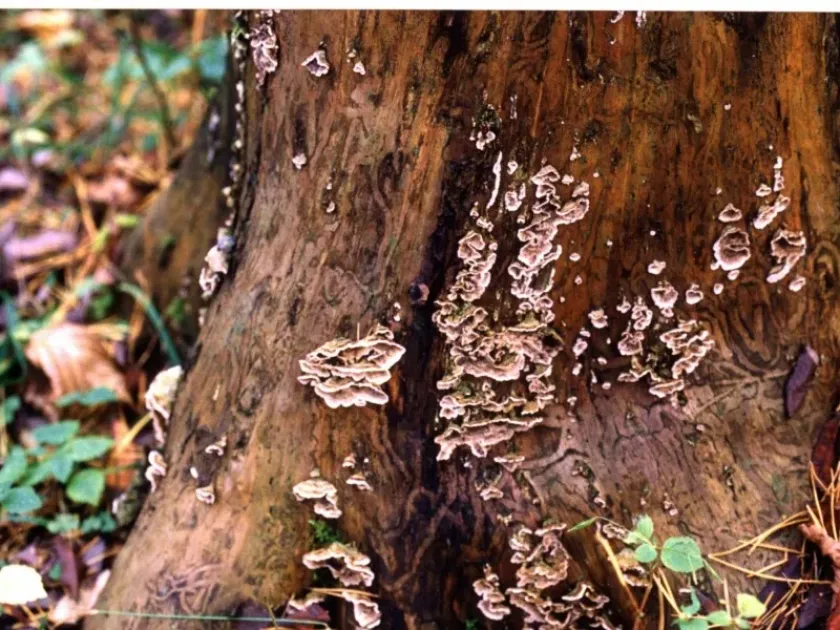
Description
Symptoms
The most visible sign of infection is the appearance of distinct, leathery, shelf-like fruiting bodies on the bark of trunks or large branches, often colored in shades of gray, tan, or brown.
The bark surrounding the affected area often shows signs of drying, cracking, or peeling. Beneath the bark, one may find a visible layer of white or yellowish mycelium spreading across the surface.
Internally, the wood becomes discolored and loses its structural integrity. It may appear mottled or bleached in areas where the fungus has successfully broken down the wood fibers.
The crown of the tree may exhibit symptoms such as premature yellowing of leaves and the progressive dieback of infected branches due to the impairment of vascular tissues.
Cross-sections of infected branches frequently reveal necrotic zones often delineated by dark, irregular lines, which represent the tree's attempt to compartmentalize the infection.
Pathogen
The causal agent of this disease is the wood-decaying fungus Stereum hiugense, which belongs to the phylum Basidiomycota. It primarily acts as a saprotroph but can behave as a facultative parasite.
The fungus penetrates tree tissues through existing wounds in the bark, such as frost cracks, sunburn lesions, or pruning scars. Once inside, the mycelium colonizes the wood, breaking down its structural components.
The pathogen produces leathery fruiting bodies on the bark surface. These bodies act as the primary source of spore production, allowing the fungus to spread across the environment via wind and rain.
The biological activity of the fungus involves the secretion of powerful enzymes that decompose lignin and cellulose, leading to a progressive and destructive rot within the tree's internal structure.
Stereum hiugense typically targets weakened deciduous trees. Its ability to infect depends heavily on the presence of entry points and the host's inability to isolate the invading mycelium effectively.
Conditions for development
High humidity and moderate temperatures are the primary environmental drivers for the development of Stereum hiugense. Prolonged wet weather facilitates spore germination and fungal growth.
Poor orchard ventilation due to dense planting or overgrown canopies creates a microclimate with high moisture retention, which is ideal for the rapid colonization of the fungus.
Mechanical injuries are crucial for the establishment of the pathogen. Wounds resulting from pruning, machinery, or pests serve as direct entry routes for the fungal spores.
Trees suffering from stress—due to poor soil nutrition, drought, or neglect—are significantly more susceptible to infection, as their natural immune mechanisms are compromised.
Spore dispersal occurs throughout the vegetative season, with peak activity during spring and autumn when moisture levels in the environment are most conducive to fungal success.
Why it matters
The primary threat is the loss of the tree's structural strength, which can lead to the breakage of branches or the failure of the entire trunk during high winds or heavy snow loads.
As the rot progresses internally, it disrupts the flow of water and nutrients, leading to decreased yields, stunted growth, and the eventual death of the affected tree.
The infection reduces the longevity of the tree, necessitating premature removal and replacement, which causes significant economic losses in fruit-bearing orchards.
Young trees are particularly vulnerable, as their smaller trunks allow the fungus to reach the core quickly, potentially girdling the tree and causing rapid collapse.
The presence of this fungus in a garden also increases the risk of cross-contamination to neighboring trees if proper sanitation measures are not strictly followed.
Protection
The most effective strategy is a combination of good sanitation and cultural management. Regular inspections are necessary to detect the earliest signs of fruiting bodies.
- Always disinfect pruning tools between trees to prevent the mechanical transmission of fungal spores.
- Treat all pruning cuts and accidental wounds with antiseptic wound dressings or copper-based pastes.
- Promptly remove and dispose of infected wood and visible fruiting bodies to reduce the inoculum pressure in the garden.
- Ensure adequate tree spacing and proper pruning to promote good air circulation within the canopy.
While preventative fungicide applications on wounds can be beneficial, the focus should remain on maintaining tree health and minimizing physical damage to the bark.
Vigilance against bark-boring insects is also essential, as these pests often create the initial injuries that allow Stereum hiugense to invade the healthy wood tissues.
Discussion
No discussions yet — be the first.