
Stereum hirsutum
Stereum hirsutum
Description
Symptoms
The most reliable sign of an infection is the emergence of dense, leathery fruiting bodies on the bark of trunks, stumps, or major branches. These structures can persist for months, even through winter, acting as a continuous source of spores.
The affected wood exhibits a characteristic bleached appearance, turning light yellow or white. When chipped or cut, the wood appears softened and fibrous, demonstrating that the internal structure has been thoroughly compromised by the fungal activity.
Visually, the tree may show signs of decline, such as premature leaf drop, dieback of the canopy, and the slow wilting of individual skeletal branches. The bark in colonized areas often dies, becoming cracked and dry.
As the disease progresses, the tree loses its structural strength. This poses a significant safety risk, as the affected trunk or major limbs may collapse suddenly during high winds, potentially causing damage to property or surrounding plants.
Fungal growth is frequently observed near old pruning wounds that were not properly sealed. Around these neglected sites, the fungus develops in concentric patterns, slowly expanding into the heartwood and sapwood of the tree.
Pathogen
The causal agent of this disease is the basidiomycete fungus Stereum hirsutum, commonly known as the false turkey-tail. It primarily acts as a saprotroph, but can become a necrotrophic parasite on weakened or damaged broadleaved trees.
The fungal mycelium enters the tree’s wood tissue through cracks in the bark, frost injuries, pruning cuts, or broken branches. As it grows, it breaks down lignin and cellulose, leading to profound structural degradation of the internal wood.
The resulting disease is classified as white rot. The fungus secretes specific enzymes that degrade the cell walls of the wood, causing it to become pale, fibrous, and eventually brittle, significantly compromising the structural integrity of the plant.
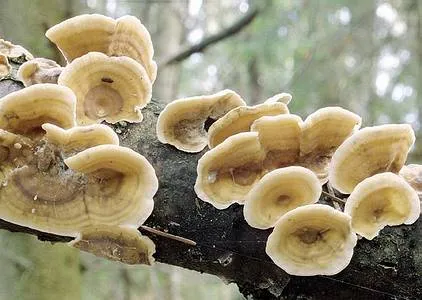
The fruiting bodies of Stereum hirsutum are distinctive: they are tough, leathery, and shelf-like, often growing in clusters. The upper surface is covered with fine, stiff hairs, which are greyish or yellowish, while the fertile undersurface is smooth and brightly colored.
Spore dissemination occurs primarily via basidiospores, which are carried by wind or rain splashes. When these spores land on exposed woody tissues, they germinate rapidly if moisture levels are sufficient, establishing new infection sites.
Conditions for development
The development of Stereum hirsutum is highly dependent on humidity and the health status of the host. The fungus thrives in humid environments, making prolonged rainy seasons the primary periods for its rapid spread and colonization.
Weakened trees are the primary targets for this pathogen. Factors such as nutrient deficiency, prolonged drought stress, insect infestations, or mechanical bark injuries create entry points for the fungal mycelium.
Temperature also plays a vital role, as moderate temperatures combined with high humidity create an ideal environment for spore germination. The fruiting bodies are remarkably resilient and can endure significant temperature fluctuations.
Poor orchard or garden management practices exacerbate the issue. Overcrowded plantings, insufficient canopy airflow, and the accumulation of woody debris create a conducive environment for spore build-up and disease transmission.
Retaining decaying stumps or fallen logs infested with the fungus in the garden sharply increases the disease pressure on surrounding healthy trees, making effective management nearly impossible without thorough site sanitation.
Why it matters
The primary damage caused by this fungus is the destruction of the wood's structural integrity. The reduction in mechanical strength often leads to the premature death of the tree or its physical collapse, necessitating removal.
In fruit-bearing species like apple or pear, infection leads to a significant decrease in yield and fruit quality. The tree diverts its metabolic resources to combat the infection, leading to stunted growth and overall physiological exhaustion.
If the fungus colonizes a major branch, the decay can spread into the main trunk, rendering the tree unsalvageable. While the disease may progress gradually, its impact on the long-term health of the garden is devastating.
Economic losses include not only the loss of harvest but also the costs associated with the removal of hazardous trees and the necessary site restoration. In forestry, it reduces the quality and marketability of the timber.
The disease can be spread through contaminated pruning equipment if tools are not disinfected between uses. This turns the pathogen into a significant threat that can traverse an entire orchard if standard hygiene protocols are ignored.
Protection
Rigorous sanitation is the cornerstone of control. It is essential to promptly identify, prune out, and destroy (burn) all infected limbs and dead woody material where fungal fruiting bodies have appeared.
Any mechanical injury to the bark or pruning cuts must be immediately sealed. Use high-quality pruning wound sealers, oil-based paints, or specialized antiseptic pastes to protect exposed wood from spore entry.
Maintaining strong tree vigor is the best prevention. Consistent fertilization, adequate irrigation, and effective pest management help the tree build natural defenses against fungal colonization.
- Disinfect all pruning tools with alcohol or a strong antiseptic solution between each tree to prevent cross-contamination.
- Remove and destroy old stumps that serve as reservoirs for the pathogen.
- Apply lime-based whitewash with added fungicides to tree trunks to protect the bark from physical cracking and entry by fungi.
When pruning, avoid leaving stubs; make clean, flush cuts close to the branch collar. This facilitates rapid wound healing and significantly reduces the probability of Stereum hirsutum successfully establishing itself in the tree.
Discussion
No discussions yet — be the first.