
Stereocaulon evolutum
Stereocaulon evolutum
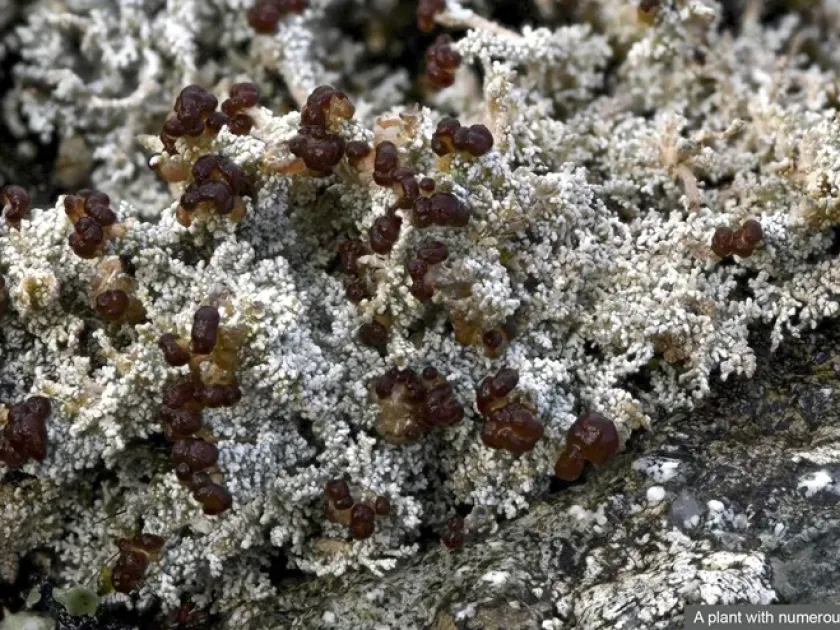
Description
Pathogen
It is crucial to clarify that Stereocaulon evolutum is not a plant disease, pathogen, or crop pest.
This organism is a lichen, which is a complex symbiotic association between a fungus (mycobiont) and an alga or cyanobacteria (photobiont).
Classified within the family Stereocaulaceae, this species exhibits a fruticose or shrub-like growth form.
Because it lacks the biological mechanisms to invade plant tissues, it does not act as a parasite on agricultural or horticultural crops.
Labeling this species as a disease is an agronomic misconception, as it is completely harmless to the host plants it inhabits.
Conditions for development
This lichen species thrives in humid and cool environments, commonly found in mountainous regions or areas with high atmospheric moisture.
It acts as a sensitive bioindicator, requiring pristine air quality to survive, as it is highly vulnerable to sulfur dioxide pollution.
Growth is exceptionally slow, and the organism requires stable conditions on rocky substrates or mature bark over many years.
Reproduction is primarily vegetative, relying on the dispersal of thallus fragments that colonize new areas when environmental conditions are suitable.
It prefers well-lit but sheltered microclimates that maintain a consistent humidity levels throughout the seasons.
Why it matters
Stereocaulon evolutum does not cause any harm to crops, timber trees, or ornamental garden plants.
It functions strictly as an epiphyte, using the plant surface merely as a physical substrate for anchoring without extracting water or nutrients.
There is no evidence that this lichen blocks gas exchange in trees or impedes their growth, contrary to various gardening myths.
The appearance of lichens on trees is typically associated with older, slow-growing plants rather than being the cause of any underlying pathology.
No protective measures or control methods are needed, as the presence of this lichen is ecologically neutral and sometimes beneficial for local biodiversity.
Discussion
No discussions yet — be the first.