
Stereum fungi
Stereaceae
Description
Symptoms
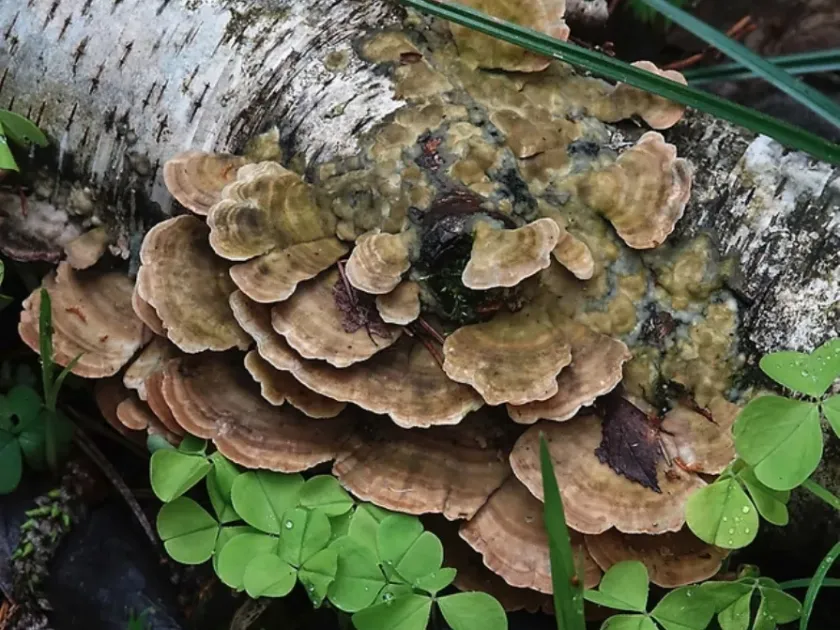
The most visible symptom is the development of leathery, bracket-shaped, or crust-like fruiting bodies on the bark of trunks and branches.
These fruiting bodies are often hairy, range in color from yellowish to brownish, and appear in overlapping clusters along the bark surface.
Internally, the wood becomes brittle and bleached, often showing distinct black lines or zones where the fungus has actively decayed the structure.
Affected trees exhibit crown dieback, thinning foliage, and cracks in the bark that serve as entry points for further secondary infections.
In advanced stages, the structural integrity of the wood is so compromised that branches can snap under minimal wind pressure or environmental stress.
Pathogen
The disease is caused by fungi belonging to the family Stereaceae, with Stereum hirsutum being the most common representative affecting various woody species.
These fungi are primarily saprotrophic, breaking down dead wood, but can become facultative parasites on trees weakened by injury, frost, or improper pruning.
The mycelium colonizes the xylem and phloem of the host plant, secreting specialized enzymes that decompose lignin and cellulose, resulting in white rot.
The pathogen reproduces via basidiospores that are dispersed by wind and rain, allowing the fungus to infect new hosts through open wounds.
Biological persistence is achieved through the formation of resilient fungal mats and the ability to survive in decaying timber for many years.
Conditions for development
High humidity and moisture levels are essential for the germination of spores and the successful establishment of the fungus in wood tissues.
Temperatures ranging between +15°C and +25°C provide the optimal environment for rapid mycelial growth and fruit body maturation.
Mechanical damage to the bark, such as pruning cuts not treated with protective sealant, represents the primary entry vector for the infection.
Poorly managed sites with inadequate drainage and high planting density are particularly susceptible to the spread of fungal outbreaks.
Stressed trees, particularly those suffering from drought or nutrient deficiency, lack the defense mechanisms required to wall off fungal advancement.
Why it matters
The primary damage caused by Stereum fungi is the irreversible degradation of the wood structure, which destabilizes the tree's architecture.
Reduced water and nutrient transport leads to stunted growth, loss of foliage, and eventually the death of infected limbs or the entire tree.
From an economic standpoint, the timber loses its value, and fruit trees become unproductive, requiring early removal and replacement.
In urban landscapes, the risk of falling branches or whole trees poses a significant safety hazard to infrastructure and pedestrians.
The disease also increases the vulnerability of the tree to secondary pests and pathogens that thrive in decaying wood environments.
Protection
Sanitation is the most effective control strategy, requiring the removal and destruction of all infected wood and dead branches from the property.
All pruning wounds should be covered with appropriate wound dressings to prevent the entry of airborne spores during the growing season.
Strict hygiene protocols, including the sterilization of pruning tools with alcohol or copper-based solutions, must be followed after every cut.
Maintaining tree vigor through proper irrigation, fertilization, and site management helps trees develop natural defenses against decay fungi.
- regular inspection of bark for fruiting bodies;
- prompt removal of stumps and debris;
- avoiding unnecessary wounding of stems;
- using fungicide sprays on susceptible nursery stock.
Discussion
No discussions yet — be the first.