
Steccherinum fimbriatum
Steccherinum fimbriatum
Description
Symptoms
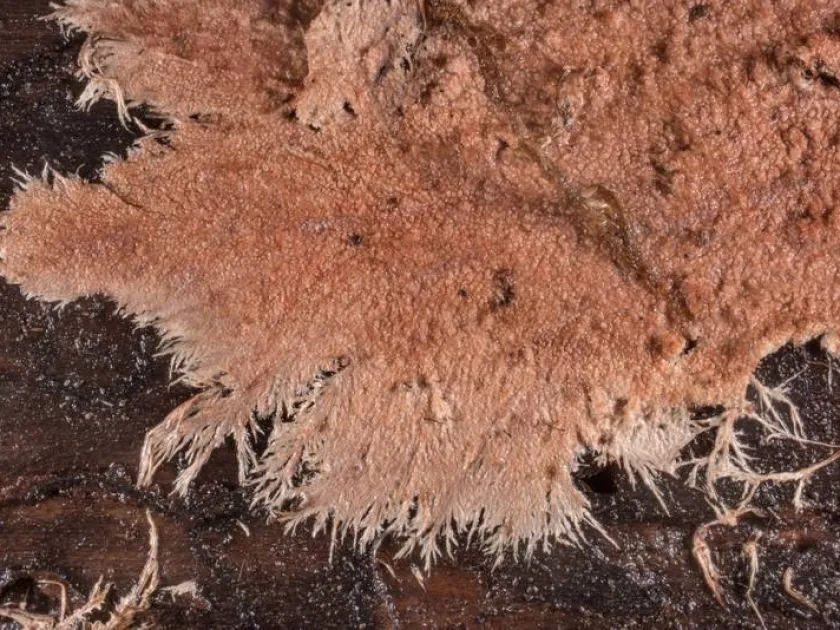
Steccherinum fimbriatum is characterized by the formation of resupinate, white to cream-colored fruit bodies that grow directly on wood. These bodies often exhibit a distinctive fringed or fimbriate margin.
The hymenial surface is covered with numerous small spines, which are diagnostic for this specific type of fungi. These spines provide a unique texture compared to other shelf fungi.
Infected wood undergoes structural changes, losing its density and strength. Affected areas often appear decayed, brittle, or discolored, which indicates the presence of fungal hyphae.
The fungus is typically observed on decaying stumps, dead branches, or the lower parts of tree trunks where moisture levels are consistently high.
Over time, the fruit bodies may merge together, covering larger areas of the bark with a crust-like structure that is firm to the touch.
Pathogen
The causative agent is the basidiomycete fungus Steccherinum fimbriatum, belonging to the family Steccherinaceae. It is a wood-rotting species that primarily functions as a saprotroph.
This fungus causes white rot, a process in which it effectively breaks down lignin and cellulose components of the wood structure, leading to a significant loss of structural integrity.
The life cycle involves the production of basidiospores that are dispersed by wind. These spores germinate on fresh wounds or unprotected wood surfaces.
The mycelium colonizes the wood substrate, secreting enzymes that degrade complex polymers. This allows the fungus to obtain nutrients from the wood tissue effectively.
While often associated with deadwood, the fungus can behave as an opportunistic pathogen on weakened trees, accelerating their decline in garden or forest environments.
Conditions for development
High humidity and poor ventilation are the primary drivers for the development of this fungus. It thrives in shaded areas where moisture is trapped against the wood surface.
The fungus is well-adapted to temperate climates. Optimal growth occurs during warm and humid seasons when spores can easily germinate and colonize the substrate.
Mechanical damage to tree bark, such as frost cracks or improper pruning wounds, provides necessary entry points for the fungus to establish its colony.
Poor orchard hygiene, characterized by the accumulation of woody debris and dead branches on the ground, increases the overall spore pressure in the environment.
Reduced vigor of host trees, caused by drought, poor soil quality, or pest attacks, makes the woody tissue more susceptible to initial fungal colonization.
Why it matters
The primary concern is the internal decay of the wood. As the fungus breaks down the structure, the tree becomes prone to limb breakage and windthrow.
Infected fruit trees experience reduced nutrient transport, leading to a decline in canopy health, reduced yield, and, eventually, premature tree death.
The wood loses its commercial and functional value, as it becomes soft and brittle, which may pose a risk to nearby buildings or structures if the tree is large.
The pathogen can persist in the environment for many years, acting as a source of infection for other nearby vulnerable woody plants.
Once the internal decay reaches a critical point, the tree can no longer support its own weight, making it a safety hazard in home gardens and landscapes.
Protection
Proactive orchard hygiene is essential. Remove dead branches and stumps to prevent the accumulation of potential substrates for the fungus.
Always treat pruning wounds with appropriate fungicides or wound paint to create a physical barrier against spore infiltration and colonization.
Strengthen host tree health through balanced fertilization and proper irrigation to enable the tree to build stronger defenses against wood-rotting pathogens.
If fruit bodies are visible on a tree trunk, excise the area down to healthy wood if possible, and apply a high-quality wood preservative or fungicidal treatment.
- Sanitize pruning tools after working on each tree.
- Monitor trees for early signs of decay or bark necrosis.
- Improve air circulation in the tree canopy through proper pruning practices.
Discussion
No discussions yet — be the first.