
Stagonosporopsis leaf spot of valerianella
Stagonosporopsis valerianellae
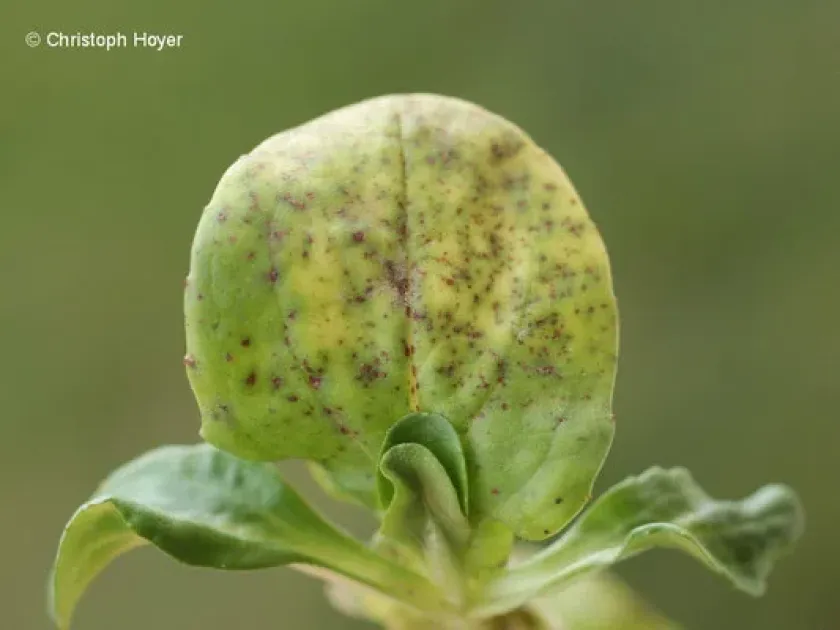
Description
Symptoms
The infection manifests primarily on the leaves of valerianella (lamb's lettuce) as small, distinct circular or irregular spots with a brownish or grayish color.
As the disease progresses, these lesions expand and merge, causing significant necrosis that leads to premature yellowing and eventual wilting of the foliage.
Tiny black fruiting bodies called pycnidia appear on the surface of the necrotic spots, serving as a distinct visual marker for the presence of the pathogen.
If the infection reaches the stalks or petioles, it creates sunken cankers that weaken the plant structure, often causing it to collapse under humid conditions.
In cases of severe infestation, the entire crop can become discolored and shriveled, rendering the harvest commercially worthless and unmarketable.
Pathogen
The disease is caused by the fungal pathogen Stagonosporopsis valerianellae, a specialized fungus that primarily targets plants within the Valerianella genus.
The fungus reproduces via conidia, which are efficiently disseminated across fields by rain splashes, wind currents, and mechanical activities like field cultivation.
It persists in the soil and on crop debris, serving as the primary inoculum source that triggers infection outbreaks in subsequent growing seasons.
The pathogen's life cycle is tightly synchronized with the host plant, allowing it to rapidly colonize young leaves during the most active growth phases.
Its high specificity to valerianella makes it a persistent challenge in areas where the crop is grown frequently without adequate crop rotation cycles.
Conditions for development
High humidity and moisture are the most critical environmental conditions for the development and spread of this fungal disease among valerianella crops.
The pathogen thrives at moderate temperatures, making it particularly active during the spring and autumn months when conditions are cool and damp.
Dense planting patterns that restrict airflow create a stagnant microclimate, which significantly accelerates the germination and infection rate of the fungus.
Extended periods of leaf wetness, whether from frequent rain or poorly managed irrigation systems, provide the necessary environment for conidia to infect tissues.
Poor drainage in fields can exacerbate the problem by keeping the soil environment conducive to fungal survival and the overall weakening of the host plant.
Why it matters
The primary economic harm is the degradation of the product's quality, as the leafy greens become visually unappealing due to the necrotic spotting.
Infested plants exhibit reduced photosynthetic capacity, which leads to stunted growth and lower biomass yield for the producer.
Produce infected with the fungus has a severely limited shelf life and is highly prone to secondary rot during post-harvest handling and transport.
Early-stage seedling infection can result in significant stand loss, forcing farmers to bear the costs of reseeding or abandoning the affected plots.
Market rejection of cosmetically damaged salad greens leads to substantial revenue losses for commercial agriculture and greenhouse operations.
Protection
Implementing a strict crop rotation schedule, avoiding valerianella in the same soil for at least 3-4 years, is the most effective cultural practice.
Thorough sanitation, including the complete removal and destruction of crop residues after harvest, helps to break the pathogen's infection cycle.
Using high-quality, fungicide-treated seeds ensures that plants begin their growth cycle with a level of protection against seed-borne inoculum.
Applying appropriate fungicides during high-risk periods can suppress disease development and prevent the establishment of widespread field infection.
- Maintaining proper row spacing to optimize airflow and reduce leaf moisture.
- Avoiding overhead irrigation to keep foliage dry.
- Regular field scouting to identify and manage the disease in its early stages.
Discussion
No discussions yet — be the first.