
Stagonosporosis
Stagonosporopsis oculi-hominis
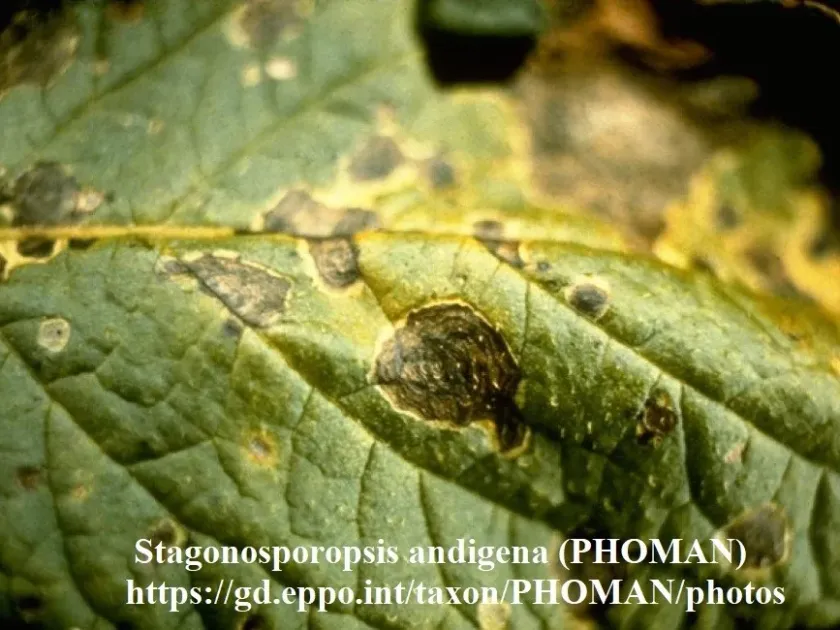
Description
Symptoms
The primary symptom of infection is the appearance of small, round, or angular spots on the leaves. These spots gradually turn light brown to dark brown and are often encircled by a distinct, darker-colored margin.
Under high-humidity conditions, one can observe small black dots appearing in the center of these lesions. These are the pycnidia, which serve as a clear diagnostic indicator of the presence of the pathogen.
If left unchecked, these lesions merge, covering vast areas of the leaf blade. This leads to premature yellowing, withering, and eventually leaf shedding, which significantly reduces the plant's photosynthetic capacity.
Stem infections manifest as elongated brown streaks or lesions. These structures can obstruct the vascular system, preventing the effective transport of water and essential nutrients from the roots to the rest of the plant.
Severe infestation results in stunted growth and overall deformation of plant organs, significantly hindering the development of the crop compared to healthy specimens in the same field.
Pathogen
The disease is caused by the microscopic fungus Stagonosporopsis oculi-hominis, which belongs to the deuteromycete group. This pathogen targets the vegetative parts of various crops, triggering significant necrotic processes in plant tissues.
The lifecycle involves the formation of pycnidia—small fruiting bodies that act as the primary storage and dispersal units for spores. These spores are responsible for initiating infections in agricultural fields.
Stagonosporopsis oculi-hominis demonstrates high adaptability, allowing it to survive for extended periods within the soil or on decaying plant debris, ready to infect new hosts when conditions align.
The infection mechanism involves the secretion of specialized enzymes that degrade host cell walls. This enzymatic activity causes the formation of distinct lesions, progressively destroying the structural integrity of the plant.
The pathogen spreads efficiently through wind currents, rain splashes, and physical contact, making it difficult to contain once an outbreak has been established in a crop field.
Conditions for development
High humidity (exceeding 80%) coupled with moderate temperatures ranging from 18 to 25 degrees Celsius represents the ideal environment for the development and spread of Stagonosporosis.
Frequent rainfall or persistent fog creates a layer of surface moisture on leaves, providing the necessary medium for spores to germinate and penetrate the plant epidermis efficiently.
Densely planted crops that lack adequate airflow create a stagnant microclimate characterized by high moisture levels in the canopy, making them prime targets for rapid infection spread.
Poor crop rotation practices, where host species are planted in succession, lead to a massive accumulation of inoculum in the soil, increasing the probability of severe annual outbreaks.
Imbalanced mineral nutrition, particularly excessive nitrogen fertilization, results in overly succulent and delicate tissue, which is much more susceptible to the intrusion of fungal hyphae.
Why it matters
The economic harm caused by Stagonosporosis is largely driven by a substantial reduction in overall yield, resulting from the loss of functional leaf area and inhibited plant metabolic processes.
Early-stage infection often leads to premature leaf loss, causing the plant to exhaust its resources too early and struggle to fill grain or develop fruit, thus reducing the market value of the produce.
Seeds harvested from heavily infected plants are often shriveled or exhibit low germination rates, which directly threatens the quality and success of subsequent planting seasons.
Infection necessitates extra expenditures on fungicide treatments during the growing season, which increases the total cost of production and shrinks profit margins for farmers.
Handling diseased crops adds further complexity and cost during post-harvest sorting, as contaminated residues must be carefully managed to prevent recurrence in following years.
Protection
The cornerstone of effective control is a strict adherence to crop rotation, allowing for a break in the host cycle and a natural decline in the level of soil-borne inoculum over several years.
Thorough mechanical incorporation of plant residues into the soil immediately after harvest accelerates decomposition, effectively killing the pycnidia that would otherwise survive the winter.
The selection and use of resistant or tolerant cultivars constitute the most reliable and cost-effective management strategy, drastically reducing the reliance on chemical inputs.
Timely application of systemic or contact fungicides, triggered by the first visible symptoms, is vital to limiting the pathogen's spread and protecting the potential yield of the crop.
- Utilizing clean, certified, and treated seeds to prevent initial infection from the source.
- Active management and removal of weeds that may serve as alternative hosts or infection reservoirs.
- Optimization of planting density to ensure better air circulation and lower canopy humidity levels.
Discussion
No discussions yet — be the first.