
Lupine anthracnose
Stagonosporopsis lupini
Description
Symptoms
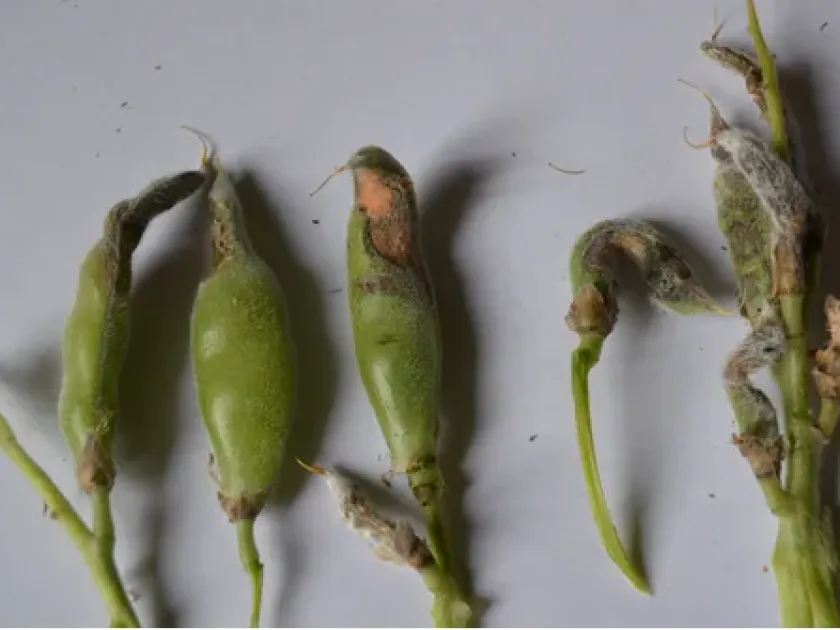
The earliest signs of infection on seedlings include stem bending or twisting, often accompanied by dark, sunken lesions. These necrotic areas can eventually cause the stem to snap.
Leaf symptoms appear as brown or gray spots with distinct dark margins. In high-humidity conditions, these lesions may exhibit a salmon-colored or pinkish mass of fungal spores.
As the plant matures, the infection spreads to the pods. Sunken, dark lesions develop on the pod surface, causing deformation and preventing the normal development of seeds inside.
Severe infection often results in the wilting and premature death of the entire plant. When fields are heavily infested, large patches of dying lupine become clearly visible.
- Twisted stems and stem breakage
- Sunken dark lesions on pods
- Brown necrotic leaf spots
- Salmon-colored sporulation on lesions
Pathogen
The causal agent of lupine anthracnose is the fungus Stagonosporopsis lupini (formerly Colletotrichum gloeosporioides). This pathogen specifically targets lupine species, causing severe tissue necrosis.
The fungus is seed-borne and can survive in soil, crop residues, and infected weeds for several years. Seed transmission is considered the primary pathway for introducing the disease into new fields.
During the growing season, the fungus produces conidia, which are asexual spores spread by wind and splashing rain. These spores initiate secondary infection cycles on healthy plant tissues.
The pathogen invades the host through wounds or natural openings. Once inside, the mycelium colonizes the vascular system and parenchyma, leading to cell death and the characteristic lesion formation.
As a deuteromycete, the fungus relies on these survival strategies and environmental dispersal to maintain its population across multiple growing seasons.
Conditions for development
Warm and moist weather conditions are ideal for the development of lupine anthracnose. Temperatures between 20°C and 25°C promote rapid fungal growth and spore production.
Rainy periods, heavy dews, and high air humidity act as catalysts for the spread of spores. Moisture is essential for the germination of conidia on the plant surface.
High plant density and poor canopy ventilation increase the risk of disease. These conditions keep the foliage wet for longer periods, facilitating fungal penetration into plant tissues.
Poor soil management or the presence of infected crop debris from previous years provides a reservoir for the pathogen to re-infect the new crop in the spring.
Human activity, such as mechanical cultivation during wet weather, can unintentionally spread the spores from infested areas to healthy parts of the field.
Why it matters
Lupine anthracnose is a major threat to lupine production, with potential yield losses ranging from moderate to total crop destruction if not managed properly.
The disease directly affects seed quality, as infected pods produce shriveled, contaminated seeds. Such seeds often have low germination rates or serve as the primary source of future outbreaks.
By damaging stems and pods, the pathogen limits the plant's ability to transport nutrients, leading to poor pod fill and overall stunted development of the crop.
The economic impact extends beyond yield loss to the added costs of applying fungicides and the potential need to destroy heavily infested batches of harvested seed.
Because the disease can spread rapidly, it poses a significant biosecurity risk to regions where lupine is a crucial pulse crop, necessitating strict monitoring.
Protection
The primary control measure is the use of disease-free, certified seeds. Testing seed lots for the presence of Stagonosporopsis lupini before planting is essential.
Implementing a rigorous crop rotation cycle (at least 4 years) is critical to reduce the population of the pathogen in the soil and break the fungal infection cycle.
Sanitation practices, such as burying infected crop residues through deep plowing and controlling weed hosts, significantly lower the primary inoculum levels.
Chemical control involving the application of systemic fungicides is necessary if symptoms appear. Timely treatment is the key to preventing a widespread field epidemic.
Selecting and planting genetically resistant varieties is the most sustainable and effective long-term strategy for managing lupine anthracnose in commercial farming.
Discussion
No discussions yet — be the first.