
Stagonosporopsis inoxydabilis
Stagonosporopsis inoxydabilis
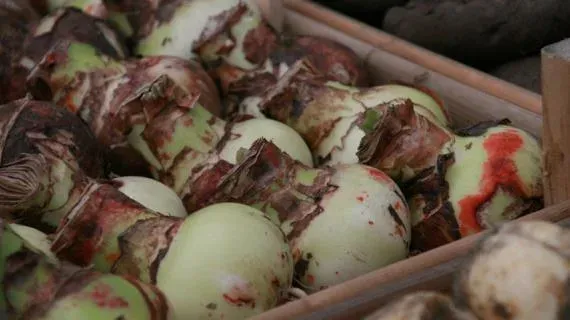
Description
Symptoms
Initial symptoms appear as small chlorotic or necrotic spots of irregular shape on the leaves. Over time, the spots expand, taking on a brown or reddish-brown hue with a characteristic border.
When stems are affected, depressed lesions form, which may eventually encircle the plant, hindering the flow of nutrients. This frequently leads to premature wilting and the total death of the plant.
Under conditions of high humidity, pycnidia—small black dot-like fruiting bodies of the fungus—form on the surface of the affected areas. These serve as the primary diagnostic feature for identifying the pathogen.
Infection of the fruit results in the development of dry or wet rot starting from small spots. As the disease progresses, the fruit loses its marketability and becomes unsuitable for storage or transport.
The root system of infected plants may also suffer, showing browning, softening, and subsequent decay, which leads to a sharp decline in overall crop productivity.
Pathogen
The causal agent of this disease is the fungus Stagonosporopsis inoxydabilis. It belongs to the class of deuteromycetes and primarily affects a wide range of herbaceous plants, particularly those in the cucurbit and legume families.
The life cycle of the pathogen includes conidial spore formation phases, which ensure massive infection of new plant tissues during the growing season. The fungus is capable of surviving for long periods in plant debris located within the soil.
The pathogenic complex often interacts with other species of the same genus, which complicates differential diagnosis in field conditions without laboratory analysis. Infection occurs through stomata, mechanical wounds, or directly through the epidermis.
The fungal mycelium develops actively in the intercellular spaces of the host plant, secreting specific toxins that suppress the plant's immune response. This leads to a gradual destruction of plant tissues and disruption of physiological processes.
The biology of the pathogen allows it to adapt to various climatic conditions, making this disease a serious threat to both greenhouse operations and open-field cultivation.
Conditions for development
The development of the disease is favored by high relative humidity (above 80–85%), which is a critical factor for spore germination. Prolonged rainfall and fog significantly accelerate the rate of disease spread.
The optimal temperature range for fungal development is between 18 and 25 degrees Celsius. Under these conditions, the incubation period is significantly shortened, potentially leading to widespread epidemics.
Poor ventilation in greenhouses creates a favorable environment for the accumulation of inoculum. Densely planted crops also trigger disease outbreaks due to the disruption of microclimate parameters.
Weakened plants experiencing nutrient deficiencies or environmental stress (drought, temperature fluctuations) become more susceptible to the penetration of Stagonosporopsis inoxydabilis.
Disease spread occurs through the movement of spores by wind, rain splashes, as well as through agricultural activities using contaminated equipment.
Why it matters
The economic impact of the disease lies in the significant reduction of both crop quality and yield. Leaf infection reduces the photosynthetic area, which directly impacts fruit size and total weight.
The infection causes massive premature leaf drop, which disrupts plant development and delays fruit ripening. In severe cases, the disease can lead to total crop loss within specific fields.
Infected fruit loses flavor quality and is not suitable for long-term storage. The development of secondary microflora on top of the fungal lesions leads to rapid rotting of harvested produce.
Economic losses include not only direct yield reductions but also substantial costs associated with the application of expensive chemical crop protection products.
The long-term survival of the pathogen in the soil makes it impossible to grow susceptible crops in the same area for several years without strictly following a crop rotation schedule.
Protection
The primary preventive measure is strict adherence to crop rotation, excluding susceptible crops from the rotation cycle for 3–4 years. It is also necessary to destroy plant debris through deep plowing or burning.
Disinfection of greenhouses, frames, and agricultural tools after the season is an essential practice. Growers are advised to use only healthy, certified planting material.
Systemic and contact fungicides are used for disease management. Treatments should be applied preventively or upon the first appearance of disease symptoms, alternating between different chemical classes.
Agronomic measures include maintaining optimal humidity in greenhouses through regular ventilation and drip irrigation, which prevents water from reaching the aerial parts of the plants.
Growing resistant or tolerant varieties and hybrids is recommended, as this is the most environmentally sustainable way to limit the spread of the infection over large areas.
Discussion
No discussions yet — be the first.