
Stagonosporosis
Stagonosporopsis dorenboschii
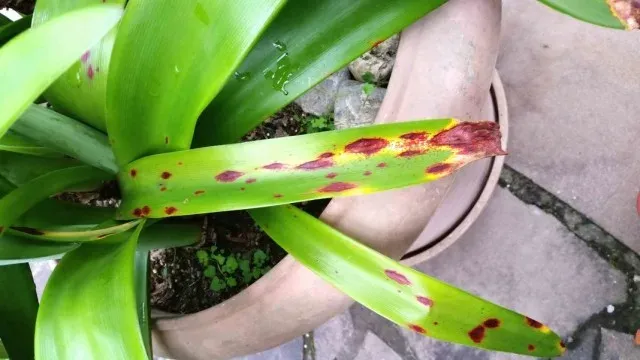
Description
Symptoms
Early symptoms include chlorotic spots on leaves that gradually evolve into brown or grey necrotic lesions. The spots are typically irregular or circular, surrounded by a distinct yellowish halo.
A definitive diagnostic feature is the appearance of small black dots known as pycnidia within the necrotic areas. These represent the fungal fruiting bodies and are visible under close inspection.
Stem infection leads to cracking and the development of sunken lesions or cankers. This physical damage interrupts the plant's vascular system, causing stunted growth or total wilting.
Root system involvement manifests as a dark brown decay, which weakens the plant's anchoring and nutrient absorption capabilities. Severely affected plants often succumb to lodging.
Under high humidity, a greyish spore mass or fungal growth may appear on the surface of the lesions. This facilitates rapid secondary infection cycles throughout the crop canopy.
Pathogen
The disease is caused by the fungus Stagonosporopsis dorenboschii, an ascomycete pathogen known for affecting various plant species. Historically linked to the Didymella complex, it is a significant threat in agricultural production.
The pathogen functions as a facultative parasite, capable of surviving for long periods in crop debris and soil via mycelium or pycnidia. It relies on asexual spore production to propagate across fields.
Life cycle dynamics are highly dependent on seasonal changes. The fungus overwinters in infected tissue and resumes activity when environmental conditions become suitable for spore formation.
The fungus penetrates host tissues through natural openings like stomata or physical wounds. Once inside, the hyphae colonize the plant's parenchyma, causing tissue breakdown.
High genetic diversity among strains of this fungus complicates the development of resistant crop varieties. Understanding its specific life cycle is essential for any effective management program.
Conditions for development
Optimal development of Stagonosporosis occurs in environments with high relative humidity, typically exceeding 75%. Frequent rainfall and leaf wetness are critical factors that promote spore germination.
The ideal temperature range for the pathogen's activity is between 18°C and 25°C. Within this range, the incubation period is significantly reduced, accelerating the disease spread.
High planting density contributes to the buildup of humidity within the crop canopy, making it an ideal environment for the fungus to thrive. Lack of airflow prevents rapid drying of leaves.
Infected crop residue left on the soil surface serves as a primary reservoir for the pathogen. It can remain viable in soil for several seasons, ensuring a high initial inoculum load.
Imbalanced fertilization, particularly high nitrogen levels with low potassium, can reduce plant resistance. Such physiological imbalances make crops more susceptible to fungal penetration.
Why it matters
The primary harm caused by Stagonosporosis is the reduction of the photosynthetic surface area, leading to lower energy production. This directly impacts overall plant vigor and growth rates.
Stem damage interferes with nutrient and water transport, often causing premature senescence and shriveled grains or fruits. This significantly reduces total yield quality and quantity.
Heavy infections can lead to yield losses ranging from 30% to 50% in vulnerable crops. Affected harvest material often fails quality standards and has reduced shelf-life.
The disease-induced structural weakness leads to lodging, making mechanical harvesting difficult and causing additional field losses during the gathering process.
Long-term infestation degrades the soil's agricultural value, requiring expensive sanitation practices to return the field to productive status in subsequent years.
Protection
Effective management begins with the use of certified, disease-free seed material. Treating seeds with systemic fungicides provides crucial protection during the early establishment phase.
Crop rotation is essential for breaking the pathogen's life cycle. Rotating susceptible plants with non-host crops for at least 3–4 years helps reduce the inoculum level in the soil.
Sanitation practices, including deep plowing to bury crop residues, are effective in minimizing survival sites for the fungus. Controlling weeds is also vital as they can act as alternative hosts.
Applying preventative or curative fungicides is necessary once initial symptoms appear. Alternating active ingredients is a recommended practice to delay the development of fungicide resistance.
Optimizing plant health through balanced nutrition, especially potassium application, strengthens cell walls against invasion. Maintaining recommended planting densities also improves airflow, reducing moisture-related infection risks.
Discussion
No discussions yet — be the first.