
Stagonosporopsis blight
Stagonosporopsis dennisii
Description
Symptoms
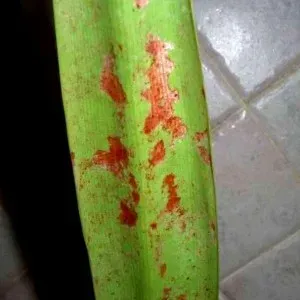
The key symptoms of the infection include the appearance of spots of various shapes, ranging from circular to elongated, on leaves and stems. The color of the spots typically ranges from light brown to grayish, usually framed by a darker margin.
In the center of the necrotic areas, small black dots known as pycnidia develop over time. These are the most reliable diagnostic markers that help distinguish this fungal disease from abiotic physiological disorders or sunscald.
Stem infections can lead to the formation of deep lesions, which result in a loss of turgor and subsequent lodging of the plants. Severe infection leads to premature yellowing and shedding of the foliage.
On generative organs, the disease manifests as spotting, which can cause fruit deformity or seed damage. Infections on fruits are often associated with post-harvest rotting if the conditions are humid.
Under high humidity, a subtle fungal growth may appear on the surface of the lesions. In dry weather, the affected tissues often crack, leading to characteristic perforations and tissue degradation.
Pathogen
The causal agent of this disease is the fungus Stagonosporopsis dennisii, which belongs to the class Ascomycetes. Historically, this pathogen was often categorized under the genus Phoma or Ascochyta, complicating its exact taxonomic identification in earlier studies.
The infection persists in infected plant debris, soil, and on contaminated seeds through pycnidia and mycelium. The pathogen demonstrates a high capacity to adapt to various agro-ecosystems and survives harsh conditions for extended periods.
The disease is characterized as a necrotic spot infection affecting primarily aerial plant parts. During its lifecycle, the fungus produces pycnidia, which serve as sources of conidial inoculum for secondary infections throughout the season.
The spread of fungal spores during the growing season is primarily facilitated by rain splash, irrigation water, and wind gusts. Primary infections often originate on the lower leaves that are in direct contact with contaminated soil.
The biology of this fungus is closely linked to the availability of weakened plant tissues. The pathogen penetrates through stomata or micro-wounds, rapidly colonizing the intercellular spaces of the host tissue.
Conditions for development
The development of Stagonosporopsis dennisii is favored by high relative humidity levels, typically exceeding 80–90%. Rainfall during critical plant growth phases is the primary driver for rapid disease spreading.
The optimal temperature range for mycelial growth and development is between +18 and +25 degrees Celsius. However, the pathogen remains viable at lower temperatures, effectively slowing down its development cycle.
Overcrowded crop stands and poor air circulation within the canopy create an ideal microclimate for epidemic-level outbreaks. Lack of airflow prevents leaf surfaces from drying quickly after dew or rainfall.
Unbalanced mineral nutrition, particularly excessive nitrogen fertilization, reduces the natural resistance of plants to fungal pathogens. Nitrogen-rich plants possess succulent tissues that are more susceptible to fungal penetration.
Violation of crop rotation schedules, specifically planting susceptible hosts in the same field before a 3–4 year interval, significantly increases the soil inoculum load and the risk of disease outbreak.
Why it matters
The harmfulness of the disease lies in the significant reduction of the functional photosynthetic leaf area. This disrupts metabolic processes and severely hinders the plant's overall growth and development.
When the vascular system of the stems is affected, the transport of water and nutrients is impaired, leading to stunted growth, reduced vigor, and a substantial decrease in total biomass yield.
The disease causes a decline in both the quantity and quality of the yield. This results in lower fruit weight, reduced marketability, and diminished shelf-life during storage and transport.
Seeds infected by the pathogen show reduced germination energy and overall viability. Plants grown from contaminated seeds often die during the seedling stage or exhibit severe physiological abnormalities.
Economic losses arise not only from direct crop yield reduction but also from the increased operational costs of applying repeated fungicide treatments during the growing season.
Protection
The foundation of disease management is the use of certified, healthy, and fungicide-treated seeds. This essential measure prevents the introduction of primary infection into the field.
Strict adherence to crop rotation is critical for suppressing pathogen populations. It is necessary to avoid growing susceptible host crops on the same field for consecutive years.
Agrotechnical methods include deep plowing to bury crop residues, which are the main reservoirs of the infection. Effective weed management is also necessary to eliminate alternative hosts for the fungus.
Fungicide application is necessary under high-risk conditions or when disease symptoms appear. The use of systemic and contact fungicides in rotation is recommended to minimize resistance risk.
- Maintaining optimal planting density to improve air circulation.
- Applying balanced potassium and phosphorus fertilization.
- Monitoring crops regularly during active growth phases.
- Prompt removal and destruction of heavily infected plants to reduce inoculum.
Discussion
No discussions yet — be the first.