
Gummy stem blight
Stagonosporopsis cucurbitacearum
Description
Symptoms
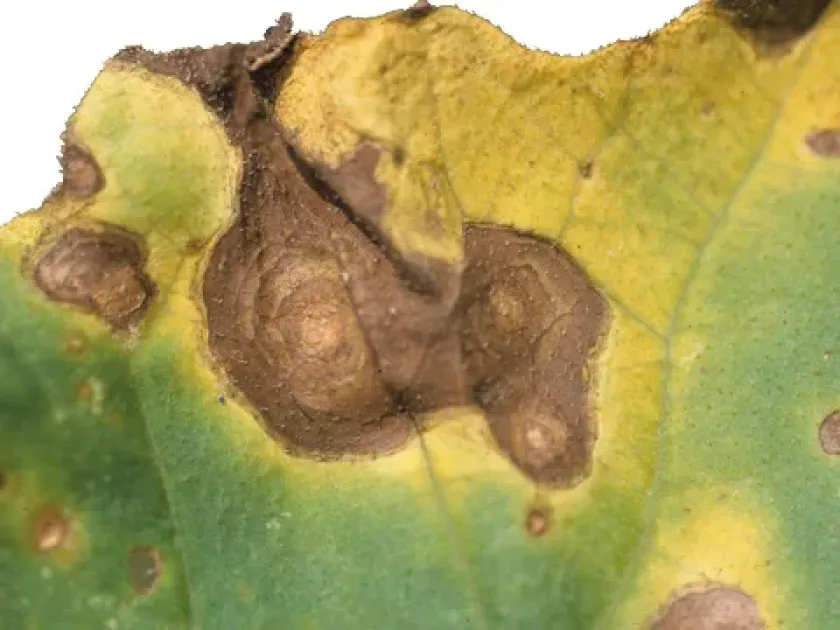
Early symptoms typically manifest as water-soaked lesions on leaves, stems, and fruits, which eventually enlarge and become brown or gray with a necrotic center.
A distinctive characteristic of the disease is the presence of numerous tiny black dots (pycnidia) embedded within the lesions, which serve as diagnostic features.
Stem infections often occur at the nodes or near the base, frequently leading to the exudation of a reddish-brown or amber gummy sap, which gives the disease its common name.
Severe infections cause leaves to yellow, curl, and wither, ultimately leading to plant death. In advanced stages, the stems may crack and crumble due to tissue decay.
Fruit symptoms include irregular, dark lesions that can lead to fruit rot, especially in storage or during transit, significantly impacting marketability.
Pathogen
The causal agent of Gummy stem blight is the fungus Stagonosporopsis cucurbitacearum (also known as Didymella bryoniae). This pathogen is highly specialized and targets members of the Cucurbitaceae family.
The fungus survives in crop debris, infested seeds, and soil for extended periods, forming overwintering structures known as pycnidia and perithecia.
The lifecycle of the pathogen is heavily dependent on moisture, which is required for the discharge and dissemination of spores from the fungal fruiting bodies.
It acts as a versatile pathogen, capable of infecting plants at any growth stage, from early seedling emergence to mature, fruit-bearing vines.
Transmission occurs through splashing water during irrigation, wind-blown spores, contaminated equipment, and even via handling by field workers.
Conditions for development
The development of the disease is favored by high relative humidity (typically over 85%) and moderate temperatures ranging between 18°C and 25°C.
Poor ventilation in greenhouses, combined with dense plant spacing, creates a stagnant microclimate that allows moisture to persist on leaf surfaces, promoting spore germination.
Stress factors, such as improper nutrient balance, excessive nitrogen, or environmental fluctuations, weaken the plant’s defenses and increase susceptibility.
Persistent leaf wetness is the most critical environmental trigger for the rapid spread and penetration of the fungus into the host plant tissue.
Failure to implement proper sanitation and rotation practices allows for the accumulation of the pathogen's inoculum in the soil, increasing future infection risks.
Why it matters
Gummy stem blight is a major economic threat to cucurbit production, capable of causing yield losses exceeding 60-70% if left unmanaged.
Infection of the crown area often leads to total plant collapse and death, requiring costly replanting efforts and significant reduction in stand density.
Beyond yield reduction, the disease severely compromises fruit quality, as affected produce is prone to post-harvest decay and is often rejected by consumers.
The disease slows vegetative growth, stunts fruit development, and reduces the photosynthetic capacity of the plants, preventing them from reaching their full genetic potential.
In greenhouse settings, the disease spreads explosively, and failure to monitor early signs can lead to the destruction of the entire crop in a matter of weeks.
Protection
Effective management relies on the use of disease-free seeds, resistant cultivars, and rigorous field sanitation protocols to minimize primary inoculum.
Cultural practices such as pruning, thinning for airflow, and implementing drip irrigation significantly reduce the moisture required for fungal development.
Immediate removal and destruction of infected plant material are crucial to slow the spread of the disease within the planting area.
Fungicide applications, specifically those targeting the ascomycete group, should be implemented preventatively or upon the first appearance of symptoms.
- Maintain a crop rotation cycle of at least 3-4 years to reduce soil-borne pathogen load.
- Disinfect greenhouse structures, tools, and equipment thoroughly between seasons.
- Balance fertilizer applications to avoid overly succulent growth, which is more susceptible to fungal entry.
Discussion
No discussions yet — be the first.