
Chrysanthemum ascochyta blight
Stagonosporopsis chrysanthemi
Description
Symptoms
The disease first appears as small brown spots on leaves, which gradually enlarge and coalesce. These spots often develop concentric rings, indicative of pathogen activity.
Stem infection leads to dark lesions that can cause the stem to collapse, effectively girdling the plant and cutting off nutrient transport, leading to wilting.
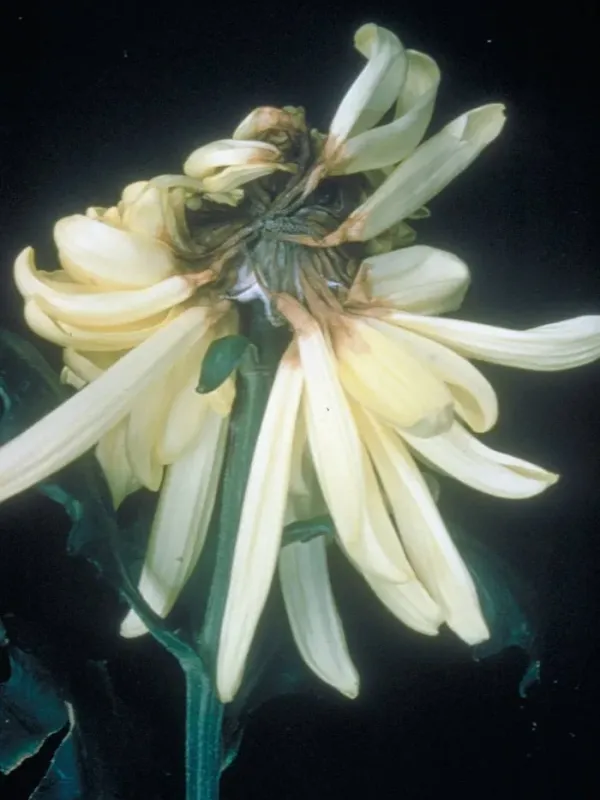
Flowers are highly susceptible, showing symptoms of petal browning, drying, and failure to open fully. The heads may droop and appear distorted.
Small, dark-colored pycnidia (fruiting bodies) become visible on the surface of necrotic tissue under high humidity conditions, often appearing as tiny black specks.
Root system colonization causes the plant to lose turgor pressure quickly, leading to yellowing of foliage and eventually death if left unchecked.
Pathogen
The causal agent of this disease is the fungus Stagonosporopsis chrysanthemi (synonyms include Ascochyta chrysanthemi and Phoma chrysanthemicola). It is a persistent pathogen within the Phoma family.
The fungus survives in plant debris, soil, and greenhouse structures, remaining viable as pycnidia or mycelium during unfavorable conditions. It thrives as a saprophyte on decaying matter.
The pathogen infects chrysanthemum tissues by producing spores that travel through water droplets, splashing onto healthy parts of the plant during irrigation or rain events.
Once inside the host, the mycelium invades the plant cells, releasing enzymes that degrade plant tissue, which results in the characteristic browning and tissue decay.
Systemic movement within the plant allows the fungus to move from leaves to stems and flowers, potentially infecting the entire vascular structure of the chrysanthemum.
Conditions for development
High relative humidity (above 80%) is the most critical factor for the rapid development and sporulation of the fungus within the greenhouse environment.
Optimal temperatures for infection range from +18 to +24 degrees Celsius, facilitating the germination of spores on wet leaf surfaces.
Dense planting patterns reduce air circulation, trapping moisture and creating a prime incubator for the pathogen to spread from one plant to another.
Frequent overhead irrigation is a primary driver of the spread, as splashing water carries spores from infected debris onto healthy plant tissues.
Poor sanitation, such as failing to remove dead leaves or contaminated soil, ensures that the inoculum remains present for the next crop cycle.
Why it matters
The blight causes significant yield losses for floriculture, rendering cut flowers unsalable due to discolored and deformed petals.
In nursery settings, it can lead to total crop failure, necessitating the disposal of large batches of young plants and increasing production costs.
The disease reduces the overall health and vigor of chrysanthemums, making them more susceptible to secondary pathogens and pests.
High remediation costs, including fungicide applications and substrate replacement, heavily impact the profit margins of horticultural enterprises.
The long-term persistence of the pathogen in soil necessitates rigorous and costly disinfection protocols before subsequent planting can occur.
Protection
The most effective strategy is a combination of strict sanitation and preventative fungicide applications to curb initial outbreaks.
Growers should source disease-free cuttings and implement rigorous inspection procedures to prevent the entry of the fungus into the greenhouse.
Improving greenhouse ventilation and employing drip irrigation minimize the leaf wetness duration required for spore germination.
Effective fungicides, particularly those containing systemic strobilurins or triazoles, should be used in a rotation program to prevent resistance.
- Sterilize all pruning tools and containers between uses.
- Remove and burn any symptomatic plant material immediately.
- Maintain a strict hygiene protocol for all staff and equipment.
- Manage greenhouse temperature and humidity levels strictly.
Discussion
No discussions yet — be the first.