
Stagonospora leaf spot of sugarcane
Stagonospora sacchari
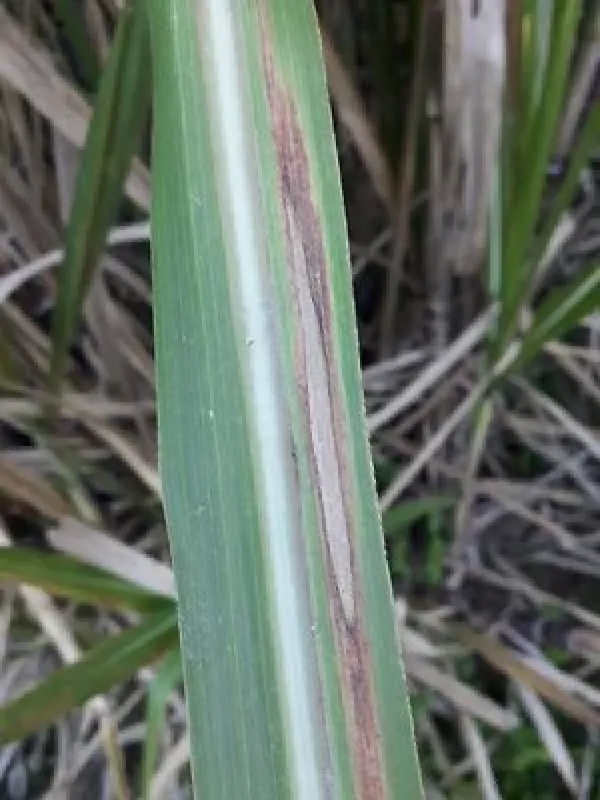
Description
Symptoms
The primary symptom of the disease is the appearance of distinct lesions on the leaves. These start as small, light-colored spots that gradually elongate into characteristic oblong shapes.
As the spots mature, a necrotic center forms, often surrounded by a chlorotic halo. The color of the lesions can vary from yellowish to tan or dark brown, depending on the stage of the infection.
In humid conditions, small black fruiting bodies called pycnidia appear on the surface of the lesions. These pycnidia are critical for secondary infection cycles within the growing season.
Eventually, the lesions coalesce, leading to extensive necrosis of the leaf blade. Severely affected leaves turn yellow, wilt, and die prematurely, which negatively impacts the plant's health.
- Appearance of chlorotic spots on leaves
- Elongated lesions with necrotic centers
- Presence of black pycnidia on the leaf surface
- Premature yellowing and death of leaves
- Overall reduction in plant vigor
Pathogen
The causative agent of this disease is the fungus Stagonospora sacchari. It is a pathogenic organism belonging to the class of fungi imperfecti that specifically targets sugarcane tissues.
The infection persists in crop debris, soil, and on infected plant material. The fungus produces spores that are easily disseminated by wind and water splashes, allowing it to spread rapidly throughout the plantation.
The pathogen enters the plant through natural openings like stomata or via mechanical wounds on the leaf surface. Once inside, the fungal mycelium colonizes the intercellular spaces, degrading plant cells.
Biological resilience allows the pathogen to survive during unfavorable conditions. Its ability to adapt makes it a persistent threat in sugarcane-growing regions globally.
The development cycle of the fungus is highly dependent on environmental moisture. When conditions are suitable, the pathogen population can increase rapidly, leading to widespread infection.
Conditions for development
Stagonospora leaf spot thrives in conditions characterized by high humidity and frequent rainfall. Wet weather is essential for the dispersal of spores and the successful infection of healthy foliage.
Moderate temperatures combined with persistent leaf wetness create the optimal environment for the fungus. These conditions are typically prevalent during the active growing season of sugarcane.
Crowded plantings that lack adequate airflow are particularly susceptible to the disease. The resulting microclimate maintains high humidity levels that favor fungal growth.
Excessive nitrogen fertilization can lead to vigorous but succulent plant growth, which is often more susceptible to fungal pathogens. This practice can worsen the severity of the disease.
Poor field sanitation, such as leaving harvest residue on the ground, serves as a primary source of inoculum. This ensures the survival of the fungus and contributes to seasonal outbreaks.
Why it matters
The disease causes significant economic loss by reducing the total biomass of the sugarcane crop. Damage to the photosynthetic area leads to a decrease in sugar accumulation.
Severe infestations affect not only the yield but also the quality of the raw material. Reduced sucrose content makes processing significantly less efficient at sugar mills.
Stunted plant growth resulting from leaf damage lowers the overall tonnage per hectare. This reduction in productivity directly impacts the economic viability of sugarcane production.
Plants weakened by the disease are more vulnerable to secondary infections and pest attacks. This necessitates a more complex and costly approach to overall crop management.
The persistence of the pathogen requires ongoing expenditure for fungicide treatments, which increases the total cost of production for the agricultural enterprise.
Protection
Using resistant sugarcane varieties is the most effective long-term management strategy. Breeding programs focusing on host resistance significantly reduce the need for chemical interventions.
Thorough field sanitation is essential to minimize the inoculum load. Removing or burying crop debris effectively interrupts the survival cycle of the fungus in the soil.
Optimizing plant spacing ensures better ventilation within the crop canopy. This reduces the duration of leaf wetness and creates a less favorable environment for the pathogen.
Fungicide applications should be timed based on disease monitoring and environmental forecasts. Preventive spraying is effective in protecting vulnerable crops during peak infection periods.
Regular scouting of fields allows for early detection of the disease. Timely identification enables targeted control measures, preventing the spread of the infection to the rest of the plantation.
Discussion
No discussions yet — be the first.