
Squamanita
Squamanita
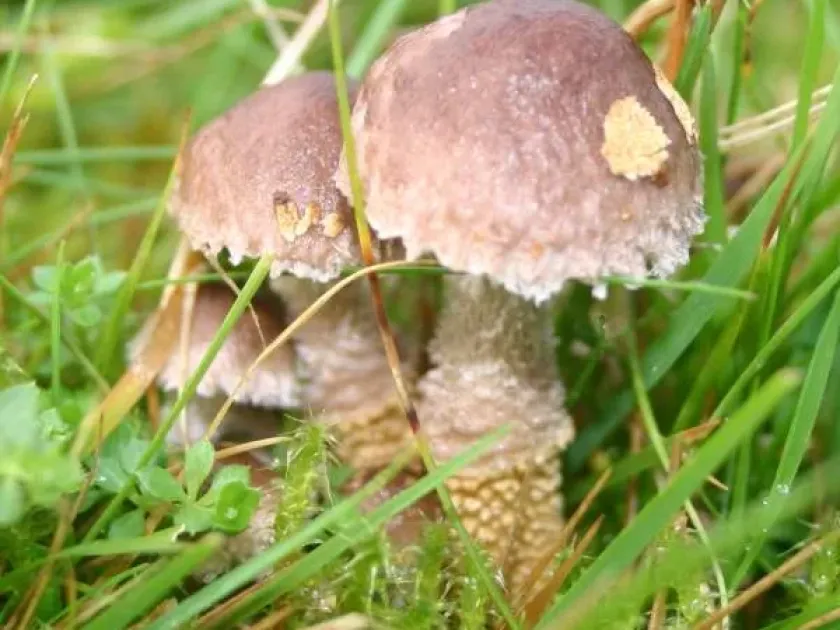
Description
Symptoms
The most distinctive sign of infection is the presence of deformed or abnormal growths on the host mushroom.
The parasite often induces the formation of characteristic scales on the host’s cap or stem.
Infected fungi exhibit stunted or malformed development, preventing normal spore dispersal.
The base of the host mushroom may appear thickened or completely covered by the parasitic mycelium.
Often, the visible fruiting body of the host is significantly altered by the presence of the Squamanita.
Pathogen
Squamanita is a genus of gilled mushrooms that are biologically classified as mycoparasites.
Unlike common plant pathogens, these fungi do not target agricultural crops or forest trees directly.
Instead, they focus their life cycle on parasitizing the fruiting bodies of other fungal species.
The genus belongs to the family Tricholomataceae and is known for its complex parasitic interaction.
It utilizes specific structures to invade and absorb nutrients from its fungal host during its developmental phase.
Conditions for development
The spread of Squamanita depends heavily on the presence and density of compatible fungal hosts.
Optimal environmental conditions include high humidity and stable temperatures within forest habitats.
The parasitic mycelium survives in the soil or host tissues, waiting for favorable developmental triggers.
Seasonal patterns strongly influence the emergence of these mushrooms in temperate ecosystems.
Ecological stability is essential for maintaining the balance between these rare parasites and their hosts.
Why it matters
Squamanita does not pose a threat to agricultural production, fruit orchards, or commercial forestry.
The harm is restricted to the individual host fungi that are being suppressed or consumed.
There is no economic impact on crop yields or food security in any agricultural sector.
The biological impact is solely contained within the complex micro-ecosystems of fungal communities.
These organisms are considered rare in many regions, posing no danger to general biodiversity.
Protection
No agricultural control or protection measures are required for this genus of fungi.
Since it is not an agricultural pest, there are no established guidelines for its eradication.
Conservation efforts are focused on protecting the natural habitats where these species occur.
Fungicides should never be used as a method to control natural parasitic fungal interactions.
Scientific research and observation remain the primary focus regarding the monitoring of Squamanita.
Discussion
No discussions yet — be the first.