
Sporormiella minima
Sporormiella minima
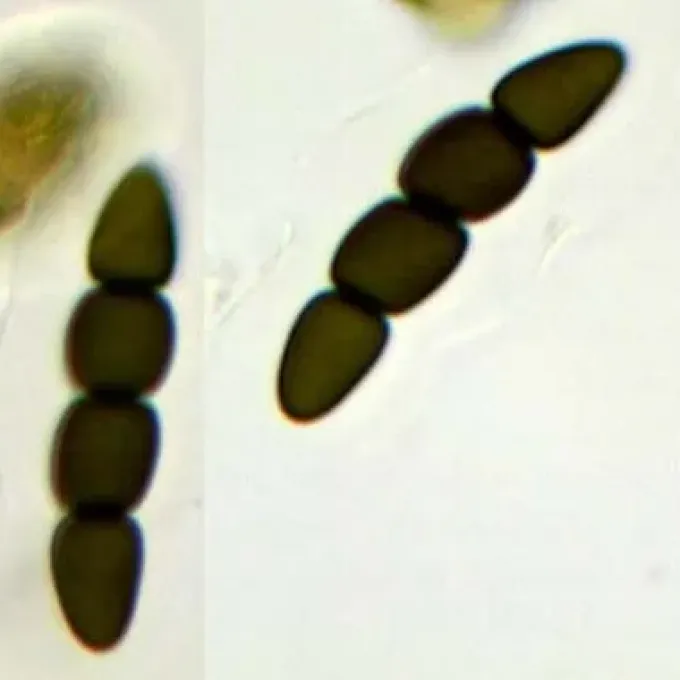
Description
Pathogen
Sporormiella minima is a microscopic fungus belonging to the Ascomycota phylum. It is classified as a coprophilous fungus, specifically adapted to grow on the dung of herbivorous mammals.
The lifecycle of this organism is specialized; its spores require passage through the digestive tract of an herbivore to become activated, allowing them to germinate upon excretion.
As a saprotroph, the fungus plays a vital role in decomposing complex organic matter, specifically cellulose and lignin found in plant residues within animal waste.
It is not a plant pathogen; it does not infect living plant tissues, nor does it cause disease in agricultural crops. Its presence is strictly associated with dead, organic-rich substrates.
In mycological research, Sporormiella is often studied as a biological indicator used in paleoecology to track past herbivore populations and grassland ecosystems.
Conditions for development
The primary condition for the development of Sporormiella minima is the presence of suitable organic substrates, such as dung or highly organic compost heaps.
High relative humidity and adequate oxygen availability are essential for the formation of the fungus's reproductive structures, known as perithecia.
The fungus thrives in temperate climates, where moisture and moderate heat allow for the rapid breakdown of substrates during the growing season.
Environmental factors like soil pH and salinity can influence its distribution, as the fungus is sensitive to high chemical concentrations often found in synthetic fertilizers.
Wind and rainfall are the primary vectors for the dispersal of its ascospores, allowing the fungus to colonize new organic substrates efficiently.
Why it matters
There is no evidence that Sporormiella minima causes harm to crops. It is entirely non-pathogenic to plants and poses no risk to agricultural productivity.
The fungus acts as a beneficial decomposer, helping to recycle nutrients within the soil ecosystem by breaking down complex organic molecules into simpler forms.
In rare greenhouse scenarios, its presence on potting mixes may be an indicator of poor sanitation or the use of insufficiently composted organic additives.
It does not produce metabolites that are toxic to crops, making it a harmless component of the soil microbial community.
Farmers do not need to implement control measures against this fungus, as it is a natural part of the soil's nutrient cycling process.
Protection
Since the organism is a beneficial saprotroph, control measures are unnecessary. It does not threaten plant health and should not be treated as a pest.
Standard agronomic practices, such as proper composting of animal manure, naturally limit the excessive proliferation of coprophilous fungi in agricultural settings.
Maintaining optimal soil structure and managing moisture levels are sufficient to keep microbial populations in balance within any farming operation.
For greenhouse growers, ensuring the use of sterile growing media prevents the accidental introduction of unwanted fungal spores into the cultivation area.
- Proper composting of manure.
- Ensuring good drainage in fields.
- Using pasteurized soil substrates.
- General hygiene in greenhouse management.
Discussion
No discussions yet — be the first.