
Sugarcane smut
Sporisorium scitamineum
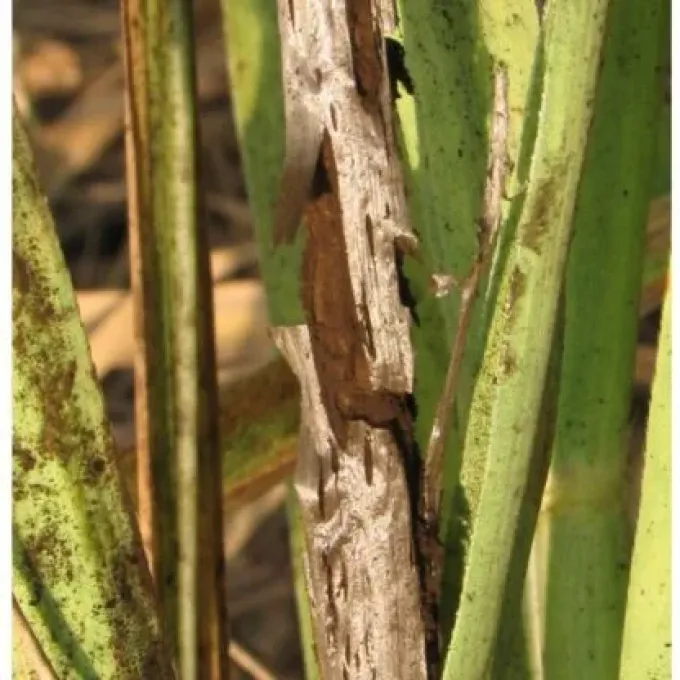
Description
Symptoms
The most diagnostic sign of the disease is the emergence of a long, curved, black structure known as the "whip." This whip replaces the inflorescence or the apical bud of the stalk.
Initially, the whip is covered by a thin, silvery membrane. As the spores mature, the membrane ruptures, releasing millions of dark teliospores that cover the surrounding foliage.
Infected stalks often show excessive tillering, resulting in a bushy appearance. The leaves are typically narrower, smaller, and may show chlorosis compared to healthy, vigorous plants.
Stunted growth is common in diseased plants, as the fungus competes for nutrients and disrupts normal development. The plants fail to reach their full potential, often becoming weak and brittle.
Late-stage symptoms may include the death of the main stalk and the proliferation of secondary buds that also become infected, further spreading the pathogen within the field.
Pathogen
The causal agent of sugarcane smut is the basidiomycete fungus Sporisorium scitamineum. This pathogen is highly specific to Saccharum species and is recognized as a major threat to global sugarcane production.
The fungus invades the meristematic tissues of the sugarcane stalk. Inside the host, the pathogen develops systemic mycelium that remains hidden until the plant prepares to produce its floral structures.
The fungus produces large amounts of teliospores, which form the characteristic black, whip-like structure. These spores are wind-dispersed and can remain viable in the soil for several months.
Infection primarily occurs when spores land on the axillary buds of healthy cane stalks. Once inside, the fungus alters the plant's hormonal balance, redirecting energy from growth to sporulation.
The pathogen can also be transmitted through infected seed canes, which is a major concern for the propagation of the crop in new, previously uninfected areas.
Conditions for development
The disease thrives in warm and relatively dry weather conditions, which are ideal for spore dispersal and germination. However, high humidity and moderate temperatures favor the infection process.
Airborne spores are easily carried by winds from one field to another. Once a field is infected, the high concentration of spores ensures a rapid spread across the entire plantation.
Poor soil moisture and stress conditions can increase the susceptibility of sugarcane to smut. Conversely, rapid growth under irrigation can sometimes mask early symptoms of the disease.
Mechanical operations, such as harvesting and cultivation, facilitate the spread of spores within the field. Insects that feed on cane buds can also act as accidental vectors for the fungus.
The fungus is well-adapted to the environment of sugarcane growing regions and can survive environmental fluctuations, making it a persistent and difficult pathogen to manage.
Why it matters
Sugarcane smut causes significant economic losses by reducing both the stalk tonnage and the sucrose content. The resulting yield loss can be devastating, especially in susceptible cultivars.
The disease severely impacts the quality of the raw material, as the affected stalks have a much lower sugar recovery rate, complicating industrial milling and processing.
Infected fields require frequent replanting, increasing operational costs. If left unmanaged, the pathogen can force the abandonment of highly productive sugarcane varieties.
Smut is a quarantine-level disease in many countries, posing a threat to agricultural exports and local biodiversity. The social and economic impact on cane-growing communities is substantial.
The general weakening of the crop makes it more vulnerable to secondary fungal attacks and environmental stressors, leading to a long-term decline in field productivity.
Protection
The most effective strategy for managing sugarcane smut is the development and use of smut-resistant cultivars. Resistant varieties significantly lower the risk of infection and epidemic spread.
Strict phytosanitary practices are essential, including the removal and destruction (burning) of infected stools to reduce the inoculum level in the field.
Seed cane can be treated with hot water (50-52°C for 20-30 minutes) to eliminate the internal fungal mycelium before planting, ensuring the start of a healthy crop cycle.
Integrated disease management, which includes crop rotation and the use of certified, disease-free planting material, is critical for preventing the introduction and buildup of the pathogen.
Regular monitoring of fields allows for early detection of smutted whips, enabling quick rogueing and reducing the likelihood of a major outbreak within the plantation.
Discussion
No discussions yet — be the first.