
Sporidiobolales fungi
Sporidiobolales
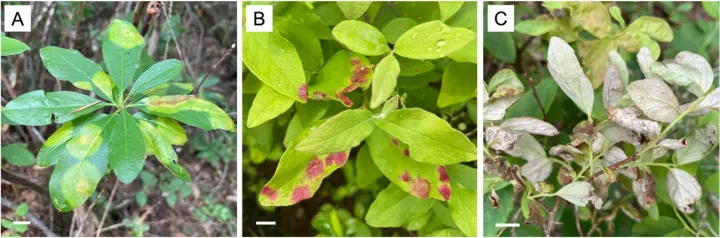
Description
Symptoms
Symptoms of Sporidiobolales infection typically manifest as superficial colonization of leaf surfaces, often resulting in colorful, yeast-like patches.
These patches often exhibit pink, red, or orange pigmentation, which is a hallmark of the carotenoids produced by these specific fungal species.
Chlorosis and localized necrotic spotting are common as the fungal colony interferes with the epidermis and underlying mesophyll tissues.
In humid conditions, a fine, powdery, or slightly slimy layer can be observed on the affected parts of the foliage, impairing photosynthetic efficiency.
Damage usually initiates on the lower canopy, progressing upwards as the microclimate becomes more favorable for fungal multiplication.
Pathogen
The order Sporidiobolales consists of basidiomycetous yeasts that occupy diverse ecological niches, including the phyllosphere of many agricultural crops.
These organisms are known for producing ballistospores, which are actively discharged into the air to facilitate dispersal over significant distances.
While often found as commensals or saprotrophs, members of this order can act as opportunistic pathogens under specific environmental stressors.
Genera such as Sporobolomyces are common inhabitants of leaf surfaces, where they utilize moisture and plant exudates to sustain their lifecycle.
The genetic plasticity of these fungi allows them to colonize various plant species, making them a persistent part of the agroecosystem's microbiome.
Conditions for development
High relative humidity is the primary catalyst for the development of Sporidiobolales, especially when accompanied by lingering dew or light precipitation.
Optimal growth temperatures for these fungi generally fall between 18°C and 26°C, which frequently coincides with the active growth stages of cereals.
Dense plant canopies that restrict air movement provide the stable, moisture-rich microenvironment necessary for the rapid spread of spores.
The presence of water droplets on leaves (guttation) provides a medium for spore germination and colonization of the plant's surface.
Plants under physiological stress, due to poor nutrition or drought, are more susceptible to becoming hosts for these opportunistic colonizers.
Why it matters
The impact of Sporidiobolales on crops involves reduced photosynthetic capacity, as the fungal growth shades the leaf and damages the epidermal layer.
Disruption of the plant's normal transpiration and gas exchange processes often leads to reduced grain weight and overall yield losses.
By compromising the leaf's physical integrity, these fungi can facilitate the entry of secondary bacterial or fungal pathogens.
Nutrient uptake efficiency may decline as the plant diverts energy toward stress responses instead of developing reproductive organs.
Severe infestations can lead to premature leaf senescence, shortening the grain-filling period and affecting final harvest quality.
Protection
Effective management requires a combination of cultural practices, such as optimizing plant density to improve canopy aeration and reduce humidity.
Chemical control involving broad-spectrum fungicides can be used during periods of high disease pressure to inhibit yeast-like fungal development.
Crop rotation and strict sanitation of crop residues are essential to reduce the primary inoculum load in the field for subsequent seasons.
Balancing fertilization programs helps maintain plant vigor, making crops less susceptible to colonization by opportunistic pathogens.
- Field monitoring programs.
- Use of resistant plant varieties.
- Integrated pest management strategies.
Discussion
No discussions yet — be the first.