
Sphrinctina turbinata
Sphrinctina turbinata
Description
Symptoms
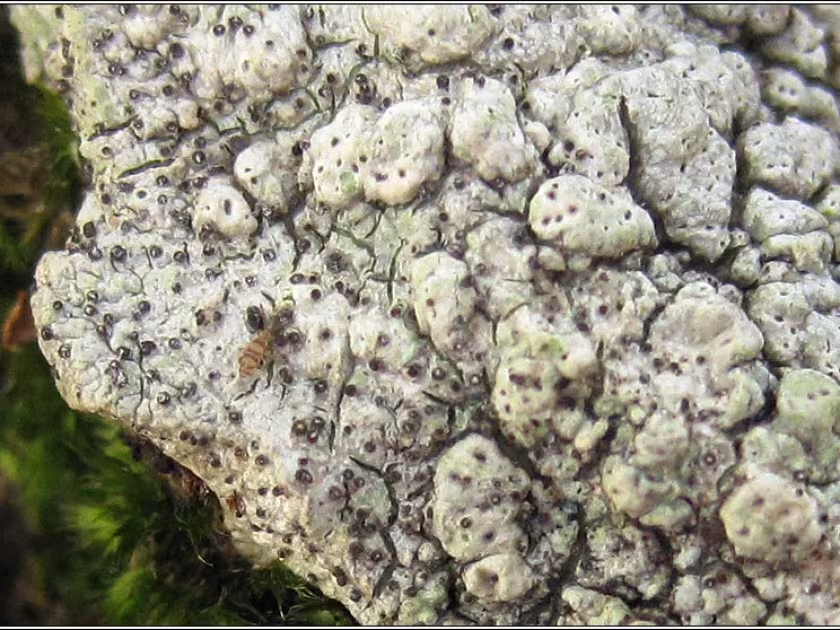
The visual presence of Sphrinctina turbinata is marked by small, black, eruptive spots on the surface of the lichen thallus. These are the developing apothecia of the fungus.
Upon closer inspection with a lens, the apothecia appear as small, dark, urn-shaped structures. They are usually concentrated in clusters, which may lead to discoloration of the host lichen.
Infected lichens may show signs of tissue degradation where the fungal colonies are most established. However, the host is not killed immediately, allowing for a long period of coexistence.
The presence of these fruiting bodies is the definitive sign of colonization. No other similar pathogen produces this specific turbinate shape on the lichen surface.
The affected areas of the lichen thallus may eventually lose their original structure, becoming thin or brittle due to the nutritional drain caused by the fungus.
Pathogen
Sphrinctina turbinata is a specialized lichenicolous fungus belonging to the class Lecanoromycetes. It acts as an obligate parasite on certain crustose lichens, living within the host thallus.
The fungus is characterized by its distinct fruiting bodies, known as apothecia. These structures are turbinate (top-shaped) in form, which is the primary morphological feature used for identification.
Unlike pathogenic fungi that affect crops, this species is entirely dependent on its lichen host for nutrients. It does not possess the capability to live independently or infect higher plants.
The fungal mycelium penetrates the cortex and algal layer of the host lichen, slowly consuming the host's tissue for its metabolic needs. This process is highly specific to a narrow range of lichenized fungi.
Scientific interest in this species is focused on its role within forest ecosystems, specifically how it manages the density and health of lichen populations in old-growth environments.
Conditions for development
The development of Sphrinctina turbinata is strongly linked to high humidity and stable microclimatic conditions. Moisture is essential for the germination of spores and the maturation of apothecia.
The species thrives in old-growth or stable forest ecosystems where tree bark remains undisturbed for long periods, providing a consistent substrate for both the lichen host and the parasite.
Optimal growth occurs during seasons with frequent rainfall, which keeps the substrate moist. During prolonged dry spells, the fungus remains dormant, awaiting favorable moisture levels.
Spore dispersal occurs passively via air currents or water runoff. Because it is an obligate parasite, the success of the fungus depends on the presence of a healthy, abundant population of host lichens.
Temperature range is generally consistent with that of the temperate zone, avoiding extreme fluctuations that would threaten the survival of the host lichen.
Why it matters
The harm caused by this species is strictly ecological. It has no negative impact on agricultural crops, forestry operations, or ornamental plants.
As a parasite of lichens, it acts as a natural regulator within the ecosystem. It does not cause economic loss, and its presence is not considered a threat by agronomists.
While it may weaken individual lichen colonies, it does not have the potential to spread to agricultural settings or affect food security.
In the context of lichen conservation, large-scale colonization might be studied, but it is rarely viewed as a damaging outbreak that requires intervention.
There is no industrial or agricultural application for this fungus, and it remains a subject purely for academic research in mycology and lichenology.
Protection
No control measures exist or are required for Sphrinctina turbinata. As it is not an agricultural pest, it does not need to be managed or eradicated.
Fungicides should never be applied to control this species, as such actions would be environmentally damaging and useless for protecting any economically important plants.
Prevention is unnecessary. Its occurrence is a natural process in diverse ecosystems and does not indicate any lack of maintenance in forests or gardens.
If you encounter this fungus, it serves as a sign of a complex biological community rather than an infestation. No intervention is recommended by professional agronomists.
The best approach to this organism is observation and documentation within the scope of environmental monitoring, recognizing its natural place in the forest food web.
Discussion
No discussions yet — be the first.