
Sphinctrina
Sphinctrina
Description
Symptoms
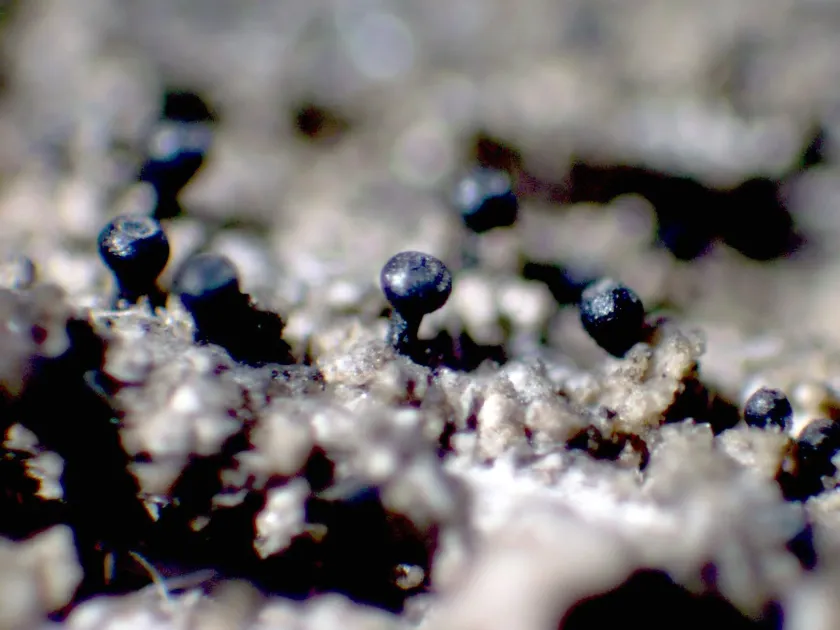
The primary symptom of infection is the appearance of small, black, shiny dots or pin-like structures on the surface of the host lichen. These are the apothecia of the fungus.
Infected areas of the lichen thallus may start to show signs of necrosis or bleaching as the fungus utilizes the lichen's organic matter. Over time, the host may show reduced growth or partial death of the affected part.
Observation typically requires a hand lens or a microscope, as the fruiting bodies are rarely larger than 0.5 to 1 mm in diameter. They often appear in clusters.
Since they are lichenicolous, these signs are strictly confined to the body of the lichen. There is no spread to the underlying tree bark or the tree's vascular tissues, as the fungus is strictly adapted to lichenized structures.
These features are distinct and usually indicate that the lichen host is being exploited by a specialized mycological inhabitant of the forest ecosystem.
Pathogen
Sphinctrina is a genus of lichenicolous fungi that live as parasites on the thalli of various lichens. Unlike typical fungi, these organisms are highly specialized, often depending on a specific host species for their entire life cycle.
Biologically, they belong to the class Lecanoromycetes. Their fruiting bodies, known as apothecia, are characteristically small, black, and stalked, often resembling tiny pins, which leads to them being called "pin-head fungi."
They are classified as obligate or facultative parasites. They invade the tissues of the host lichen, absorbing nutrients and eventually producing spores that are released into the environment to colonize new hosts.
This genus does not affect agricultural crops. They are exclusively found on lichens living on tree bark, rocks, or other natural substrates in stable environments like old-growth forests.
Species within this genus have a wide geographical distribution but are generally found in regions with high ecological integrity, where they play a role in natural ecosystem dynamics.
Conditions for development
Development is entirely dependent on the presence and health of the host lichen species. Without the specific host, the fungus cannot complete its lifecycle.
Optimal conditions for Sphinctrina include consistent humidity and clean air. These fungi are highly sensitive to sulfur dioxide and other air pollutants, making them indicators of good air quality.
Dispersal is primarily mediated by wind and moisture. The spores land on a host and, if conditions are suitable, germinate to form a new infection site on the lichen surface.
Climate stability is essential. While these fungi can tolerate dormant periods during dry spells, they require favorable moisture to maintain the metabolic processes needed for spore development.
They thrive in old-growth forests where lichen colonies are long-lived and provide a stable, long-term resource for the fungus to develop its slow-growing apothecia.
Why it matters
Sphinctrina poses no economic threat to agriculture, forestry, or horticulture. It does not damage wood, leaves, or any cultivated crops, rendering it harmless in a production context.
The damage caused is restricted to the individual lichen colonies they parasitize. In a natural ecosystem, this is a normal regulatory mechanism, not a disease of concern.
There is no risk of the fungus spreading to plants or trees. It lacks the enzymatic machinery to degrade complex plant tissues like cellulose or lignin found in trees.
Because they do not interfere with forest health or crop yield, they have no negative impact on human economic activity and are considered ecologically neutral or beneficial for biodiversity monitoring.
Consequently, the presence of these fungi is usually viewed as a positive sign of a healthy, complex, and unpolluted forest ecosystem that supports a wide range of biological interactions.
Protection
No control measures are required or recommended for Sphinctrina. As it is not a plant pathogen, it does not fall under the scope of integrated pest management (IPM) or chemical control.
Any attempt to remove these fungi would be counterproductive, as they are part of the natural heritage of the forest and play an important role in ecosystem functioning.
Prophylactic measures are unnecessary. Their existence depends on the health of the environment, not on the lack of intervention, so no agricultural practices can or should be directed at them.
Research and observation are the only forms of interaction with this organism. Field studies focus on biodiversity tracking rather than management or eradication.
In short, the appropriate management strategy is to leave these organisms undisturbed as they are essential members of the natural lichen-parasite community.
Discussion
No discussions yet — be the first.