
Sphaerulina leaf spot of boxwood
Sphaerulina westendorpii
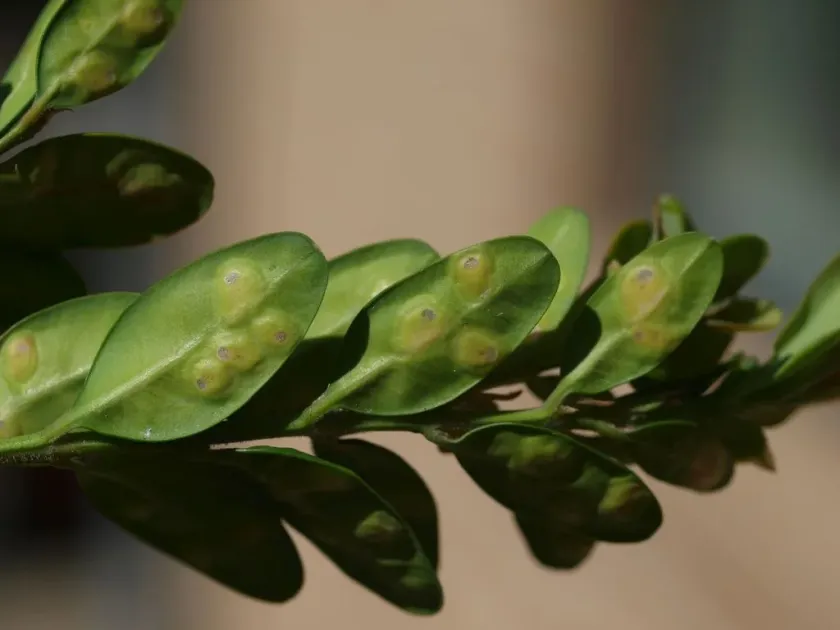
Description
Symptoms
Sphaerulina leaf spot, caused by Sphaerulina westendorpii, initially presents as small, circular, light-brown spots on boxwood foliage. These spots gradually enlarge over time.
As the disease progresses, the center of the spots develops small black fruiting bodies known as pycnidia. These structures are visible with the naked eye or a hand lens, appearing as tiny dots on the leaves.
Severely affected leaves often turn yellow and fall prematurely from the branches, leading to thinning of the shrub's canopy and loss of its dense appearance.
In humid conditions, the fungus may cause necrotic lesions on young stems, which can lead to localized dieback of twigs and branches.
Symptoms are most often seen in the lower or inner parts of the boxwood plant where air circulation is limited and humidity levels remain high.
Pathogen
The pathogen responsible is Sphaerulina westendorpii, a fungal organism that targets evergreen species of the Buxus genus. It acts as a primary pathogen under favorable environmental conditions.
The fungus overwinters in the mycelial stage within fallen leaves and in the bark of infected stems, ensuring a cycle of re-infection in the following spring.
Spores are produced in pycnidia and are primarily disseminated through splashing water from rainfall or irrigation systems, which carries the fungus to healthy leaf tissues.
Once the spores land on a host, they require a period of persistent leaf wetness to germinate and successfully penetrate the cuticle of the leaf.
The infection process can occur throughout the growing season whenever temperature and moisture levels are conducive to fungal growth and reproduction.
Conditions for development
High humidity and poor air circulation are the primary drivers of Sphaerulina outbreaks. Dense boxwood hedges are particularly susceptible to this disease.
Periods of prolonged rain or heavy dew create the perfect moisture bridge for spores to travel and germinate effectively on the foliage.
Lack of sufficient sunlight, especially in shaded garden areas, keeps foliage moist for longer periods, significantly increasing the risk of infection.
Plants that are weakened due to poor soil conditions, drought stress, or improper fertilization are more likely to succumb to the infection than healthy plants.
Overhead watering or improper pruning practices can inadvertently spread the spores from infested plants to healthy neighbors, accelerating the disease spread.
Why it matters
The primary concern regarding this disease is the aesthetic degradation of the boxwood. As a structural plant in many landscapes, its appearance is paramount.
Premature leaf drop causes the plant to lose its characteristic dense foliage, exposing bare branches and ruining the intended design of hedges and topiary.
The infection weakens the plant's overall vigor, potentially making it more susceptible to environmental stressors such as winter burn and late spring frosts.
Without intervention, the pathogen creates a persistent infection reservoir, making it increasingly difficult to manage the health of the entire boxwood collection.
The economic impact involves the need for constant maintenance, application of chemical treatments, or the expensive removal and replacement of affected plants.
Protection
Successful management begins with planting design; ensuring proper spacing between bushes allows for adequate airflow and rapid drying of the foliage after rain.
Sanitation is critical; regularly rake up and dispose of all fallen leaves to remove the primary source of overwintering fungal spores.
Fungicide applications, particularly those containing copper or systemic active ingredients, can protect foliage during high-risk rainy periods.
- Thinning of the canopy to improve light and air penetration.
- Sanitizing pruning tools between plants to prevent cross-contamination.
- Providing balanced nutrition to promote general plant resilience.
- Removing and destroying heavily infected branches immediately.
Consistent monitoring and early detection allow for prompt intervention, significantly reducing the reliance on chemical control methods over time.
Discussion
No discussions yet — be the first.