
Septoria leaf spot of poplar
Sphaerulina musiva
Description
Symptoms
Initial symptoms include the appearance of small, brown to black circular or angular spots on the leaves, often accompanied by a chlorotic halo.
As the disease progresses, tiny black fruiting bodies called pycnidia become visible in the center of the necrotic leaf spots.
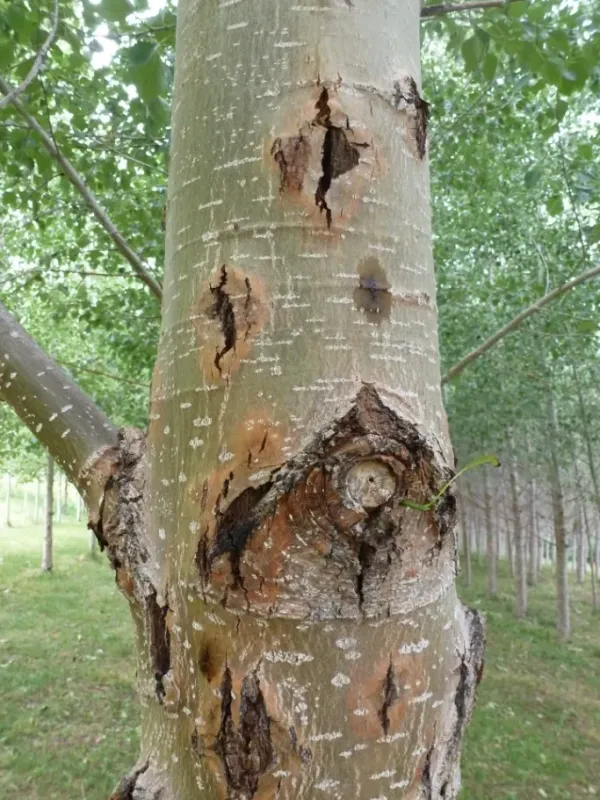
The most severe manifestation occurs on the stems and branches, where the fungus causes the development of sunken, elongated necrotic cankers.
These cankers often lead to branch breakage or the girdling of the main stem, which can be fatal for young, developing trees.
- leaf spots with dark pycnidia in the center;
- sunken stem and branch cankers;
- premature leaf drop during the summer months;
- dieback of terminal shoots and branch breakage.
Pathogen
The disease is caused by the ascomycete fungus Sphaerulina musiva (anamorph Septoria musiva), a highly destructive pathogen that affects various species and hybrids of the genus Populus.
The fungus survives the winter as mycelium and fruiting bodies (pycnidia) within fallen leaves, infected branches, and stem cankers on the host trees.
During the spring, when temperatures and humidity are appropriate, the fungus releases spores that are disseminated primarily by wind and splashing rainwater.
Biological studies indicate that the pathogen targets both leaves and woody tissues, making it a critical threat to the establishment of young poplar plantations.
The lifecycle is continuous during the growing season, with multiple cycles of conidial production occurring if environmental conditions remain favorable.
Conditions for development
The development of Sphaerulina musiva is heavily dependent on moisture; frequent rainfall and high humidity are essential for spore germination and infection.
Optimal temperatures for the fungus range from +18°C to +25°C, providing an ideal environment for rapid colonization of healthy tissues.
Dense planting environments in nurseries often result in poor airflow, which keeps foliage wet for longer periods and promotes disease outbreaks.
Tree stress, caused by nutritional deficiencies, drought, or inadequate planting site preparation, significantly increases susceptibility to the pathogen.
Cool, cloudy, and damp spring weather often marks the beginning of the primary infection period, leading to secondary cycles later in the summer.
Why it matters
The primary damage caused by Septoria leaf spot is the development of stem cankers, which destroy the structural integrity of the poplar wood.
Early defoliation caused by leaf infection reduces the tree's photosynthetic capacity, leading to decreased growth rates and weakened overall vigor.
In nurseries, severe infections can cause high mortality rates among saplings, leading to significant economic losses for tree growers.
Infected wood is prone to breakage under wind load, making the trees unsuitable for timber production or ornamental use.
The accumulation of inoculum in the environment makes the disease self-perpetuating, requiring ongoing vigilance and management in affected areas.
Protection
The most reliable control method is the deployment of resistant or tolerant poplar clones, selected through extensive breeding programs.
Sanitation practices, such as the removal and destruction of fallen leaves and the pruning of infected branches, are crucial for reducing the inoculum load.
Strategic planning of nursery spacing ensures improved ventilation and faster drying of leaves, which inhibits fungal germination and spread.
Fungicide applications may be necessary in high-risk zones, particularly during the early leaf expansion stage when young tissues are most vulnerable.
Maintaining optimal tree health through proper fertilization and site management enhances the tree’s natural defensive mechanisms against the fungus.
Discussion
No discussions yet — be the first.