
Sphaerulina leaf spot
Sphaerulina aceris
Description
Symptoms
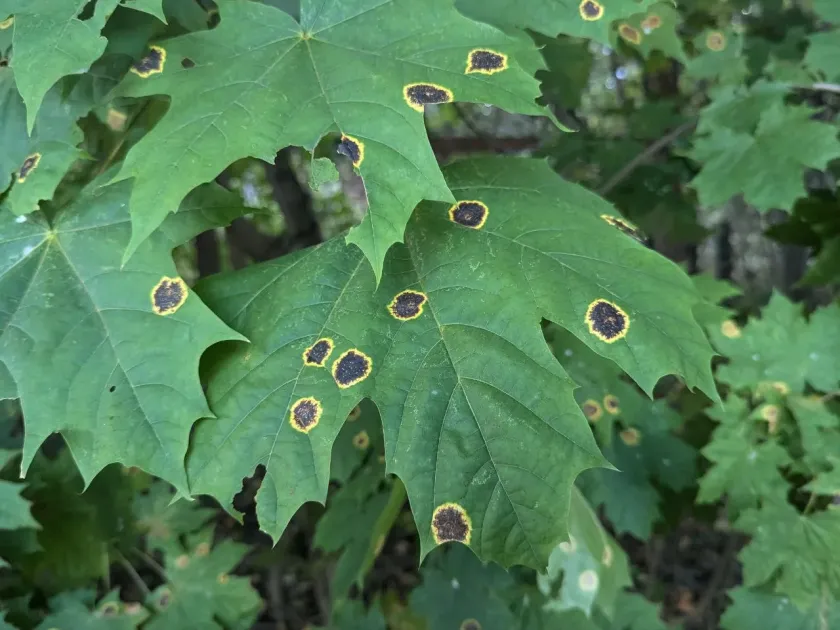
The first visual signs of Sphaerulina leaf spot appear as small, circular lesions on the surface of the maple leaves. Over time, these spots expand, changing their color to light brown or dark tan.
In the center of the infected spots, tiny dark structures known as pycnidia become visible. These are the fruiting bodies of the fungus where spores develop before being released into the environment.
As the disease progresses, these individual lesions can merge together, covering large areas of the leaf blade. This heavy infection causes the leaf to dry out and lose its structural integrity.
Severe infestation leads to premature yellowing and leaf drop, often occurring mid-summer. The canopy may look thin and unhealthy, significantly impacting the aesthetic value of the maple tree.
Microscopic examination of the tissue reveals the degradation of the leaf parenchyma by the fungal mycelium, which is the primary cause of the symptomatic necrosis.
Pathogen
The causative agent of this disease is the fungus Sphaerulina aceris. It is a specialized pathogen that primarily targets maple species, using them as its sole host for survival and reproduction.
The fungus functions as a parasite, obtaining nutrients from the living tissues of the maple leaves. It completes its lifecycle by producing spores that can infect neighboring leaves or trees.
The pathogen overwinters primarily in the fallen leaf litter, protected by the organic debris. When spring conditions arrive, it resumes its activity, producing new spores to restart the cycle.
The high degree of host specificity allows the fungus to establish itself firmly within maple-dominant landscapes. This makes it a persistent challenge for foresters and arborists.
Understanding the life cycle of the pathogen is vital, as the synchronization between spore release and the development of new maple foliage determines the severity of the outbreak.
Conditions for development
The development of Sphaerulina leaf spot is heavily dependent on prolonged periods of high humidity. Rain, fog, and heavy dew provide the necessary surface moisture for spore germination.
Dense tree canopies that lack sufficient airflow create a microclimate that is highly conducive to fungal growth. In such environments, moisture lingers on the leaves for much longer periods.
Trees that are under stress—whether due to drought, soil nutrient deficiencies, or urban pollution—are significantly more susceptible to infection compared to healthy specimens.
Poor sanitation, specifically the failure to remove infected leaf litter, is the primary reason for widespread infection. The spores remain in the litter, ready to be splashed onto the lower leaves by rain.
Temperatures ranging from 18°C to 25°C are considered optimal for the rapid spread of the fungus, coinciding with the prime growth period of the maple leaves during the summer.
Why it matters
The primary harm caused by this disease is the reduction in photosynthetic capacity due to premature leaf drop. This limits the tree's ability to store the starch needed for the next growing season.
Reduced winter hardiness is a major consequence of late-season defoliation. Trees affected by the disease are often more prone to frost damage and branch dieback during winter months.
For ornamental maples in landscapes and gardens, the disease is highly destructive as it ruins the plant's aesthetic appeal, leaving the tree bare and sickly long before autumn.
Repeated yearly infections drain the tree's immune system, making it more vulnerable to secondary fungal attacks or wood-boring insects, potentially leading to the tree's decline over time.
In nursery production, this pathogen causes economic losses by rendering saplings unsellable due to their unsightly appearance and stunted growth caused by repeated leaf damage.
Protection
The most effective management strategy is rigorous sanitation. Removing and destroying all fallen leaves in autumn is crucial to eliminate the overwintering reservoir of the fungus.
Pruning branches to improve airflow through the canopy is recommended. By reducing humidity levels around the foliage, the conditions for fungal development become far less favorable.
Fungicide applications, particularly those containing copper, can be effective if applied early in the season when the first signs of the disease appear on the leaves.
Maintaining the overall health of the maple tree through proper watering and fertilization helps the tree build natural resistance against pathogens, reducing the impact of the infection.
- Monitor tree health regularly during rainy summers.
- Apply systemic fungicides as a preventative measure in high-risk areas.
- Select resistant maple varieties if available in your region.
Discussion
No discussions yet — be the first.