
Sphaerulina leaf spot
Sphaerulina
Description
Symptoms
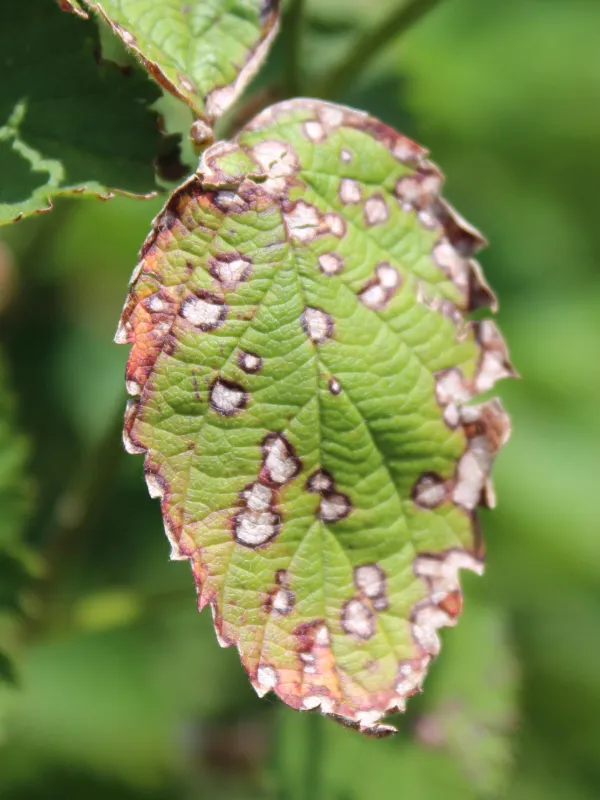
The primary symptom of this disease is the appearance of characteristic spots on leaves, stems, and petioles, which tend to coalesce over time.
These spots usually exhibit a distinct shape and are often bordered by a dark ring, making them clearly visible against the healthy leaf tissue.
In the center of the affected areas, the fungus develops its fruiting bodies, which appear as tiny black dots protruding above the leaf surface.
As the infection progresses, affected leaves turn yellow prematurely, wither, and drop, which significantly reduces the plant's photosynthetic surface.
On stems, the infection can cause necrotic lesions or ulcers that interfere with the transport of water and essential nutrients throughout the plant.
Pathogen
The disease is caused by ascomycete fungi belonging to the genus Sphaerulina, which act as parasites on various herbaceous plants and shrubs.
The fungus survives the winter as mycelium or fruiting bodies within infected plant debris, fallen leaves, and soil, remaining viable until the next season.
During the growing season, the infection spreads mainly through ascospores, which are ejected from perithecia under moist conditions.
Initial infection of healthy crops occurs when spores land on leaf surfaces or damaged stems, especially during periods of high humidity.
The pathogen's biology is characterized by a rapid development cycle, allowing the fungus to produce multiple generations within a single growing season.
Conditions for development
The most favorable conditions for the intense development of Sphaerulina are high air humidity and frequent atmospheric precipitation.
The optimal temperature range for spore germination and colonization of plant tissues is typically between 18 and 25 degrees Celsius.
Dense crop stands or plantations with poor air circulation create a localized microclimate with excess humidity, which triggers disease outbreaks.
Weakened plants, suffering from nutrient deficiencies or pest damage, are significantly more susceptible to the penetration of fungal spores.
The presence of water film on leaf surfaces for extended periods is a critical factor that facilitates the active infection process.
Why it matters
The damage caused by Sphaerulina is primarily due to a sharp decline in photosynthetic activity resulting from the premature death of leaf tissue.
The disease disrupts the metabolic processes in the plant, which inevitably leads to a significant reduction in both the quantity and quality of the yield.
In berry crops or fruit trees, the pathogen can substantially reduce the winter hardiness and long-term vitality of perennial plantings.
The infection can extend beyond vegetative organs to fruits, rendering them unsuitable for commercial sale or long-term storage.
Economic losses for agricultural businesses arise from both lower yields and the high costs associated with repeated chemical control measures.
Protection
A key preventive measure is the thorough removal and deep incorporation or destruction of all plant debris, which serves as an infection reservoir.
Implementing a crop rotation strategy is recommended to avoid planting susceptible crops in the same field for at least three to four years.
Selecting resistant or tolerant cultivars and ensuring optimal plant density for better aeration can significantly mitigate the risk of disease.
During the growing season, if initial symptoms appear, targeted applications of contact or systemic fungicides should be carried out.
Maintaining high agricultural standards, including balanced fertilizer application, helps improve the natural immunity and resilience of crops.
Discussion
No discussions yet — be the first.