
Sphaerostilbella aurifila
Sphaerostilbella aurifila
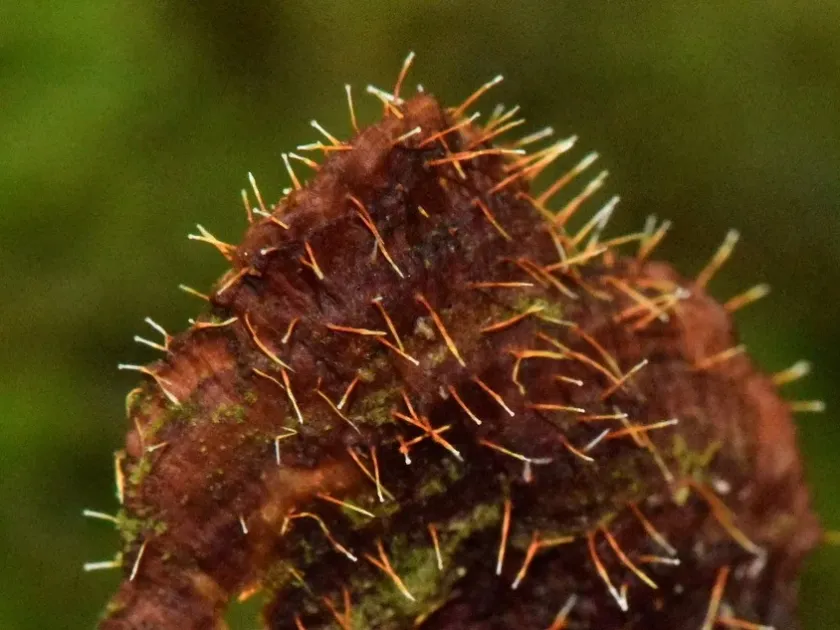
Description
Symptoms
The primary symptom of infection is the emergence of a conspicuous golden-yellow or ochre-colored dust-like layer on the surface of the host fruiting bodies.
As the infection progresses, the tissues of the host fungus become soft, deformed, and lose their natural texture and structural integrity.
Large clusters of spores accumulate on the infected surface, appearing as a powdery coating that disperses easily when disturbed.
Growth of the host fruiting body is typically stunted or completely arrested once the mycoparasite establishes a significant colony.
- Golden-yellow mycelial and spore patches.
- Softening and decay of host tissue.
- Powdery spore accumulation.
- Stunting and deformation of fruiting bodies.
- Premature death of the host organism.
Pathogen
The causative agent of the disease is the fungus Sphaerostilbella aurifila, which belongs to the Ascomycota division and acts as a specialized mycoparasite.
This organism lives by colonizing and consuming other fungi, effectively using them as a nutrient host for its own reproductive cycles.
The fungus is characterized by the production of specific conidial structures that display a distinctive golden hue, hence the species name.
Spores are efficiently dispersed through air currents, water splashes, and insect vectors, allowing the pathogen to move rapidly across fields or growing rooms.
At the cellular level, the fungus invades the tissues of the host, breaking down its structural components to sustain its own mycelial growth.
Conditions for development
Development of Sphaerostilbella aurifila is strictly dependent on high relative humidity, which serves as a major catalyst for spore germination.
Moderate temperatures, typical of temperate climates and mushroom growing environments, provide the ideal range for active mycelial spread.
Poor ventilation and overcrowded cultivation areas significantly increase the likelihood of severe outbreaks due to localized high-humidity pockets.
The presence of organic debris and moisture-rich substrates ensures the survival and proliferation of the pathogen over longer periods.
Sudden fluctuations in microclimate, specifically those leading to condensation, create optimal conditions for rapid pathogen colonization.
Why it matters
The main threat is the complete destruction of host mushroom populations, which represents a significant loss in commercial mushroom cultivation.
The pathogen disrupts the nutritional supply of the host, leading to reduced yield and total loss of product quality in affected areas.
In natural ecosystems, excessive colonization can disrupt the balance of beneficial mycorrhizal fungi, potentially affecting associated plant health.
The high rate of spore production and ease of dispersal make it a difficult disease to manage once it has established a foothold in a facility.
Economic damage is exacerbated by the difficulty of using chemical controls that are safe for the primary crop while being effective against the parasite.
Protection
Effective management focuses on strict sanitation practices, including the regular disinfection of tools and cultivation surfaces.
Environmental control is paramount, with an emphasis on regulating humidity levels and ensuring robust air circulation to discourage pathogen growth.
Early detection and the immediate removal and safe disposal of infected specimens are critical to preventing further outbreaks.
Implementing quarantine measures when introducing new materials or substrate batches helps contain the spread of the fungus.
Integrated pest management strategies should prioritize hygienic protocols and microclimate optimization to maintain a healthy growing environment.
Discussion
No discussions yet — be the first.