
Sphaerostilbella
Sphaerostilbella
Description
Symptoms
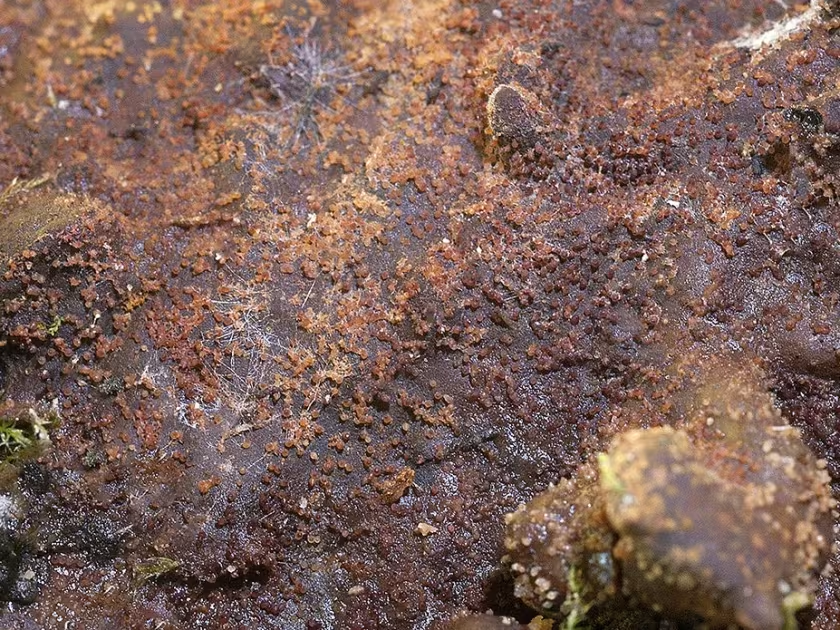
The most distinctive symptom of a Sphaerostilbella infection is the development of visible fruiting bodies on the surface of the plant or its debris. These usually appear as small, cushion-like structures that are white, yellow, or reddish-brown.
Infected plant parts often show signs of necrosis, turning dark or grayish-black. The structural integrity of the tissue weakens, leading to wilting, drooping of stems, or the death of individual branches or entire plants.
If the fungus affects mushrooms or specific fungal substrates, it manifests as a rapid, dense overgrowth of mycelium. This parasitic layer chokes out the intended crop, leading to total failure of the growing cycle.
- Development of distinct cushion-shaped spore masses.
- Localized tissue discoloration and tissue softening.
- Stunted growth of new shoots and leaves.
- Cracking or peeling of bark on woody host plants.
Advanced infections often produce a distinct musty or foul odor, characteristic of the rapid decay process initiated by the fungal enzymes. This serves as a warning sign for growers to isolate affected areas.
Pathogen
Sphaerostilbella is a genus of fungi belonging to the Ascomycota division. Often associated with the decay of woody tissues or acting as mycoparasites, these fungi can become significant threats to various host plants when conditions favor their opportunistic growth.
The pathogen spreads primarily through the production of conidia, which are asexual spores capable of traveling long distances via wind, rain, or insects. These spores adhere to plant surfaces and initiate infection upon germination.
Once established, the mycelium penetrates the epidermal layers of the host, secreting enzymes that break down cell walls. This destructive process allows the fungus to colonize the interior tissue, effectively hijacking the host's nutrient transport system.
The biology of Sphaerostilbella is characterized by its adaptability. It can thrive as a saprophyte on dead organic matter, waiting for the right moment to transition into a parasitic phase when the host plant experiences stress.
Environmental stability of the fungus is high, as it can form resilient structures in soil and infected plant debris. This persistence makes it a long-term challenge for growers who must manage infected sites over multiple seasons.
Conditions for development
Sphaerostilbella thrives in high-humidity environments where moisture is consistently available on plant surfaces. Poor air circulation in greenhouses or dense field plantings is a primary driver of disease outbreaks.
The optimal temperature range for the pathogen's development is between 18 and 24 degrees Celsius. In these conditions, the metabolic activity of the fungus accelerates, and the latent period between infection and symptom appearance is minimized.
Mechanical damage is a significant risk factor. Wounds from pruning, insect feeding, or environmental stressors like hail provide direct entry points for the fungus to colonize the inner tissues of the plant.
Water management is critical. Overhead irrigation that keeps foliage wet for prolonged periods creates a perfect microclimate for spore germination and colony establishment, especially during cooler, overcast days.
Accumulation of plant litter provides a reservoir for the pathogen. Overwintering spores in fallen leaves, rotten wood, or untreated soil serve as the primary inoculum source for the following season's infection cycle.
Why it matters
The primary harm caused by Sphaerostilbella is the systemic impairment of the plant's health. By disrupting the vascular system, the fungus prevents the flow of water and nutrients, leading to physiological drought and starvation.
Crop loss is a common economic consequence, as infected plants become unproductive or die entirely. Reduced fruit quality and market value are significant issues in commercial horticulture due to visible scarring and tissue decay.
The infection forces the plant to divert resources toward stress responses rather than growth and reproduction, resulting in significant yield reduction even before the plant shows overt signs of collapse.
Sphaerostilbella often acts as a precursor to more aggressive secondary infections. By destroying the plant's protective barriers, it invites bacteria and other fungi to attack, making the prognosis for the plant significantly worse.
Furthermore, the persistent nature of the pathogen in the soil complicates long-term cultivation plans, as infected land may remain unsuitable for sensitive crops without intensive sanitation efforts.
Protection
Integrated Pest Management (IPM) is the best approach to control Sphaerostilbella. Sanitation, including the thorough removal and destruction of all infected plant materials, is the first and most vital step.
Cultural practices such as pruning to improve air circulation and maintaining proper spacing between plants can drastically reduce the humidity levels that the fungus requires to flourish.
Chemical intervention via approved fungicides can be effective if applied early. Systemic fungicides are generally preferred, but they should be used in rotation to prevent the development of resistant fungal strains.
Biological control agents, particularly beneficial fungi like Trichoderma species, can suppress the growth of Sphaerostilbella by competing for space and nutrients in the soil and on the plant surface.
Monitoring for pest activity is essential, as certain insects can act as vectors, transporting spores from infected areas to healthy ones. Controlling these carriers is a key strategy in limiting the spread of the disease.
Discussion
No discussions yet — be the first.