
Sphaeropsis blight
Sphaeropsis tumefaciens
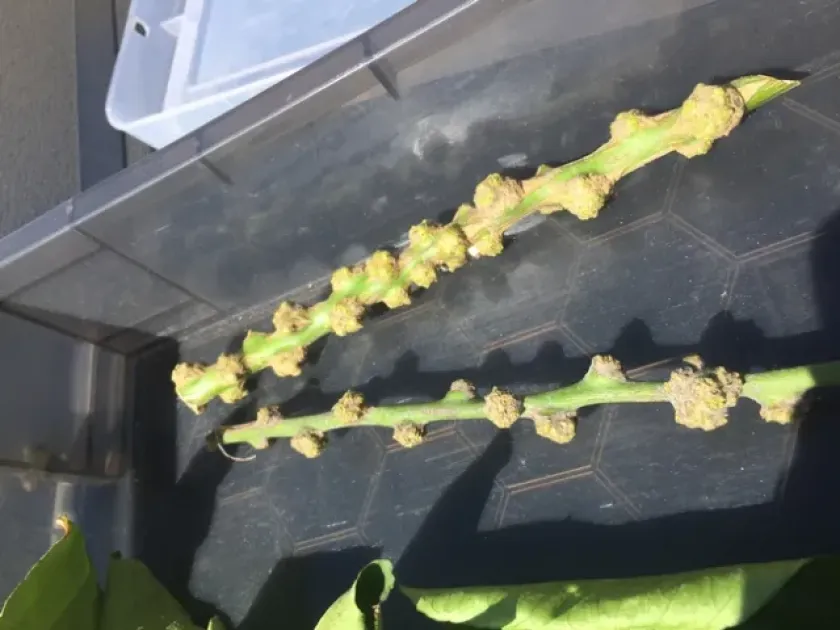
Description
Symptoms
The most distinctive sign of Sphaeropsis blight is the development of galls or tumor-like growths on the stems and branches. These growths can vary in size and often result in a swollen, distorted appearance of the affected area.
As the disease progresses, the bark over the galls tends to crack and peel, exposing the underlying woody tissue to environmental stressors. This secondary damage often invites other pathogens or wood-boring insects.
Dieback is a common symptom, where the parts of the branch beyond the infected gall begin to wither and die due to the blockage of nutrient transport. This often leads to foliage turning yellow and dropping prematurely.
Small black dots, known as pycnidia, can be seen clustered on the bark surface or within the cracks of the galls. These are the primary reproductive structures of the fungus.
- Development of tumor-like galls on stems.
- Cracking and splitting of the bark.
- Progressive dieback of branches.
- Premature yellowing and leaf loss.
- Appearance of black pycnidia on the bark.
Pathogen
The disease is caused by the fungus Sphaeropsis tumefaciens (often referred to as Macrophoma tumefaciens). This pathogen acts as a parasite that infects the bark and cambium layers of various trees and shrubs.
The fungus colonizes the internal tissues of the host, leading to abnormal growth patterns. It disrupts the vascular system, preventing the proper flow of water and nutrients, which results in the gradual decline of the affected branch or stem.
A key biological feature is the production of pycnidia, which are small black fruiting bodies visible on the surface of the infected bark. These structures house the spores that facilitate the spread of the pathogen.
The pathogen is highly opportunistic, surviving in infected tissues throughout the dormant season. It relies on water movement and physical contact for dissemination across the canopy of the host tree.
Understanding the life cycle of the fungus is crucial for effective management, as it can persist in dead plant material for several years if not properly disposed of.
Conditions for development
High humidity and consistent rainfall are the primary environmental drivers for the development of Sphaeropsis blight. These conditions encourage the maturation and dispersal of fungal spores from the pycnidia.
Wounds caused by pruning, storm damage, or insect activity serve as major entry points for the fungus. The pathogen rapidly infects exposed tissue where the natural protective barrier of the bark is compromised.
Trees undergoing stress, whether from drought, nutrient deficiency, or overcrowding, are significantly more susceptible to infection. Poor air circulation in dense plantings exacerbates the problem by keeping the canopy moist.
Seasonal weather patterns, specifically mild and wet spring or autumn days, favor the rapid spread of spores via splashes from rainfall, which can carry the fungus to higher branches.
The lack of proper sanitation in a garden or nursery allows the fungus to flourish, as infected cuttings left on the ground act as a continuous source of inoculum for healthy plants.
Why it matters
The main danger of Sphaeropsis blight is its ability to weaken the structural integrity of the tree. The formation of large galls makes branches prone to snapping under heavy winds or snow loads.
If left untreated, the disease often leads to the death of major scaffold branches, severely impacting the aesthetics and overall health of the tree. In ornamental landscaping, this leads to significant economic loss.
The pathogen significantly reduces the photosynthetic capacity of the tree by causing foliage loss and branch dieback. This creates a cycle where the tree is unable to produce enough energy to heal or resist further infection.
In forest nurseries, this disease can devastate young seedlings, making them stunted or unmarketable. The cumulative effect of these infections can lead to the loss of an entire stock of young plants.
Chronic infections eventually lead to tree mortality, especially if the primary trunk becomes girdled by the tumorous growth, preventing the tree from supporting its own weight.
Protection
The most effective management strategy is rigorous sanitation, which involves pruning out infected branches. It is vital to make cuts well into healthy wood and ensure the removed material is destroyed.
Sterilizing pruning tools with alcohol or a bleach solution between every single cut is essential to prevent the spread of the pathogen from infected areas to healthy tissues.
Protective spraying with copper-based fungicides during the dormant season helps to reduce the number of fungal spores present on the bark, limiting the risk of spring infections.
Improving general tree vigor through proper irrigation and balanced fertilization helps the tree develop its own natural resistance against the fungus.
Ongoing monitoring and the removal of secondary pests that cause bark damage are necessary to maintain a healthy environment and reduce the number of potential infection sites.
Discussion
No discussions yet — be the first.