
Sordaria fimicola
Sordaria fimicola
Description
Symptoms
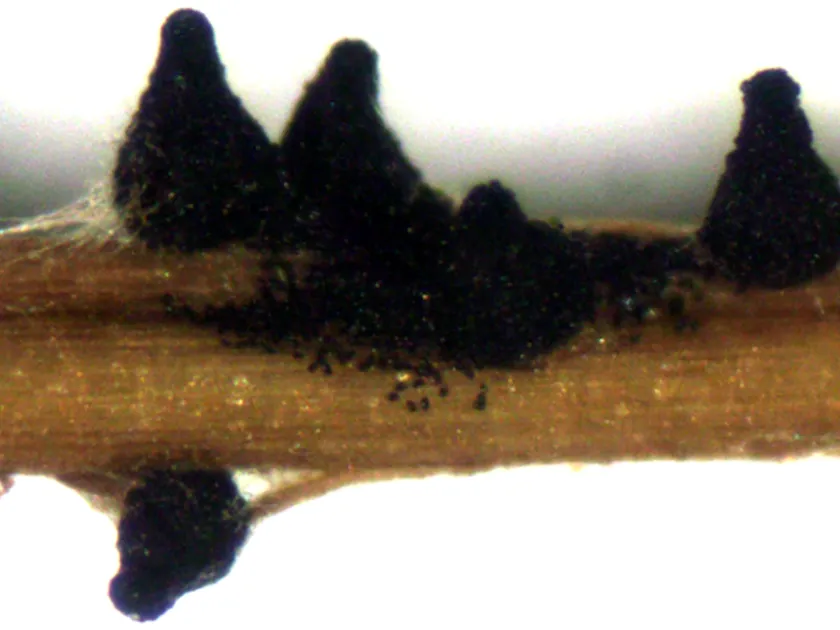
The primary visual sign of Sordaria fimicola is the appearance of small, dark, dot-like fruiting structures (perithecia) on dead or dying plant stalks, stems, and debris.
Under conditions of high humidity, a greyish-brown to black mycelial mat may develop on the surface of the infected tissue, which is often visible to the naked eye upon close inspection.
Plants affected by this fungus may exhibit stunted growth, chlorosis, and premature wilting if the pathogen manages to compromise the structural integrity of the roots or the stem base.
In post-harvest scenarios, infection manifests as surface mold on stored produce, leading to decay and discoloration, which significantly decreases the overall quality of the harvest.
Diagnosis often involves isolation of the fungus in a laboratory, as its macroscopic symptoms are easily confused with other ubiquitous soil-borne fungal species.
Pathogen
Sordaria fimicola is a filamentous fungus belonging to the Ascomycota division. It is widely recognized in scientific literature as a coprophilous organism, commonly found on the dung of herbivores and decaying organic matter.
This fungus is a classic model organism in genetic research due to its relatively short life cycle, ease of cultivation in laboratory settings, and clear observation of sexual reproduction stages.
The life cycle involves the formation of perithecia — flask-shaped fruiting bodies that contain asci with eight dark ascospores. These spores are forcibly ejected when environmental conditions are conducive to dispersal.
In agronomy, it is categorized as a saprotrophic fungus that can opportunistically colonize stressed or weakened plant tissues, acting as a secondary pathogen in complex disease scenarios.
The mycelium develops rapidly on moist surfaces, forming dark, velvety patches. While it is rarely the primary cause of major crop loss, it serves as an indicator of poor decomposition management in agricultural fields.
Conditions for development
The development of Sordaria fimicola is heavily dependent on moisture levels. It thrives in humid environments and on substrates with high water activity, which are essential for its spore germination and mycelial expansion.
Rich organic soils, especially those heavily amended with fresh manure or poorly composted materials, provide an ideal nutrient source for the fungus to establish and propagate.
Temperatures between 20°C and 25°C represent the optimal thermal range for the rapid colonization of organic substrates and the subsequent formation of perithecia.
Poor field management, including the lack of air circulation in dense crop stands and the presence of abundant undecomposed crop residues, creates a favorable microclimate for the fungus.
The fungus is resilient and can survive as dormant spores or mycelium in the soil for extended periods, waiting for optimal moisture and temperature triggers to begin its reproductive phase.
Why it matters
The harm caused by Sordaria fimicola is primarily associated with the degradation of organic matter and the spoilage of stored crops, which reduces the marketability of agricultural produce.
In seedling stages, the fungus can negatively affect germination rates and initial plant vigor if the seeds are contaminated, leading to erratic stand establishment and reduced yields.
Livestock producers may suffer losses if forage or feed is colonized by this fungus, as the resulting mycotoxins or mold growth can render the feed unpalatable and hazardous to animal health.
The pathogen competes with beneficial soil microorganisms, potentially disrupting the natural microbiome balance in the rhizosphere, which can weaken plant immunity against more aggressive pathogens.
Cumulative economic losses are primarily driven by the need for increased fungicide usage and the costs associated with the rejection of spoiled agricultural commodities.
Protection
Effective management requires the thorough incorporation of crop residues into the soil, promoting rapid decomposition by beneficial bacteria and fungi, thereby denying Sordaria fimicola its primary food source.
In storage facilities, strict humidity control and adequate ventilation are essential to prevent the fungus from proliferating on harvested goods, particularly in grain and hay storage.
Preventative fungicide applications during the growing season can reduce the overall fungal inoculum pressure in fields where the pathogen is known to be endemic.
- Implementing balanced crop rotation
- Ensuring proper composting of organic fertilizers
- Monitoring moisture levels in grain and silage
- Maintaining healthy soil pH and structure
Using certified, disease-free seed material and optimizing planting density help create an environment that is less conducive to the spread of opportunistic fungal pathogens.
Discussion
No discussions yet — be the first.