
Septoria needle cast of Japanese black pine
Septorioides pini-thunbergii
Description
Symptoms
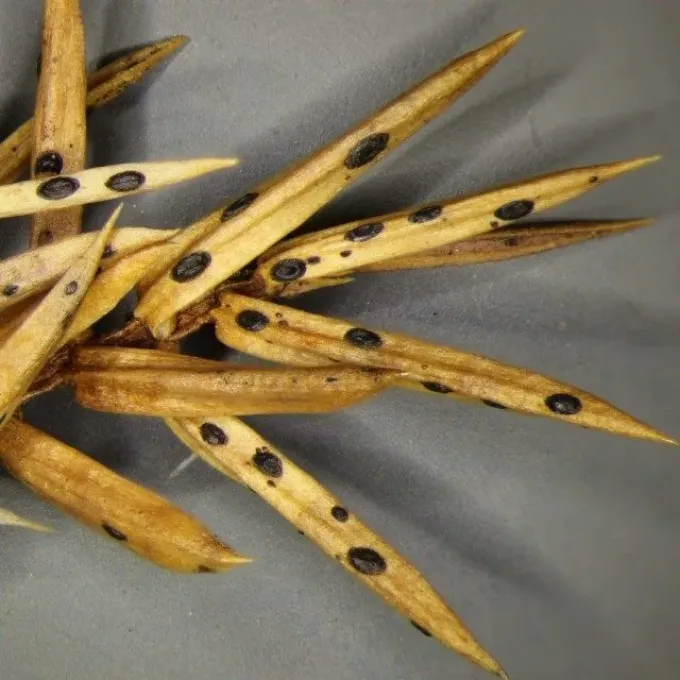
The initial symptoms appear as small, yellow-to-brown spots or bands on the previous year's needles. These spots expand gradually and can eventually affect the entire length of the needle.
As the disease progresses, the necrotic areas darken to a gray or brown color. Close inspection often reveals tiny black dots on the needle surface; these are the pycnidia of the fungus.
Premature needle drop is a hallmark symptom of severe infection. The lower branches of the pine tree are typically affected first, leading to a thin and sparse canopy over time.
During periods of high humidity, a glistening or powdery mass of spores may be visible on the surface of the infected needles, indicating active dissemination.
- Yellowing and browning of needles
- Presence of black pycnidia
- Premature needle abscission
- Sparse, thin canopy appearance
Pathogen
The causative agent of this disease is the fungus Septorioides pini-thunbergii (previously classified within the Septoria genus). It is a specialized pathogen that primarily targets the needles of Pinus thunbergii.
The fungus invades the intercellular spaces of pine needles, where it secretes enzymes and toxins that disrupt cellular integrity. As the pathogen matures, it produces pycnidia — specialized fruiting bodies that release infectious spores.
This disease is categorized as a fungal needle cast. The fungus survives unfavorable seasons by persisting as dormant mycelium within fallen needles or on infected branches remaining in the canopy.
The life cycle is tightly coupled with environmental moisture. During spring and summer, spores are ejected from pycnidia and dispersed by splashing rain or air currents to healthy needles.
Biological adaptability allows this pathogen to thrive in diverse climatic conditions, provided that periods of high humidity and moderate temperatures occur during the growing season.
Conditions for development
High relative humidity and frequent rainfall are the primary drivers of disease development. These conditions facilitate both the germination of spores and the movement of the pathogen through the canopy.
Dense plantings or poor site selection that restricts air movement around the tree create a microclimate conducive to fungal growth. Stagnant air keeps foliage wet for longer durations.
Tree vigor is a significant factor; pines stressed by drought, poor soil fertility, or physical injury are more susceptible to colonization by Septorioides pini-thunbergii.
Cultural practices that lead to water accumulation in the crown or neglect of sanitation procedures create conditions where the fungal load increases exponentially year after year.
The optimal temperature range for the development of this pathogen is typically between 15°C and 22°C, which often coincides with the flush of new growth on pine trees.
Why it matters
Septoria needle cast significantly compromises the aesthetic value of Japanese black pine, which is often used in ornamental landscapes. A thin crown is visually undesirable.
Chronic needle loss impairs the tree's photosynthetic capacity, leading to reduced growth rates and a decrease in energy reserves essential for winter survival and spring budding.
Severely weakened trees often become magnets for secondary pests, such as bark beetles, which can finish off a tree that is already struggling with a fungal infection.
In nursery settings, this disease can cause high seedling mortality, leading to significant economic losses and a decrease in the availability of healthy planting stock.
If left unmanaged, the disease can become endemic within a landscape, causing long-term damage and weakening the structural integrity of the affected pines.
Protection
Sanitation is the cornerstone of control. Removing and destroying fallen needles and infected branches is essential to reduce the primary inoculum source for the following season.
Copper-based fungicides are highly effective when applied preventively. Programs should start in early spring and continue as weather conditions dictate, focusing on thorough coverage.
Improving air circulation through proper spacing and selective pruning of dense branches helps to lower humidity levels in the canopy, making it less hospitable for the fungus.
Balanced fertilization that avoids excessive nitrogen can help maintain tree vigor, as overly lush growth can sometimes be more prone to infection and retain more moisture.
For high-value specimens or persistent outbreaks, systemic fungicides should be applied according to local agricultural guidelines to penetrate the tissue and halt the growth of the fungus.
Discussion
No discussions yet — be the first.