
Septoria leaf blotch
Septoriella elongata
Description
Symptoms
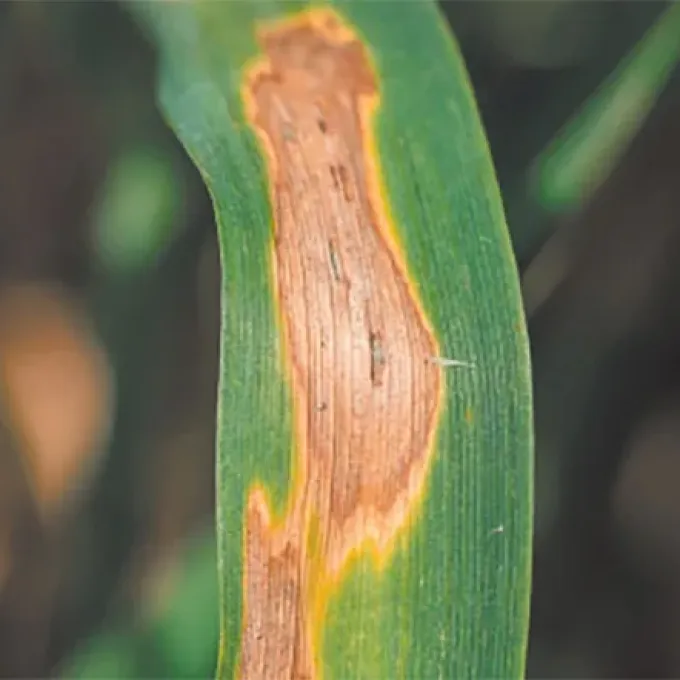
The first symptoms are small, light-green to yellow spots on the lower leaves, which eventually turn into brown or greyish necrotic lesions.
A distinctive feature of this disease is the presence of pycnidia — tiny, dark, speck-like fruiting bodies visible within the necrotic spots.
As the disease progresses, lesions coalesce and cover large areas of the leaf, leading to rapid yellowing and premature death of the foliage.
On the glumes (part of the wheat head), the infection presents as dark-brown, irregular spots that can lead to partial or total discoloration of the ear.
- Chlorotic spots on lower leaves.
- Visible black pycnidia within lesions.
- Premature yellowing and desiccation of leaves.
- Brown lesions on the glumes of the wheat head.
- Reduced vigor and stunted plant growth.
Pathogen
The primary pathogen of Septoria leaf blotch in wheat is the fungus Zymoseptoria tritici, while Parastagonospora nodorum is responsible for glume blotch.
The fungus is a major threat to both winter and spring wheat crops globally. It survives primarily on infected crop debris, which acts as a primary inoculum source for new seasons.
The life cycle involves both asexual reproduction through conidia and sexual reproduction via ascospores, which can be spread by wind over long distances.
Once spores land on leaf surfaces, they enter the plant through stomata. The mycelium grows intercellularly, eventually causing tissue necrosis and chlorosis.
The pathogen is highly adapted to temperate climates, showing significant resilience and high potential for rapid reinfection during the growing season.
Conditions for development
High humidity (above 85%) and moderate temperatures ranging between 15°C and 25°C are ideal for the rapid development of Septoria infections.
Rain events are critical for disease spread; splashing water carries spores from lower canopy leaves to upper foliage, including the flag leaf.
Extended periods of cloud cover, dew, and fog can facilitate infection even without direct rainfall, maintaining high moisture levels on the plant surface.
Dense crop stands often inhibit airflow, creating a humid microclimate that promotes faster colonization and multiplication of the fungal pathogen.
Monoculture practices and the use of highly susceptible varieties in high-pressure areas significantly increase the likelihood of severe outbreaks.
Why it matters
Septoria leaf blotch is a major cause of yield reduction in wheat, potentially causing losses ranging from 15% to 50% in untreated fields.
The economic impact is primarily driven by the destruction of the flag leaf, which is essential for photosynthesis during the grain-filling stage.
Severe infestations lead to shriveled grains with low test weight and poor milling quality, directly affecting marketability and profit margins.
The loss of functional green leaf area prevents the plant from accumulating sufficient biomass and nutrients, resulting in overall crop failure.
Additionally, farmers face significant costs for fungicide applications required to maintain healthy canopy cover until crop maturity.
Protection
Crop rotation is the most effective cultural practice to reduce the inoculum level in the soil and disrupt the disease cycle of the fungus.
Effective management includes burying crop residues through deep tillage to accelerate decomposition and reduce the initial infection source.
Planting resistant wheat varieties significantly reduces the need for heavy fungicide use and provides a reliable foundation for crop management.
Chemical control using systemic fungicides should be applied preventively or at the first sign of symptoms during critical growth stages like stem elongation.
Monitoring disease progress and alternating fungicides with different modes of action are crucial to manage the risk of fungicide resistance in the pathogen population.
Discussion
No discussions yet — be the first.