
Septoria leaf spot of pear
Septoria pyricola
Description
Symptoms
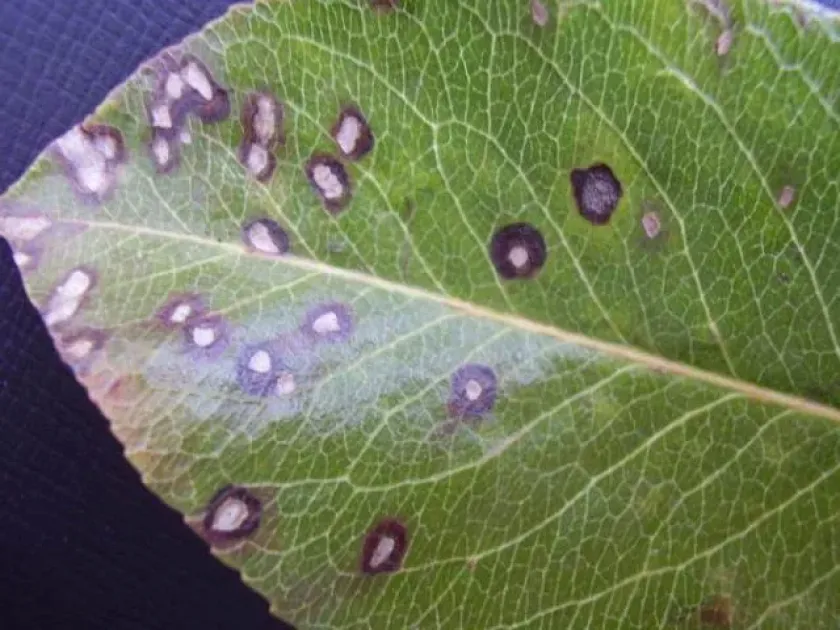
Initial symptoms consist of small, circular spots that are light brown or white in color, appearing on the leaves during the early summer months.
Over time, these spots expand, often developing a dark, distinct border, and may become angular in shape as they are bounded by the leaf veins.
Tiny black dots, known as pycnidia, become visible in the center of these spots as the fungal colony matures and begins to produce its own reproductive spores.
Severe infections cause individual spots to merge, leading to extensive necrosis that covers large areas of the leaf blade, eventually resulting in premature yellowing.
In some instances, the fungus can also infect the fruit and fruit stalks, creating small black pits that ruin the aesthetic and storage quality of the pear.
Pathogen
The disease is caused by the fungus Septoria pyricola, an imperfect fungus that specifically targets pear trees and causes necrotic lesions on the leaves.
The fungus overwinters primarily in the form of pycnidia, which are tiny fruiting bodies embedded within the tissues of fallen pear leaves from the previous season.
In spring, with the arrival of warm and wet weather, these pycnidia release conidia, which are then spread to young leaves by rain splashes and wind currents.
The incubation period typically lasts between one and two weeks, after which the first symptoms appear on the leaf surface, starting the infection cycle anew.
As the season progresses, the fungus produces subsequent generations of spores, allowing it to spread throughout the canopy if environmental conditions remain favorable.
Conditions for development
Septoria leaf spot thrives in environments characterized by high humidity, frequent rainfall, and moderate temperatures ranging from 15 to 25 degrees Celsius.
Poor orchard sanitation, specifically the failure to remove infected leaf litter, allows the fungus to survive the winter and reinfect the trees each year.
Dense tree canopies that lack proper spacing or pruning restrict airflow, maintaining high moisture levels around the foliage and promoting fungal growth.
Overhead irrigation systems can inadvertently facilitate the spread of the pathogen by splashing fungal spores from the ground up onto the lower leaves.
Stressed trees, whether due to pest pressure, nutrient deficiencies, or drought, show increased susceptibility to infection by Septoria pyricola.
Why it matters
Premature leaf drop caused by the disease severely impairs the tree's photosynthetic capability, leading to a significant reduction in carbohydrate storage.
Weakened trees become less winter-hardy, which increases the likelihood of cold damage to shoots and buds during the subsequent winter months.
The reduction in stored nutrients directly correlates to poor fruit set and reduced yields in the following growing season.
Infected fruit often fails to develop properly, suffering from physical deformities and a higher susceptibility to secondary storage rot issues.
Chronic infections lead to the gradual decline of tree vigor, making the entire orchard more vulnerable to other pathogens and environmental stressors.
Protection
The most important control strategy is rigorous orchard sanitation, which includes raking and destroying fallen leaves to eliminate overwintering sites for the fungus.
Proper pruning practices are essential to improve canopy airflow and light penetration, effectively creating an environment less favorable for fungal development.
Fungicide applications, particularly those containing copper or systemic triazoles, should be timed appropriately according to the tree's growth stages.
Balanced fertilization with phosphorus and potassium helps boost the tree's natural resistance and strengthens cell walls against fungal penetration.
Selecting resistant pear varieties is the most sustainable long-term method for managing Septoria leaf spot and reducing reliance on chemical pesticides.
Discussion
No discussions yet — be the first.