
Septoria leaf spot of pistachio
Septoria pistaciae
Description
Symptoms
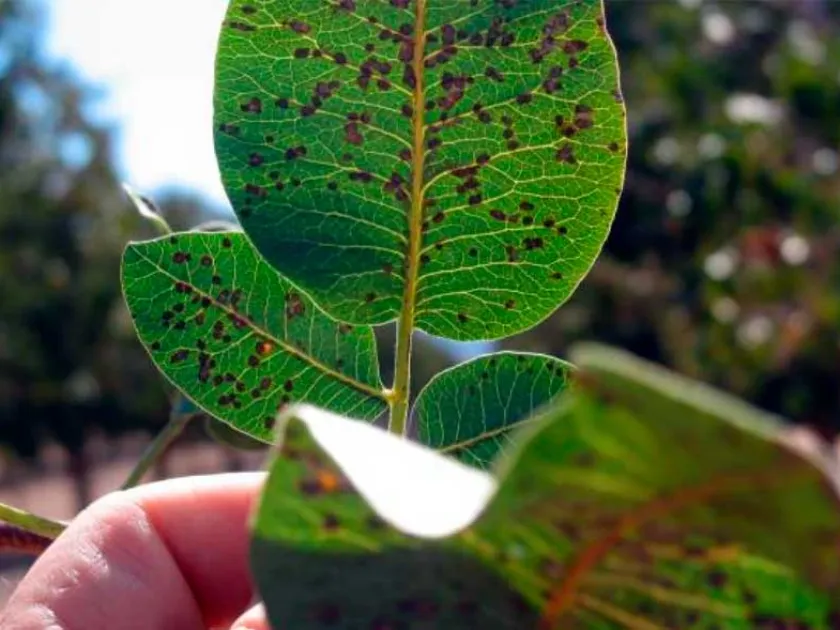
The initial symptoms appear as small, angular brown or reddish-brown spots on the leaves. As the disease progresses, these spots expand in size and may coalesce, covering a significant portion of the leaf surface.
A hallmark of this disease is the development of tiny, black, dot-like pycnidia within the necrotic lesions. These structures are often visible to the naked eye or with a hand lens and confirm the presence of the fungal pathogen.
Severe infections lead to chlorosis and premature leaf drop. The premature loss of foliage reduces the tree's overall vigor and weakens its ability to accumulate energy reserves for the following season.
In some cases, the fungus may also attack young, tender shoots, resulting in elongated dark lesions that can distort shoot growth. This is particularly concerning in nursery settings where young plants are most vulnerable.
Early detection through regular orchard scouting is essential to mitigate the spread of the disease, as symptoms become more difficult to manage once they reach a widespread epidemic level.
Pathogen
The disease is caused by the fungus Septoria pistaciae, a member of the Deuteromycetes group. This pathogen is a host-specific fungus that targets trees of the genus Pistacia, leading to the development of necrotic leaf lesions.
The life cycle of the pathogen is centered around overwintering within fallen leaves and infected plant debris, where it persists as mycelium and pycnidia. When environmental conditions improve in the spring, the fungus releases conidia (spores) that are spread by rain splash and wind to healthy foliage.
Infection occurs primarily through stomata or mechanical wounds on the leaf surface. Once inside, the fungus colonizes the intercellular spaces of the leaf tissue, leading to localized cell death and the formation of characteristic leaf spots.
Septoria pistaciae can produce multiple cycles of spores during a single growing season, allowing the infection to escalate rapidly throughout the canopy if conditions remain favorable for fungal development.
Laboratory diagnosis involves microscopic observation of the lesions, where the pycnidia — small, black fruiting bodies containing the fungal spores — can be clearly identified on the surface of the necrotic spots.
Conditions for development
The development of Septoria pistaciae is strongly influenced by periods of high humidity and moderate temperatures. Moisture on the leaf surface is a fundamental requirement for spore germination and infection.
The optimal temperature range for the pathogen is between 18°C and 25°C. Under these conditions, the incubation period is shortened, facilitating rapid reproduction and secondary cycles of infection.
Orchards with dense canopies that lack sufficient airflow create microclimates where humidity remains high for extended periods, providing a perfect environment for the fungus to thrive and spread.
Poor orchard sanitation is a primary driver of disease recurrence. Retaining leaf litter beneath the trees serves as a reservoir for the fungus to survive the winter and re-infect the foliage the following spring.
Tree stress, whether from poor nutritional management or water deficiency, can also predispose pistachio trees to higher infection rates by lowering their natural defense mechanisms against fungal pathogens.
Why it matters
The primary impact of Septoria leaf spot is the reduction of the functional photosynthetic area of the leaves. This premature defoliation hinders the tree's ability to produce energy, ultimately impacting growth and yield.
Reduced carbohydrate accumulation leads to smaller nut sizes and lower overall kernel quality. In heavy infestations, economic losses in yield can be substantial, often ranging from 30% to 50% depending on the severity of the outbreak.
Chronic annual infections weaken the overall vitality of the pistachio trees, making them more susceptible to cold damage and other secondary biotic or abiotic stresses over time.
In nurseries, the disease can stunt the growth of young saplings, rendering them unsuitable for sale or field planting. This leads to direct financial losses for nursery operators.
The necessity of implementing fungicide programs and sanitation practices adds to the operational costs of orchard management, emphasizing the need for integrated disease management strategies.
Protection
The foundation of Septoria leaf spot management is orchard sanitation. Collecting and destroying fallen leaves is a critical step in reducing the primary inoculum load for the following season.
Proper pruning practices that open the tree canopy are essential to improve air circulation and sunlight penetration. This promotes faster drying of leaves, which inhibits the conditions necessary for fungal infection.
Protective fungicide sprays, particularly those based on copper, are effective when applied early in the season to prevent the initial infection from becoming established on the new foliage.
In cases of severe outbreaks, systemic fungicides should be employed to treat the infection. These should be applied according to local agricultural recommendations to ensure both efficacy and safety.
- Selection of resistant or tolerant pistachio varieties for planting.
- Adhering to proper spacing to allow for adequate canopy ventilation.
- Balanced fertilization to maintain robust plant immunity.
- Regular scouting and monitoring to detect the first signs of disease.
Discussion
No discussions yet — be the first.