
Septoria leaf spot of parsley
Septoria petroselini
Description
Symptoms
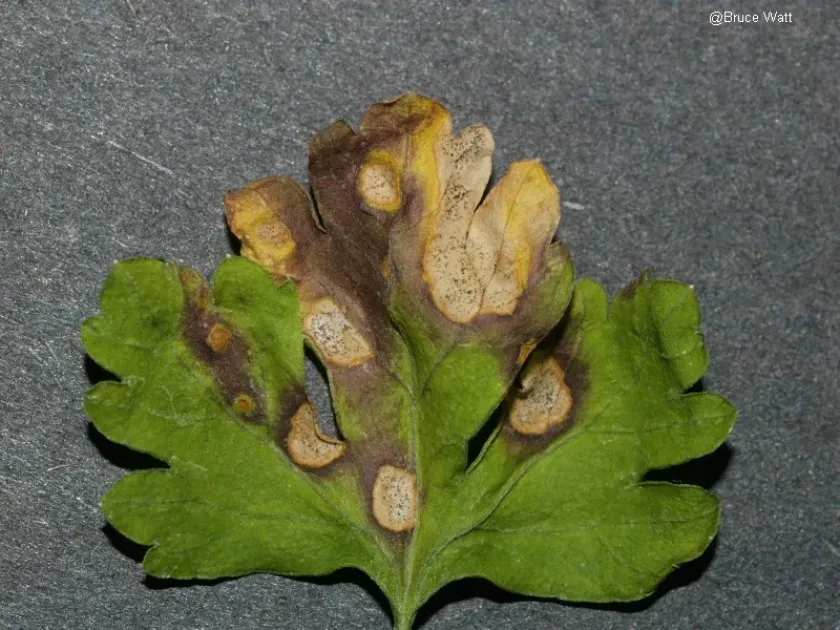
Symptoms initially appear as small, circular or irregular spots on the leaves, which are dark brown in color, often surrounded by a lighter halo.
As the infection progresses, the spots expand and coalesce, leading to severe leaf blight, yellowing, and eventually the death of the leaf tissue.
A diagnostic feature of this disease is the presence of tiny, black, pimple-like pycnidia embedded within the lesions on the leaf surface.
The disease typically manifests on lower foliage first, as these leaves are closer to the soil and remain moist for longer periods.
- Small dark brown leaf spots
- Characteristic black pycnidia on lesions
- Yellowing and wilting of the foliage
- Reduced plant vigor and stunted growth
Pathogen
The disease is caused by the fungus Septoria petroselini, a specialized pathogen that primarily targets plants belonging to the Apiaceae family.
The fungus overwinters in crop debris left in the soil or on infected seeds, making sanitation a critical aspect of disease management.
The life cycle involves the formation of pycnidia, small black structures that produce spores, which are then disseminated by rain splashes or wind.
During the growing season, the fungus thrives in a saprophytic phase on dying leaves, ensuring its continued presence in the field environment.
The biological nature of the pathogen allows it to survive in various soil types, maintaining high infection pressure for multiple seasons if left untreated.
Conditions for development
The development of Septoria leaf spot is heavily dependent on wet weather conditions, specifically high humidity and frequent rainfall or dew.
Optimal temperatures for fungal colonization and spore production range between +18°C and +25°C, typical for mid-season growth.
Poor ventilation within dense plant canopies creates a microclimate that prevents leaves from drying, significantly facilitating fungal infection.
Overhead irrigation methods exacerbate the spread of the pathogen by washing spores from infected leaves onto healthy plant tissue.
Weed management is essential, as related wild species of Apiaceae can harbor the pathogen and serve as a secondary source of infection.
Why it matters
Septoria leaf spot severely impacts the marketability of parsley, as damaged leaves are visually unappealing and lose their freshness quickly.
The reduction in photosynthetic leaf area significantly stunts plant growth and reduces overall yield for both leaf and root-type parsley varieties.
Infected produce has a shorter shelf life and is highly susceptible to secondary bacterial rots, resulting in post-harvest losses.
Large-scale outbreaks can cause total crop failure if favorable weather conditions for the fungus persist throughout the harvest period.
The necessity for frequent fungicide applications increases production costs and may limit the window for harvesting due to safety regulations.
Protection
Crop rotation remains the most effective cultural practice, with a gap of at least 3–4 years between planting parsley or other Apiaceae crops.
Practicing strict sanitation, including the removal and destruction of all crop residue, is vital to eliminate the overwintering inoculum of the fungus.
Selecting certified, disease-free seeds and planting in well-drained soil with adequate spacing helps create an environment less prone to infection.
Adopting drip irrigation instead of overhead watering can significantly reduce the potential for spore dispersal on the leaf surfaces.
If chemical control is necessary, protectant fungicides containing copper or other active ingredients should be applied early, while strictly adhering to pre-harvest intervals.
Discussion
No discussions yet — be the first.