
Septoria leaf spot of peony
Septoria paeoniae
Description
Symptoms
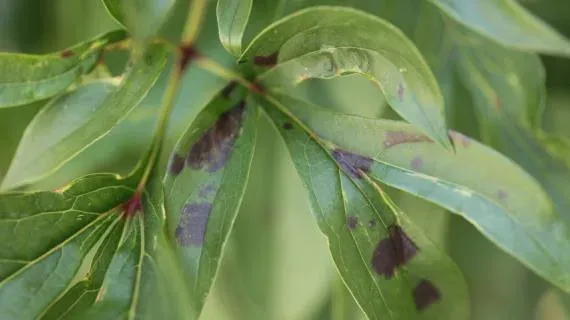
The first signs of Septoria leaf spot on peonies appear as circular or oval spots on the leaves, typically emerging in mid-summer. As the disease progresses, the center of these spots turns brown or greyish-brown, often surrounded by a distinct dark purple or reddish border.
A key diagnostic feature is the appearance of tiny black dots, known as pycnidia, in the center of the affected areas. These structures are most visible on the underside of the leaves, though they can eventually spread across the entire surface of infected tissues under high humidity.
Under favorable conditions, these spots may merge, covering a large portion of the leaf blade, which leads to premature drying, curling, and defoliation. The disease usually initiates on the lower foliage, gradually spreading upwards throughout the plant canopy.
Stem infection is less common but can occur under severe conditions. In such cases, the fungus causes elongated necrotic lesions, which weaken the stems and may result in the drooping or premature snapping of flower stalks.
In the final stages of infection, the plant loses its aesthetic appeal and sheds leaves prematurely. Without intervention, the weakened plant may show stunted growth and a significant reduction in flowering performance in the following season.
Pathogen
The causative agent of this disease is the fungus Septoria paeoniae, which belongs to the class of Deuteromycetes. This parasite is primarily an exogenous pathogen that colonizes the tissues of leaves and stems.
The life cycle of the fungus involves the formation of pycnidia, which are specialized fruiting bodies that contain pycniospores. These spores serve as the primary inoculum for new infections during the growing season.
The pathogen is capable of surviving for long periods on fallen infected leaves and plant debris remaining in the soil. This detritus acts as the primary reservoir for the fungus during the winter months, allowing it to re-emerge in spring.
Spores are disseminated primarily via rain splashes, overhead irrigation, wind currents, and insect movement. Moisture is a critical requirement for spore germination and successful colonization of the plant's epidermis.
The fungus is characterized by high aggressiveness under appropriate climatic conditions, rapidly producing new generations of spores that allow the infection to spread throughout the plant within a single season.
Conditions for development
The development of Septoria leaf spot is heavily favored by prolonged periods of wet and warm weather, with temperatures ranging between 18 and 25 degrees Celsius. High atmospheric humidity is the primary driver of pathogen activity.
Dense peony plantings restrict airflow within the canopy, creating a microclimate where moisture persists on foliage for extended periods. Lack of ventilation significantly accelerates the spread of the fungal infection.
Improper irrigation techniques, such as overhead watering that keeps the foliage wet, facilitate the transfer of spores from diseased leaves to healthy ones. Subsurface or base watering is highly recommended to minimize moisture on the greenery.
Reduced plant vigor, often caused by nutrient imbalances—specifically high nitrogen and low potassium or phosphorus—makes peonies more susceptible to fungal entry and establishment.
Failure to implement autumn sanitary measures is a critical factor in the build-up of the infection. Overwintering on soil-level debris creates a cycle that leads to inevitable disease recurrence every spring.
Why it matters
Septoria leaf spot causes significant damage to the visual appearance of the peony, rendering it unsuitable for landscaping or cut flower production due to heavy spotting and premature defoliation.
The premature loss of the leaf canopy severely impairs the plant's photosynthetic capacity, which directly negatively impacts the storage of essential nutrients in the roots needed for winter dormancy and spring regrowth.
Infected plants exhibit reduced winter hardiness and produce weaker shoots in the subsequent year, leading to a steady decline in the plant's overall health and vitality over multiple years.
Weakened plants become significantly more susceptible to secondary infections, such as Botrytis blight, which often targets damaged tissues and complicates the management of the peony's health.
Economic damage stems from both the loss of decorative value and the cost of repeated fungicide treatments, along with the potential need for full removal of severely infected stock from the garden.
Protection
The most fundamental preventative measure is thorough autumn cleaning, which involves removing and destroying all fallen leaves and plant debris to eliminate the primary wintering site of the pathogen.
Proper spacing during planting is essential to ensure adequate air circulation. Good ventilation helps foliage dry out quickly after rain or dew, effectively curbing the rapid spread of the fungus.
- Apply preventative copper-based fungicide sprays in early spring.
- Utilize systemic fungicides at the first sign of infection symptoms.
- Implement balanced potassium and phosphorus fertilization to strengthen cell walls.
- Maintain weed-free conditions and mulch around the base to prevent soil-to-leaf contact.
Upon detection of initial symptoms, immediately prune and burn affected plant parts. Follow this with a comprehensive application of an appropriate fungicide to both the remaining foliage and the surrounding soil.
Selecting disease-resistant peony cultivars is the most effective long-term strategy for managing Septoria leaf spot and maintaining a healthy, vibrant garden throughout the season.
Discussion
No discussions yet — be the first.