
Tomato Septoria leaf spot
Septoria lycopersici
Description
Symptoms
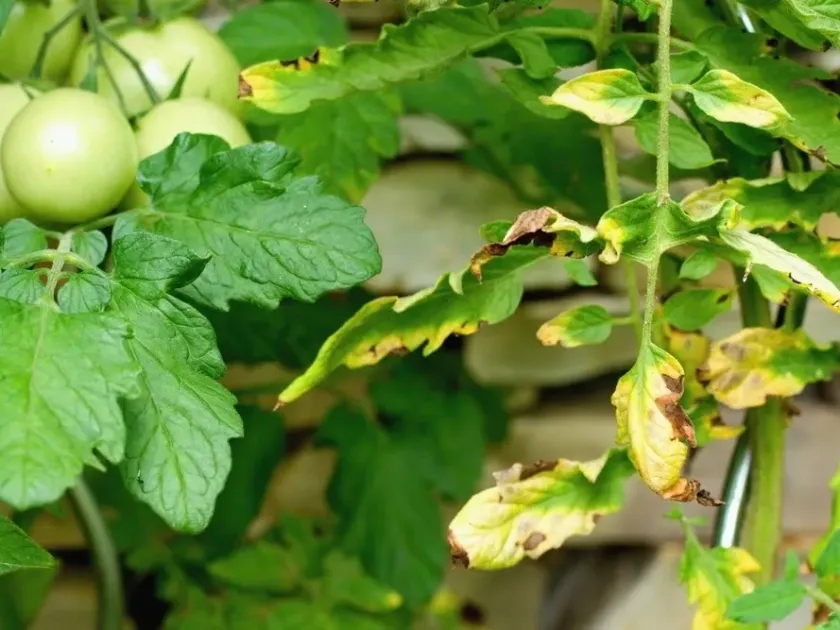
Symptoms typically begin on the lower leaves as small, water-soaked, gray-green spots that eventually turn circular with a dark brown border.
As the disease progresses, the center of the spots turns grayish-white. A key diagnostic feature is the presence of tiny, black, pimple-like structures called pycnidia.
These black dots are easily visible in the center of the lesions and are the fruiting bodies of the fungus, which release more spores to continue the cycle.
Affected leaves eventually yellow, turn brown, and wither, often leading to premature defoliation starting from the base of the plant.
- Small gray-green spots on lower leaves.
- Circular lesions with dark brown margins.
- Grayish centers with visible black pycnidia.
- Yellowing and premature death of leaves.
Pathogen
The disease is caused by the fungus Septoria lycopersici, which is highly specialized to infect members of the Solanaceae family, primarily tomatoes.
The pathogen survives in the soil and on crop debris, such as fallen leaves, as pycnidia. These structures protect the fungus through harsh winter conditions.
Conidia, the spores of the fungus, are spread by splashing rain or irrigation water, as well as by wind or contaminated garden tools during maintenance.
Once the spores land on a healthy leaf, they enter the tissue through stomata or small wounds, initiating the infection process inside the leaf.
Under optimal conditions, the incubation period is relatively short, allowing the disease to cycle multiple times within a single growing season.
Conditions for development
Septoria leaf spot thrives in warm, wet conditions. Temperatures ranging from 20°C to 25°C combined with high humidity are ideal for infection.
Extended periods of rainy weather, heavy dew, or overhead irrigation provide the water necessary for spore germination and rapid spread throughout the crop.
In greenhouses or high tunnels, poor air circulation and high humidity levels create a microclimate that strongly favors the development of the disease.
Crowded plantings and excessive foliage prevent leaves from drying quickly after rain, which significantly increases the susceptibility of the plants.
Weed infestation, particularly by other Solanaceous weeds like nightshades, can serve as a reservoir for the fungus to persist and re-infect the area.
Why it matters
The primary damage caused by this disease is the destruction of leaf tissue, which drastically reduces the photosynthetic capacity of the plant.
When the plant loses significant amounts of foliage, it cannot produce enough energy to support fruit development, leading to lower yields.
Exposure of the fruits to direct sunlight due to defoliation can lead to sunscald, further reducing the market value and quality of the harvest.
If left unmanaged, the infection can spread quickly, leading to total defoliation of the plants and severe economic losses for growers.
Plants weakened by Septoria become more prone to environmental stress and opportunistic pests, leading to a decline in overall plant health and vigor.
Protection
Sanitation is the most critical control measure; remove and destroy all infected plant debris at the end of the season to eliminate fungal inoculum.
Practice effective crop rotation by avoiding planting tomatoes in the same location for at least three to four years to break the infection cycle.
Improve air circulation by spacing plants appropriately and staking or trellising them to keep the foliage off the ground and dry.
Apply preventive copper-based fungicides or other recommended chemical treatments during periods of high disease risk or when initial symptoms appear.
Avoid overhead watering methods to minimize leaf wetness, opting for drip irrigation to keep the foliage dry during the growing season.
Discussion
No discussions yet — be the first.