
Septoria leaf spot of sunflower
Septoria helianthi
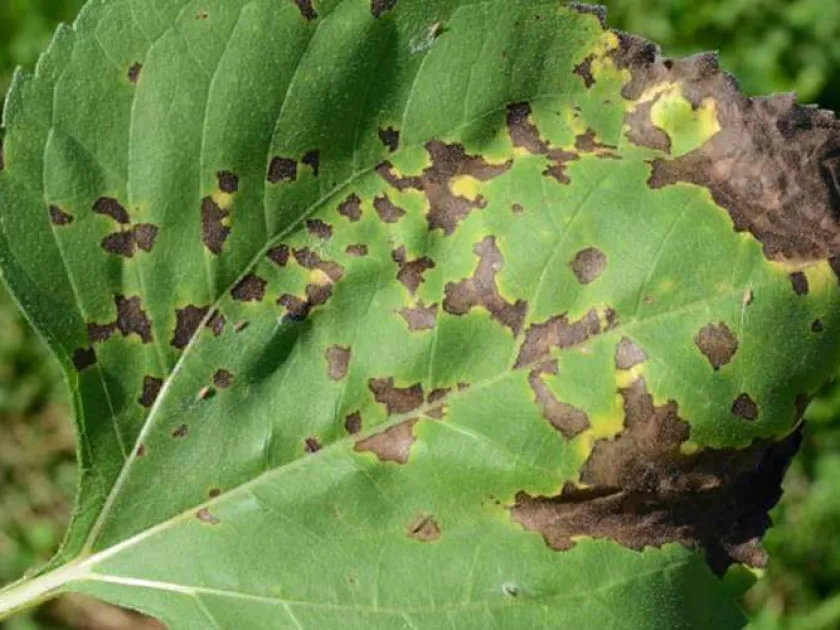
Description
Symptoms
The first symptoms appear as small, light-brown or yellowish spots with a darker margin. These spots eventually grow in size and acquire an angular shape, as they are limited by the leaf veins, which is a key diagnostic feature.
Small black dots, known as pycnidia, appear in the center of the lesions on both sides of the leaf. This feature is critical for distinguishing Septoria leaf spot from other types of sunflower foliar diseases.
As the infection intensifies, individual spots merge, covering a significant portion of the leaf surface. This leads to premature drying and leaf drop, starting from the lower levels and moving toward the upper parts of the plant.
On the stems, symptoms manifest as brown, elongated lesions that can lead to tissue necrosis. This weakens the structural integrity of the plant and increases the risk of lodging during strong winds.
Under humid conditions, the surface of the lesions may develop a grayish coating. The loss of photosynthesizing leaf area is the primary cause of reduced plant vigor and crop yield potential.
Pathogen
The causative agent of the disease is the fungus Septoria helianthi, which belongs to the class of deuteromycetes. The pathogen can survive for long periods in soil on crop residues, seeds, and perennial weeds.
The life cycle of the fungus involves the formation of pycnidia, which are reproductive structures that produce conidia. These conidia are the primary source of infection, spreading to healthy plants via rainwater splashes, wind, or insects.
The fungus is highly specialized and affects only sunflowers, with other agricultural crops showing almost no susceptibility to this specific pathogen. Its biology is strictly dependent on moisture, which is essential for spore germination and mycelial penetration into the plant.
Infection usually starts on the lower leaves, moving gradually up the stem as the season progresses. The fungal mycelium develops in the intercellular spaces, gradually degrading tissues and disrupting the plant's metabolic processes.
The optimal temperature for Septoria helianthi development ranges from +20°C to +25°C. Under these conditions, the incubation period is shortened, facilitating rapid spread and potential epiphytotics.
Conditions for development
The disease thrives in warm and wet weather characterized by frequent rainfall. High relative humidity and prolonged dew periods provide the ideal environment for fungal sporulation and infection.
Inadequate crop rotation is a major factor in the buildup of the pathogen's inoculum in the soil. Planting sunflowers on the same field more frequently than every 3–4 years significantly increases the risk of severe outbreaks.
Dense plant populations, which restrict airflow and maintain a humid microclimate, are more susceptible to disease spread. Over-application of nitrogen fertilizers, which promotes rapid vegetative growth, can also exacerbate the infection.
Unincorporated plant residues serve as the main reservoir for the fungus. Proper tillage practices that bury residues deep in the soil help reduce the primary inoculum load for the following season.
Periods of heavy rain during the budding and flowering stages are particularly critical, as the plant canopy is fully developed and highly vulnerable to pathogen colonization.
Why it matters
The primary damage caused by Septoria is the dramatic reduction in leaf surface area, which halts photosynthesis and prevents the plant from filling its seeds properly. This directly leads to significant yield losses.
The disease causes premature senescence, disrupting the flow of nutrients to the seed heads. Consequently, the thousand-kernel weight and overall harvest volume are reduced.
Oil content in the seeds is negatively affected, as the plant fails to accumulate sufficient lipid reserves. This reduces the market value of the sunflower crop for the processing industry.
Severe stem infection makes the stalks brittle and prone to lodging, which increases mechanical harvest losses. Harvesting becomes more difficult and less efficient in heavily infected fields.
Depending on the hybrid's resistance and weather conditions, yield losses can range from 15% to 30%, making Septoria a significant threat to sunflower profitability.
Protection
Strict crop rotation is the fundamental preventive measure. Rotating sunflowers with cereals or other non-host crops for at least 3–4 years helps reduce the soil-borne inoculum level.
Agricultural practices should focus on deep plowing to bury infected crop residues. This prevents the fungus from completing its life cycle and reduces the primary source of spores.
Selecting resistant sunflower hybrids is the most efficient and cost-effective management strategy. Genetic resistance can protect the crop even under moderate disease pressure.
Fungicide applications are necessary during periods of high humidity and when symptoms are first spotted. Effective options include triazoles and strobilurins applied at the 6–8 leaf stage and again at the budding stage.
Balanced mineral nutrition, specifically ensuring adequate potassium and phosphorus levels, strengthens the plant's natural immune response and improves its overall resilience to fungal infections.
Discussion
No discussions yet — be the first.